

Afghan women weep as Taliban fighters enforce new university ban
‘We have lost everything,’ one student says as hardline Islamists tighten restrictions on women; Washington vows ‘consequences’
 Add ToI as a Preferred Source on Google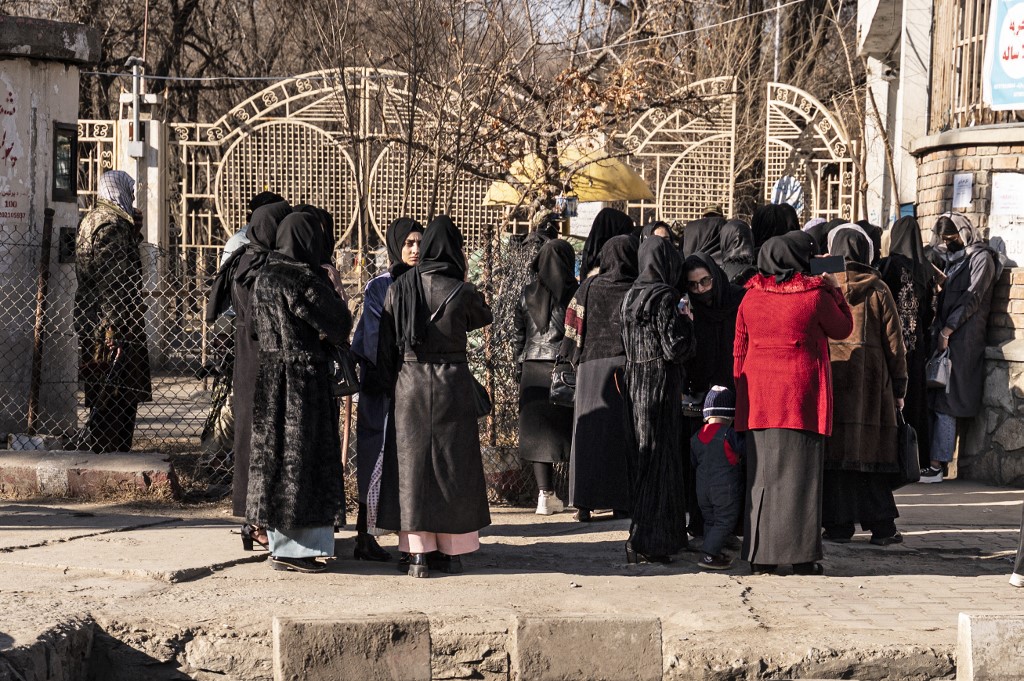
KABUL, Afghanistan — Hundreds of young women were stopped by armed guards on Wednesday from entering Afghan university campuses, a day after the nation’s Taliban rulers banned them from higher education in another assault on human rights.
Despite promising a softer rule when they seized power last year, the hardline Islamists have ratcheted up restrictions on all aspects of women’s lives, ignoring international outrage.
A team of AFP journalists saw groups of students gathered outside universities in the capital, Kabul, barred from entering by armed guards and shuttered gates.
Many, dressed in hijabs, were also seen standing in groups on roads leading to the campuses.
“We are doomed. We have lost everything,” said one student, who asked not to be identified.
Men students also expressed shock at the latest edict.
“It really expresses their illiteracy and low knowledge of Islam and human rights,” said one, also asking not to be named. “If the situation continues like this the future will be worse. Everyone is scared.”
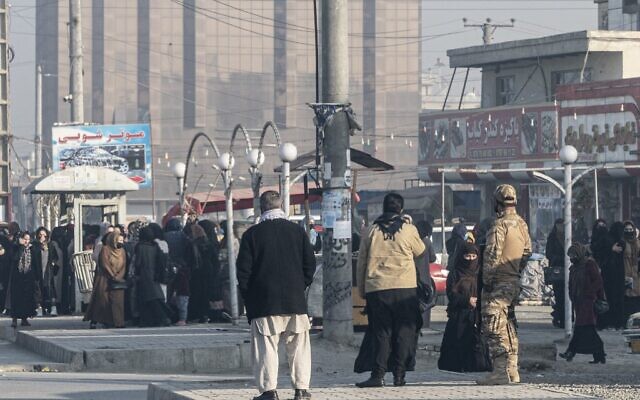
Students sought consolation from friends and family as they digested news of the university ban.
“We all felt like caged birds, we hugged each other, screamed, and cried ‘why is this happening to us’?” Amini, a 23-year-old nursing student in Kunduz, told AFP.
She was with her three sisters –- two already barred from secondary school and another studying for a degree –- when social media exploded with the news of the late-night order.
Members of an activist group called the Unity and Solidarity of Afghanistan Women gathered outside the private Edrak University in Kabul, chanting slogans in Dari.
“Do not make education political!” they said. “Once again university is banned for women, we do not want to be eliminated!”
This is the hope for Afghanistan – men like these students of Nangarhar Medical University refusing to sit exams in protest at women being banned from university. Three university lecturers have also reportedly resigned in protest (from Kunduz, Kabul & a polytechnic). pic.twitter.com/s7HEbp2x8R
— Ramita Navai (@ramitanavai) December 21, 2022
Afghan political analyst Ahmad Saeedi said that the latest decision by the Taliban authorities may have closed the door to winning international acceptance.
“The issue of recognition is over,” he said. “The world is now trying to find a alternative. The world tried to interact more but they (the Taliban) don’t let the world talk to them about recognition.”
Saeedi said he believes most Afghans favor female education because they consider learning to be a religious command contained in the Quran.
He said the decision to bar women from universities was likely made by a handful of senior Taliban figures, including the leader Hibatullah Akhunzada, who are based in the southwestern city of Kandahar, the birthplace of the Taliban movement.
Most private and government universities are closed for a few weeks over winter, although campuses generally remain open to students and staff.
Afghan girls barred from entering their classrooms and devastated by the Taliban ban comfort each other in front of a university in Kabul. #LetHerLearn pic.twitter.com/6LG0vJLMsk
— Habib Khan (@HabibKhanT) December 21, 2022
The decision to bar women from universities came late Tuesday in a terse announcement from Neda Mohammad Nadeem, the Minister for Higher Education.
“You all are informed to immediately implement the mentioned order of suspending education of females until further notice,” it said.
Washington condemned the decision “in the strongest terms.”
“The Taliban cannot expect to be a legitimate member of the international community until they respect the rights of all in Afghanistan. This decision will come with consequences for the Taliban,” US Secretary of State Antony Blinken said in a statement.
UN Secretary-General Antonio Guterres, meanwhile, was “deeply alarmed,” his spokesman said Tuesday.
“The secretary-general reiterates that the denial of education not only violates the equal rights of women and girls, but will have a devastating impact on the country’s future,” Stephane Dujarric said in a statement.
The ban on higher education comes less than three months after thousands of girls and women were allowed to sit for university entrance exams across the country, with many aspiring to choose teaching and medicine as future careers.
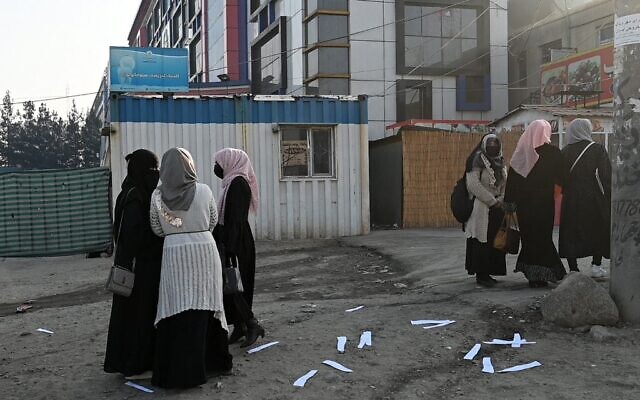
Most teenage girls across the country have already been banned from secondary school, severely limiting university intake anyway.
After the Taliban takeover in August last year, universities were forced to implement new rules including gender-segregated classrooms and entrances, while women were only permitted to be taught by professors of the same sex, or old men.
‘Serious differences’
The Taliban adhere to an austere version of Islam, with the movement’s supreme leader Hibatullah Akhundzada and his inner circle of clerics against modern education, especially for girls and women.
But they are at odds with many officials in Kabul — and among their rank and file — who had hoped girls would be allowed to continue learning following the takeover.
“The latest decision will increase these differences,” a Taliban commander based in northwest Pakistan told AFP on condition of anonymity.
In a cruel U-turn, the Taliban in March blocked girls from returning to secondary schools on the morning they were supposed to reopen.
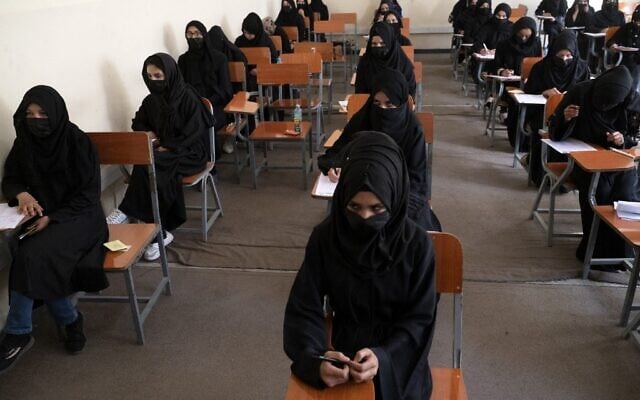
Several Taliban officials maintained the secondary education ban was only temporary, but have wheeled out a litany of excuses for the closure — from a lack of funds to the time needed to remodel the syllabus along Islamic lines.
Since the ban, many teenage girls have been married off early — often to much older men of their father’s choice.
Several families interviewed by AFP last month said that, coupled with economic pressure, the school ban meant that securing their daughters’ future through marriage was better than them sitting idle at home.
International pressure
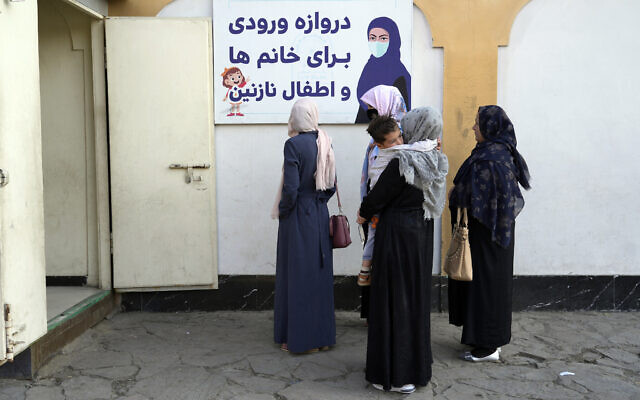
Women have also been pushed out of many government jobs — or are being paid a pittance of their former salary to stay at home. They are also barred from traveling without a male relative and must cover up outside of the home, ideally with a burqa.
In November, women were prohibited from going to parks, funfairs, gyms and public baths.
The international community has made the right to education for all women a sticking point in negotiations over aid and recognition of the Taliban regime.
Afghanistan’s neighbor, Pakistan, said that engagement with the Taliban was still the best path forward.
“I’m disappointed by the decision that was taken today,” Foreign Minister Bilawal Bhutto Zardari said Tuesday on a visit to Washington.
But, he added: “I still think the easiest path to our goal — despite having a lot of setbacks when it comes to women’s education and other things — is through Kabul and through the interim government.”
In the 20 years between the Taliban’s two reigns, girls were allowed to go to school and women were able to seek employment in all sectors, though the country remained socially conservative.
The authorities have also returned to public floggings and executions of men and women in recent weeks as they implement an extreme interpretation of Islamic sharia law.








The Times of Israel Community.