

At Golan crossing reopening, Druze yearn to see family soon
Sole crossing between Israel’s Golan Heights and Syria had been closed for seven years after being overrun by jihadists during the Syrian civil war
 Add ToI as a Preferred Source on Google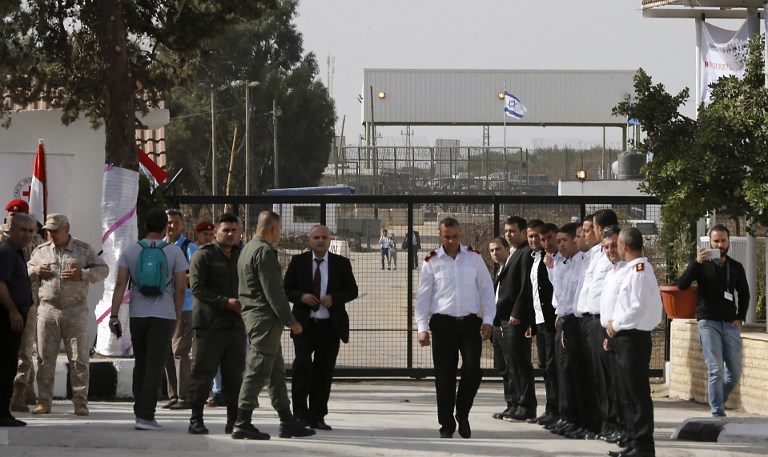
QUNEITRA CROSSING, Syria (AFP) — For seven years, Sheikh Mahmud al-Taweel had been unable to see relatives living on the Israeli side of the Golan Heights.
But with the reopening of the Quneitra crossing Monday, the Syrian Druze hopes to reunite with them soon.
As the Syrian national anthem blasted from loudspeakers at the sole crossing between Syria and the Golan, 58-year-old Taweel couldn’t hide his excitement.
“I haven’t seen my aunt’s children in seven years and I really miss them. I only speak to them on the phone,” he said, dressed in a long black robe and white circular cap topped with dark red.
Israel captured much of the strategic Golan plateau from Syria in the 1967 Six Day War and later annexed it in a move not recognized by the international community.
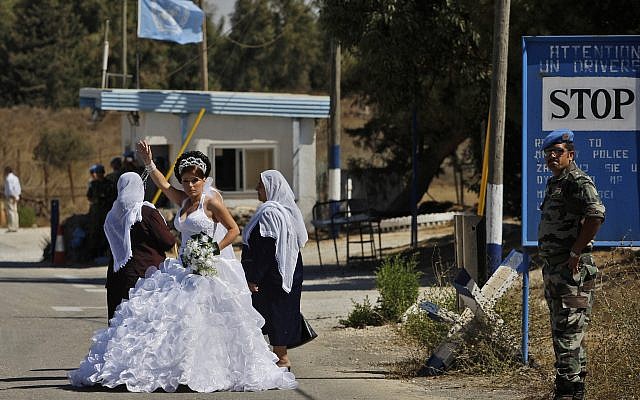
The move cut off relatives from each other, with a UN-patrolled buffer zone slicing down between both sides, and a single crossing point.
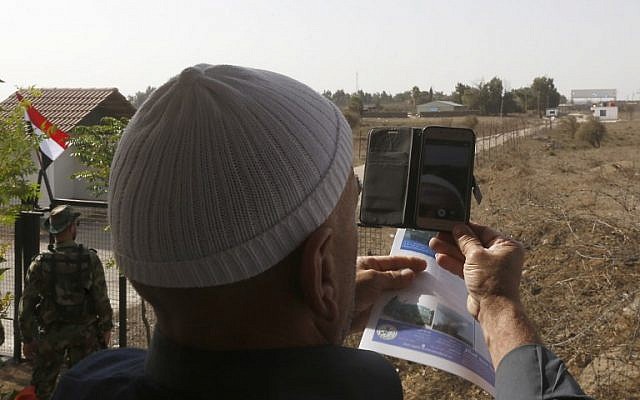
But that passage closed in 2014, three years into Syria’s war, after jihadists of Syria’s former Al-Qaeda affiliate overran the area and the UN force withdrew.
“Our only concern was for this crossing to reopen because there were many families split up between here and there,” Taweel said, standing beside a portrait of Syrian President Bashar Assad.
“There isn’t a family in the Golan that doesn’t have relatives in the motherland,” he said, referring to Syria.
Around 18,000 Druze live on the Israeli side of the Golan. Before Syria’s seven-year conflict, the Druze made up around three percent of Syria’s population.
Before it was closed, the Quneitra crossing was mostly used by the UN force patrolling the buffer zone.
Weddings, apples
But it also allowed Druze living in the Golan Heights to cross over into Syria to study or attend weddings, or sell their agricultural produce such as apples.
On Monday, Taweel was among a handful of Druze men and dozens of others who attended a ceremony on the Syrian side of the crossing.
Dozens of Syrian and Russian security forces — who retook control of the border crossing in July — were also in attendance.
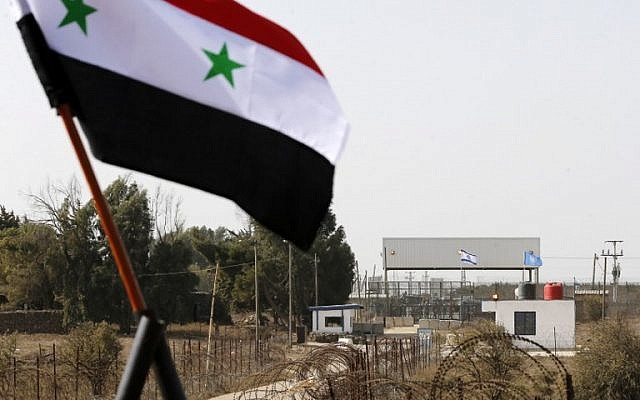
An official raised a large Syrian flag on a mast, just a couple of hundred of meters (yards) away from an Israeli flag and another one of the United Nations.
“I now officially announce the opening of the crossing on the Syrian side,” a Syrian officer said.
He mentioned “requests put in with UNDOF (the UN Disengagement Observer Force)… for Golan families to visit their relatives in Syria”.
The International Committee of the Red Cross says it helped students and pilgrims in the occupied Golan cross into Syria and back again for decades.
It was one of its main activities from 1967 to 2012, when security deteriorated one year into the war, ICRC’s representative in Syria told AFP.
After Monday’s reopening, “we hope to be able to resume our activity in order to help people from the occupied Golan to come into Syria proper and then to go back” again, Marianne Gasser said.
Beside the Quneitra crossing, a large marble plaque marked the event.
“This plaque commemorates the reopening of the Quneitra crossing on 15.10.2018,” it said.
The Quneitra crossing was opened on the same day as the Nassib crossing with Jordan.
On the sidelines of the celebration, Rafaat Hussein, a parliamentarian from Quneitra, said the development signaled new beginnings.
“The opening of the two land crossings… come as a message that the geographical and political map is changing,” he said.




The Times of Israel Community.