

Controversial exhibit portrays NY Orthodoxy’s underbelly
Amid accusations of censorship after Yeshiva University’s last-minute cancelled sponsorship, cutting edge show opens in a Brooklyn gallery
 Add ToI as a Preferred Source on Google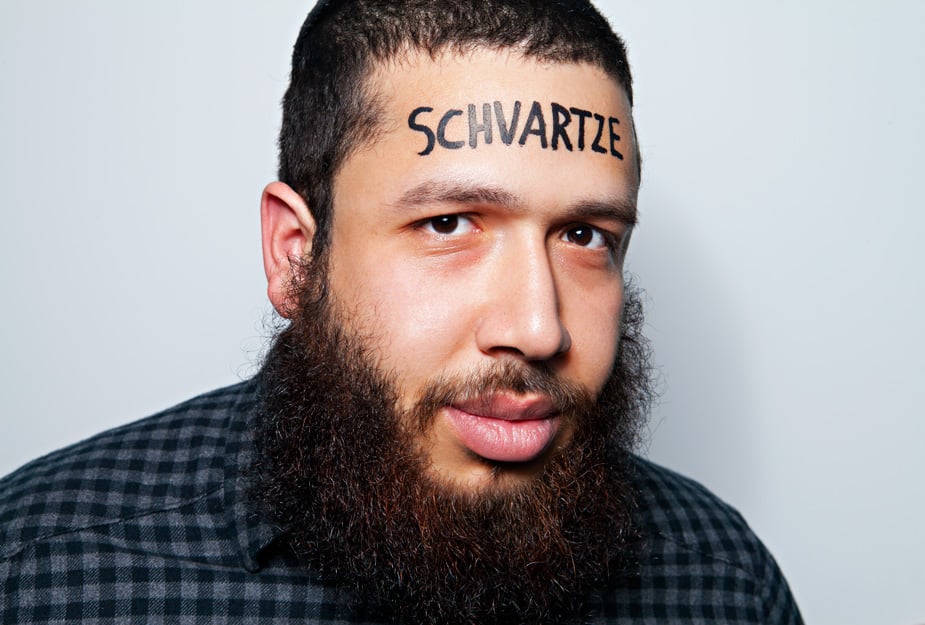
NEW YORK — When you walk into an art exhibition you don’t expect to be insulted, but “Schvartze,” “Fat girl in the room,” “Eating disorder” — these and many other words are at the center of the controversial What I Be: Jews of New York in Brooklyn’s Mister Roger’s gallery.
The exotic body-art project featuring members of New York’s Jewish community is part of the larger What I Be series and serves to highlight individual insecurities by having participants write them on their bodies.
Steve Rosenfield, a California based artist, created What I Be after experiencing an epiphany that encouraged him to engage and share his own insecurities. “I needed to be more honest and open with people,” he writes on his website.
Since creating the What I Be project, Rosenfield has traveled around the U.S. photographing people from all walks of life, giving them the opportunity to open up about their insecurities. But the opportunity to do a project on New York’s Jewish community especially caught his attention.
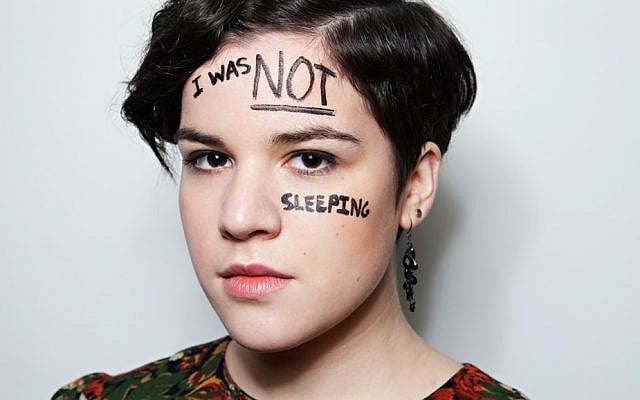
While some of the topics mentioned in the photographs reflect issues common in the Jewish community, others are more disturbing. “I was not sleeping,” are the words written in a picture of Dasha Sominski, a reference to her history of childhood trauma. Or, in another photograph, Ben Faulding is pictured with the word “Schvartze” drawn prominently on his forehead. Faulding, a native of Crown Heights, has a black father and has experienced years of torment from hearing the derogatory epithet thrown around in the ultra-Orthodox Jewish community.
By showcasing their struggles, the What I Be: Jews of New York project has created significant discussion and controversy in the New York and the Jewish world. Initially, Yeshiva University was set to host the project after students collected a petition of signatures. At the last minute, however, the school’s administration pulled out, which led to accusations in the press that YU was censoring the project.
“After close review and much discussion of this event with the student organizers, and taking the sensitivities of all of our students into consideration, we determined that a YU venue would not be able to showcase the project in its entirety,” writes Chaim Nisell, Yeshiva University’s dean of students.
“I first heard about What I Be when I saw his project at Princeton,” says Mati Engel, a student at Yeshiva University and one of the organizers who brought Rosenfield to New York. After seeing the project at Princeton University, Engel sent Rosenfield an email and he immediately expressed interest in the idea of an all-Jewish photo shoot.
After several months of communication, Rosenfield came to New York for a week of non-stop shooting in Washington Heights and Crown Heights, two neighborhoods in New York with considerable Jewish populations.
“Growing up in the Jewish community there are a lot of topics that are ‘taboo’ and forbidden to talk about—that can have a really negative effect on the people dealing with the issues,” says Hannah Rogawski, a sophomore at YU’s Stern College for women. The opportunity to photograph people with their struggles has led to a community-wide conversation about how to deal with them.
“It was shocking for me to see the struggles that many of my students face,” says Gabriel Danieli, a professor of Judaic studies at Yeshiva University. “We can’t ignore the struggles facing the Jewish people — this was a great opportunity to have students express themselves.”
Despite an initial outcry of disappointment over the University’s decision, What I Be’s organizers now agree that it was probably best for the project to precede independent of YU.
“Our intention behind this project was never to bring any harm or negative press to Yeshiva. We just wanted to create a platform for freedom of expression and honesty,” Engel says.
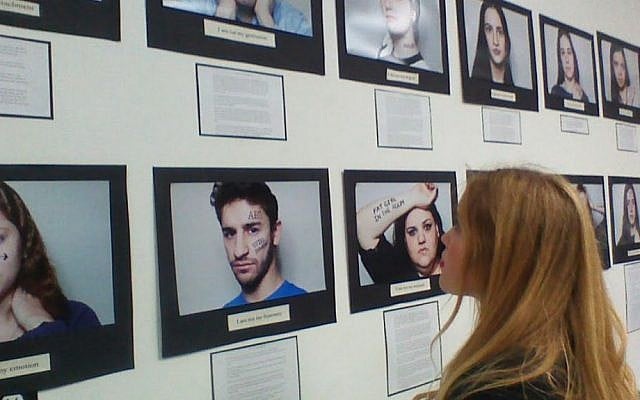
The reception to the project has been overwhelmingly positive. Saturday night several hundred patrons came to witness its unveiling in Brooklyn’s Mister Roger’s gallery. The atmosphere was warm and inviting with music from indie band Swear and Shake and folkie Trevor Hall. The photographs, which can now be seen online, were placed next to lengthy descriptions written by the participants. Some of the participants, standing next to their images, spoke to the audience about their struggles.
The photographs include Jews from a diverse religious spectrum within the Orthodox community. The project strives to invite a broader conversation about the way the Orthodox community as a whole deals with personal struggles.
“We hope that people can take these conversations to their Shabbos tables,” Engel says.
‘We hope that people can take these conversations to their Shabbos tables’
According to Engel, the next step for What I Be: Jews of New York is to begin a more intimate conversation between the participants.
“The project created a community within itself,” says Aaron Portman, an organizer.
Social media and word of mouth have contributed to the project’s popularity in New York Orthodoxy, which is often perceived as insular and unwilling to open up about its internal problems. Rosenfield and the What I Be crew say this is why the project is important.
“We’re aware that stigmas exist, and we hope that this project helps spark open dialogue within the community,” Portman says.









The Times of Israel Community.