

Dozens injured as police scuffle with voters in banned Catalonia poll
Riot police seal off polling stations and seize ballot boxes as Catalans insist on voting in independence referendum against Spanish protests
 Add ToI as a Preferred Source on Google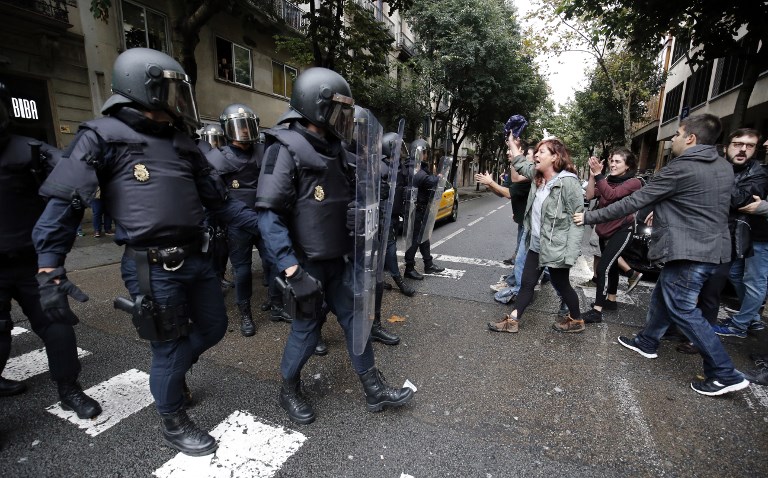
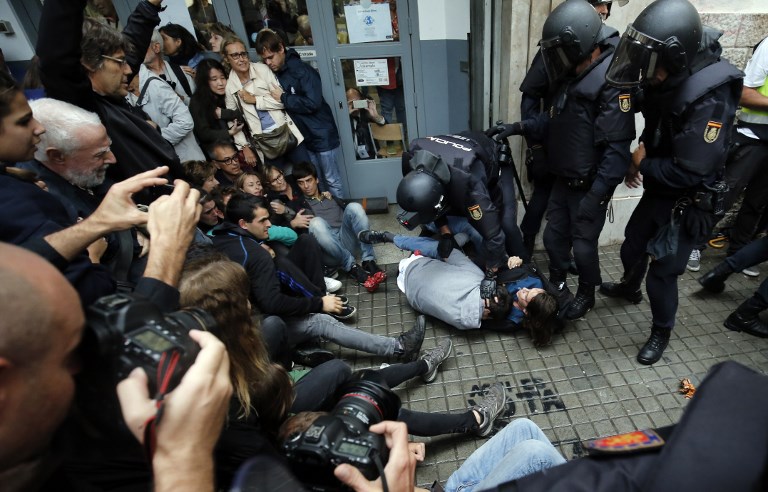
BARCELONA, Spain — Catalonia’s emergency services said Sunday they had treated 38 people who were injured in a police crackdown at polling stations for an independence referendum banned by Madrid.
Thirty-five people were lightly injured, while three others were “more seriously” hurt, they said on Twitter, adding that nine of the injured had to be taken to health centers. “The injuries were mostly bruises, dizziness and anxiety attacks,” they added.
Spanish riot police fired rubber bullets and forced their way into activist-held polling stations in Catalonia on Sunday as thousands flooded the streets to vote in the referendum.
Scuffles broke out as police moved in to seal off polling stations and seize ballot boxes to prevent people from voting across the wealthy northeastern region where more than 5.3 million people have been called upon to have their say on independence from Spain.
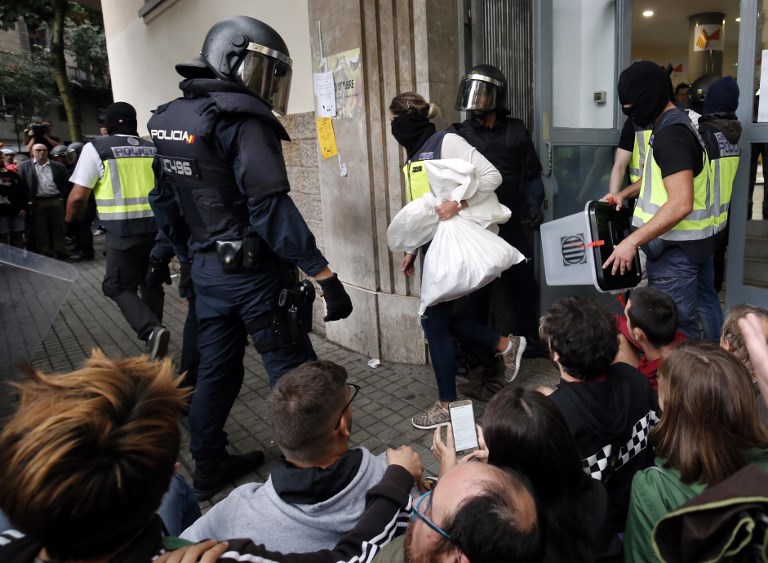
In central Barcelona, riot police forced their way inside a school to seize ballot boxes, charging at demonstrators who were sitting on the ground blocking their way, witnesses said.
Witnesses said police in Barcelona also fired rubber bullets, with one demonstrator showing AFP a leg injury he suffered.
Catalan president Carles Puigdemont blasted the “unjustified violence.”
https://twitter.com/bealxrightt/status/914433645355683840
Riot police also stormed a polling station near Girona, smashing the glass doors of the sports center where Puigdemont was due to vote, then cutting a chain to force their way in.
Inside, they bagged up ballot boxes in black trash bags, wrapping them in police tape before hauling them away.
But the regional government said Puigdemont had managed to vote anyway, tweeting pictures of him casting his ballot in Cornella del Terri, some 10 kilometers (six miles) away.
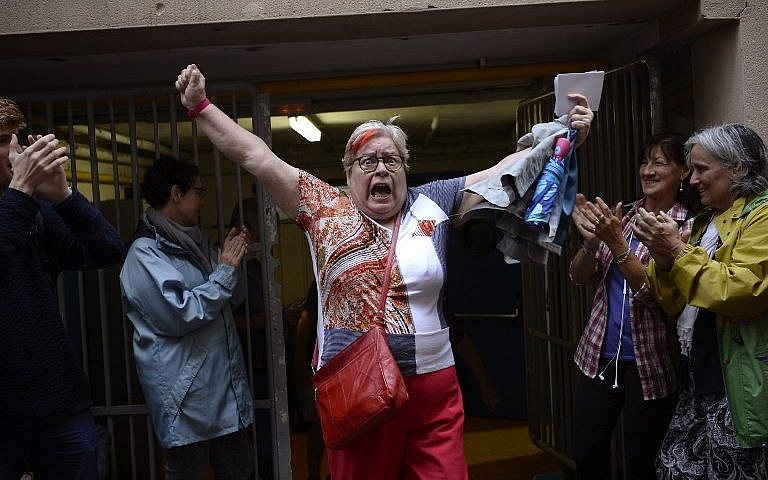
The drama unfolded after a night of tension in which thousands of people, both nervous and excited, had gathered outside polling stations before dawn.
People were injured earlier today in Spain's police raid in Sant Carles de la Rapita. #CatalanReferendum pic.twitter.com/MbHs1ggVfn
— Catalonia International (@CataloniaIntl) October 1, 2017
In Barcelona, rows of police vans were in the streets, their blue lights flashing as officers in riot gear, some carrying heavy bolt cutters, walked through the street as crowds thronged the streets outside a polling station.
“Votarem, votarem!” — Catalan for “We will vote!” — they chanted, many with their hands in the air.
As the rain poured down in Barcelona, students and activists who had spent the night in schools gathered outside with locals to “defend” these polling stations from police as cars drove by honking their horns in support.
Pacific defenders of the referendum being kicked by Spanish police with fury. You have got to watch this… pic.twitter.com/dIIrykpNKb
— Repression@Catalonia ???? (@RepressionAtCAT) October 1, 2017
Catalan television broadcast footage of crowds in towns and villages all over region ahead of the referendum, which has triggered one of the worst political crises in Spain in decades.
Although the region is divided over independence, most people want to vote on the matter in legal, binding plebiscite.
“The government today is in a position to affirm that we can celebrate the referendum of self-determination — not as we wanted, but (it will have democratic) guarantees,” government spokesman Jordi Turull told reporters.
https://twitter.com/kwilli1046/status/914433443693461504
The night before the vote, those occupying the polling stations were told to hand out flowers as a sign of peaceful resistance if the police arrived.
“If someone wants to trouble you, you must remain very calm, smile, practice passive resistance — we have a lot of carnations to hand out — and try to delay them as much as possible from taking away our ballot box,” said Joan Font, a 37-year-old teacher.
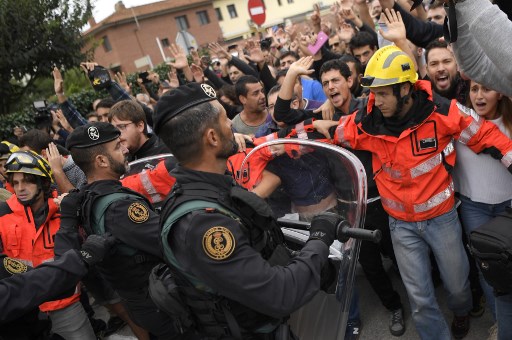
But the interior ministry said it had started seizing ballot boxes, adding police were “continuing to deploy in Catalonia” to stop the referendum.
Spain’s central government is staunchly against the vote, which has been ruled unconstitutional by the courts, and has vowed to stop it from taking place.
On orders of judges and prosecutors, police have seized ballot papers, detained key organizers and shut down websites promoting the vote.
https://twitter.com/ohboywhatashot/status/914434852493152257
The ballot boxes have been at the center of attention during the crisis, with many wondering where they were hidden and how they would be delivered to polling stations.
Whatever happens, Sunday’s referendum result will not be recognized by Madrid, and almost certainly not by the international community.
Spain’s interior ministry on Saturday said police had closed most of the 2,315 polling stations across Catalonia.
But dozens of others were occupied by teachers, parents, students and activists determined to let people in anyway, with schools coming up with innovative ways to stay open over the weekend by organizing activities ranging from kids’ pajama parties to volleyball games.
A regional government source said voting may also happen in other places like health centers and even retirement homes, with people able to cast their ballots at any voting station by using their passports or other identification documents.
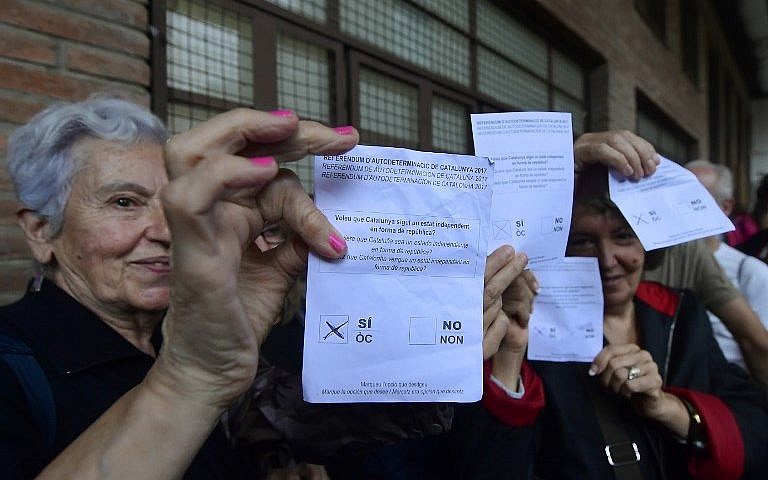
Turull said there would be ballots papers at all polling stations but voters could also use home-printed versions downloaded from the internet.
Earlier this week, the Mossos d’Esquadra Catalan police warned about the risk of “disruption of public order” if people were prevented from casting ballots.
https://twitter.com/ohboywhatashot/status/914434852493152257
Madrid has sent thousands of extra police officers from other forces to Catalonia to stop the referendum from happening.
Spanish Prime Minister Mariano Rajoy’s conservative government has come under fire for limiting its response to the crisis to repeating that the referendum is unconstitutional.
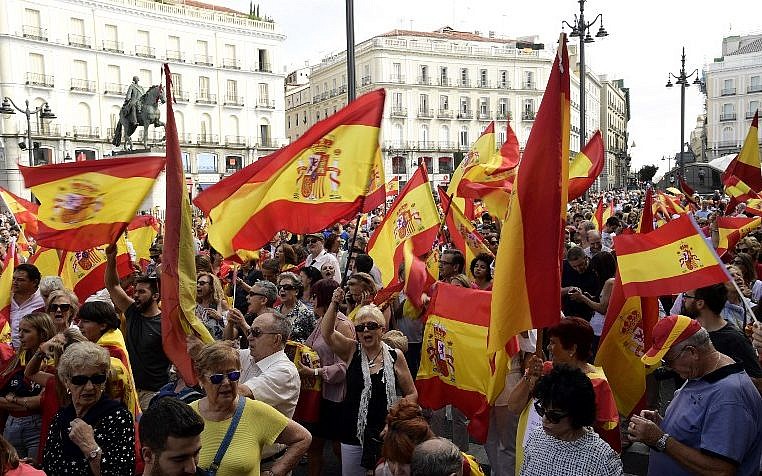
“The state needs to explain the benefits of remaining united, instead of repeating all the time that the referendum is illegal,” said Rafael Castillo, a 59-year-old engineer at a rally in Madrid, wearing a scarf with the Spanish flag around his neck.
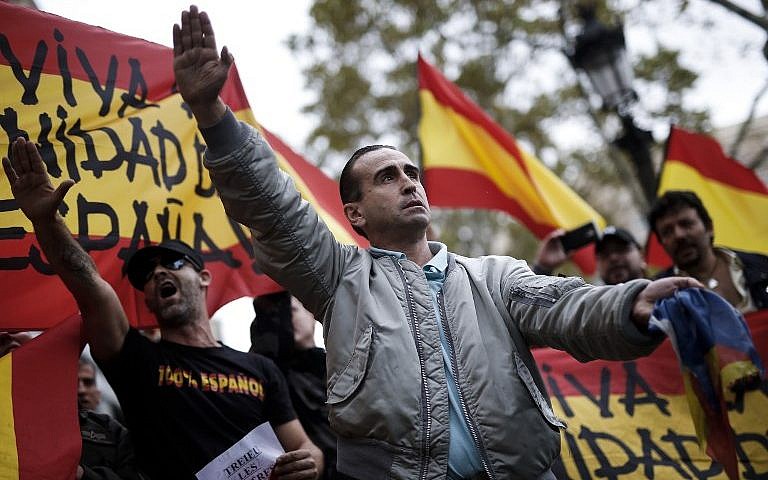
On Saturday, Spain’s foreign minister called the independence referendum a “mockery of democracy,” and accused a radical Catalan faction of “Nazi-like” actions.
In an interview with the Associated Press, Foreign Minister Alfonso Dastis accused the Catalan government of trying to promote an exclusionary system that runs counter to the goals and ideals of the European Union.
Dastis also said the radical CUP party that shores up Catalonia’s separatist-minded government was “adopting Nazi-like attitudes by pointing at people that are against that referendum and encouraging others to harass them.”
He said the CUP has put “out posters with the faces of mayors who are not supporting the referendum” — comparing that to the Nazis’ use of posters and signs to single out the houses of Jews.







The Times of Israel Community.