

Exhibit on iconic designer Dorin Frankfurt looks at the clothes that made the woman
Open through August 15, ‘Fashion Worker: Dorin Frankfurt’ at the Ashdod Museum of Art showcases nearly 50 years of local fashion, manufacturing, and Israeli style
 Add ToI as a Preferred Source on Google
Jessica Steinberg, The Times of Israel's culture and lifestyles editor, covers the Sabra scene from south to north and back to the center
ASHDOD — Dorin Frankfurt spent nearly five decades making clothes in Tel Aviv, building one of Israel’s best-known fashion labels around local production, plenty of black apparel, and practical pieces for Israeli women.
Now, Frankfurt, 74, is the subject of “Fashion Worker: Dorin Frankfurt” at the Ashdod Museum of Art, an exhibit that looks at the ideas and stories behind her work.
“Fashion Worker: Dorin Frankfurt” opened in December 2025 and will now run through August 15, after the 40-day war with Iran closed most public institutions and delayed the museum’s schedule.
The Ashdod museum was an unusual choice for Frankfurt, given that several of Israel’s fashion-focused exhibits have been at Holon’s Design Museum, which hosted the 2022 Alber Elbaz exhibit and “Heroines” in 2025, about the fashion industry during World War II.
Frankfurt chose the Ashdod Museum because she wanted to exhibit at an art museum, not a design museum, and to focus on the ideas and concepts revolving around her work, and not merely the clothing itself, she told The Times of Israel.
The exhibit looks at Frankfurt not only as the familiar designer of an Israeli brand, but also as a manufacturer, employer and cultural figure whose work was always tied to local industry, politics, gender, sustainability and the changing Israeli textile world.
“What’s always important to me is the story behind the designs, and not just looking at beautiful clothing,” said Frankfurt, during a recent visit to her exhibit.

Frankfurt and curator Lisa Peretz spent five years working on the exhibit.
When still considering where to house the show, one of their ideas was to show it at Ashdod’s art museum, which was closed for renovations for two years. It reopened in December with Frankfurt’s exhibit.
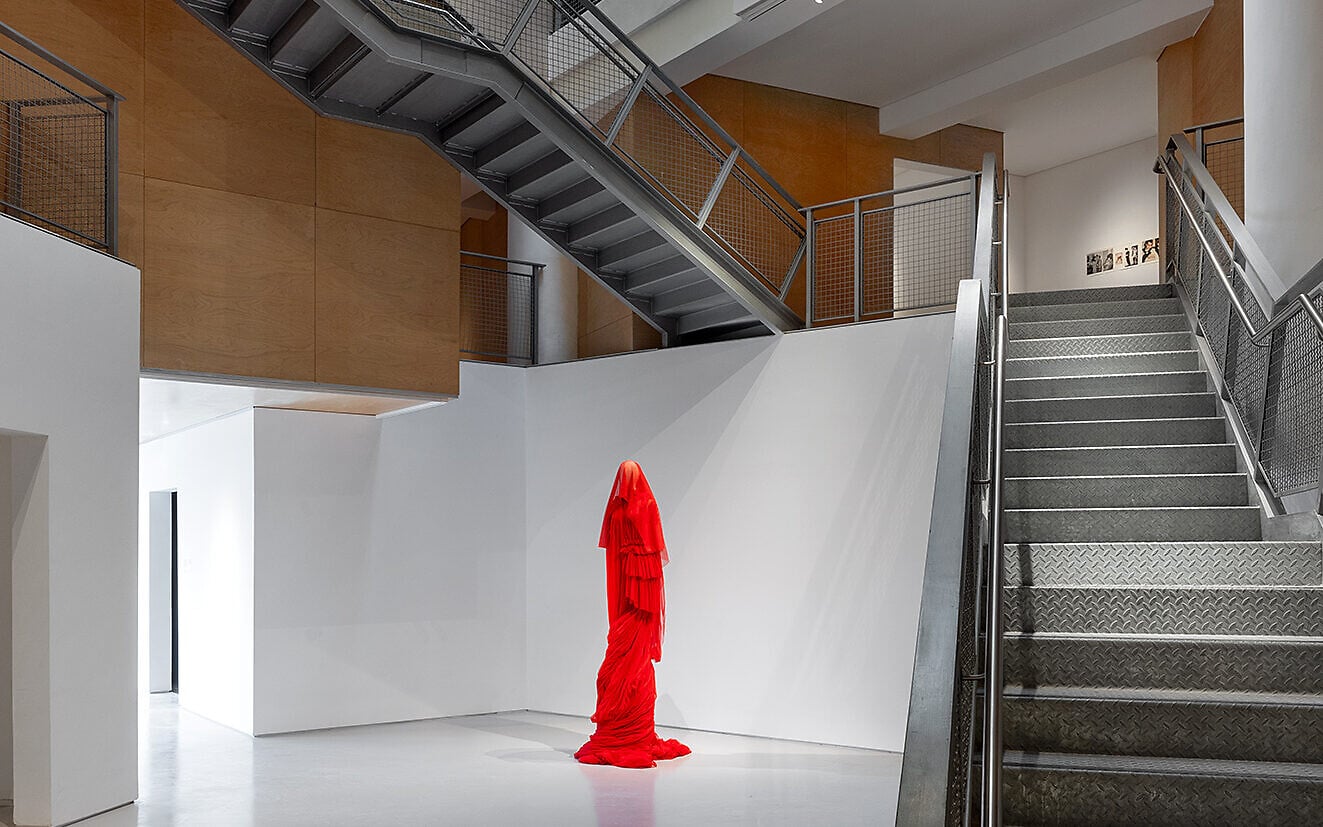
“I love this museum and its structure,” said Frankfurt, referring to the spiral-shaped, three-level design topped with a 43-foot-tall transparent glass pyramid roof that echoes the Louvre.
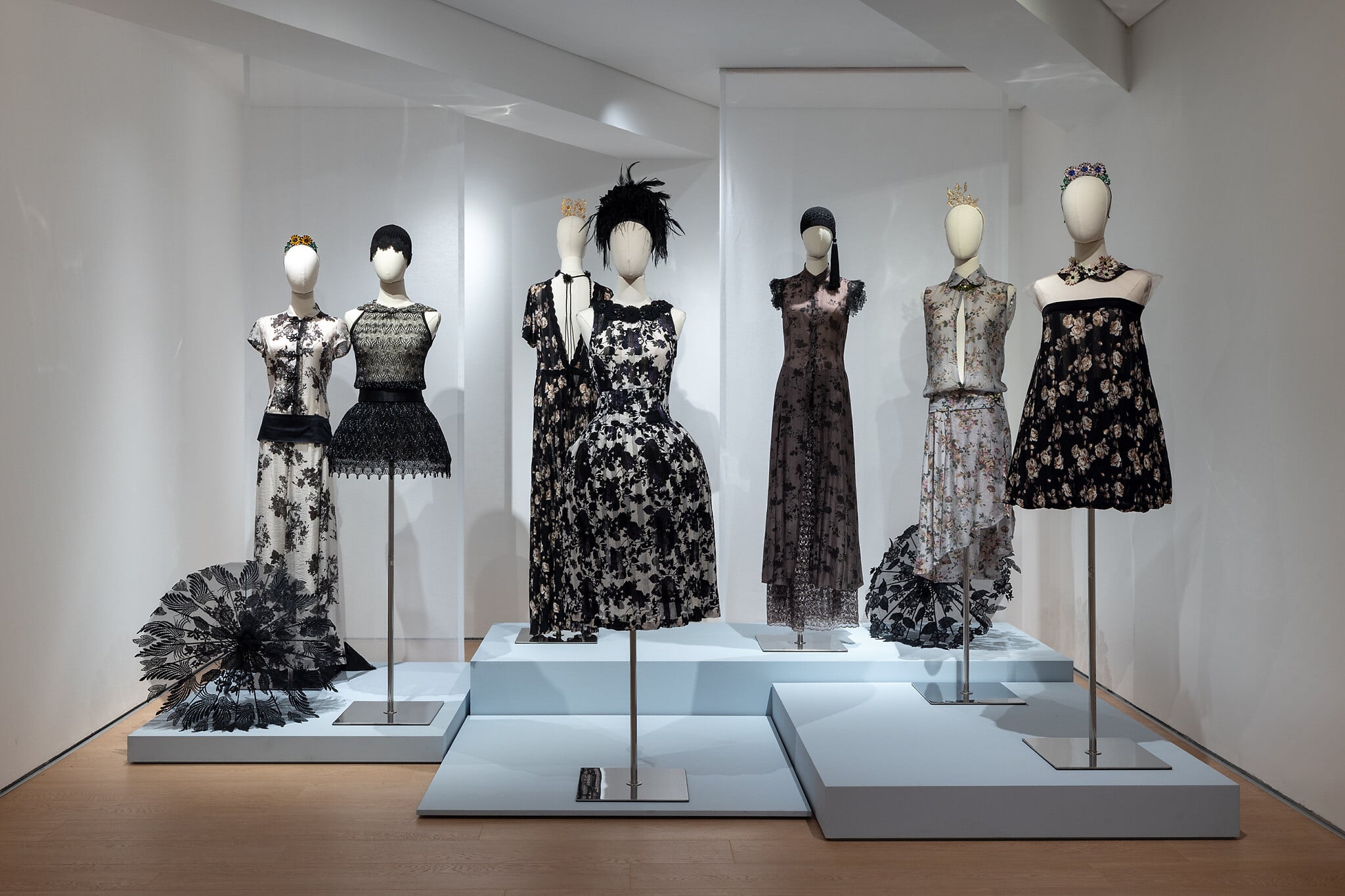
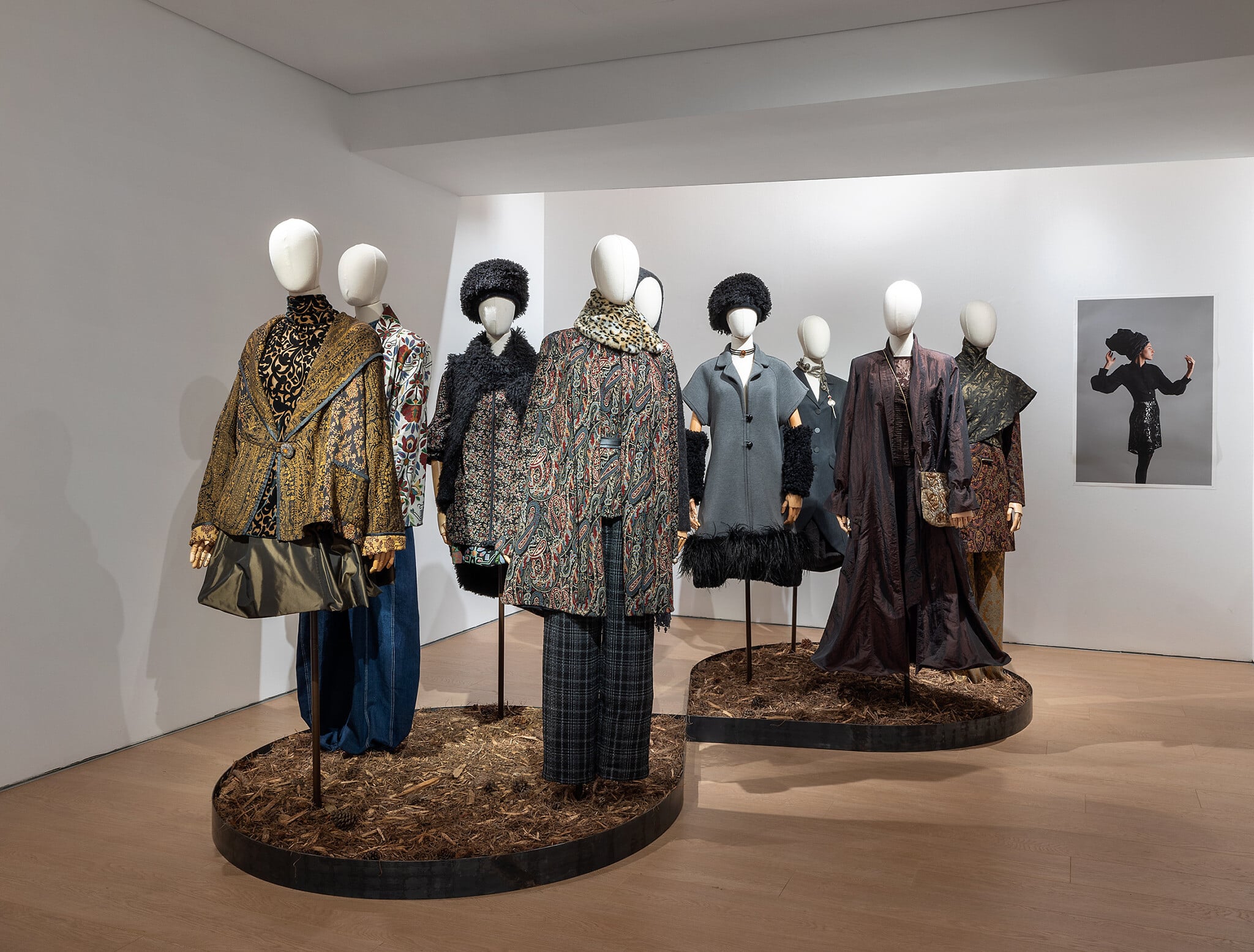
The exhibit, spread over the three spacious levels of the museum, includes many examples of Frankfurt’s work, including her longtime penchant for black — her favorite shade, she said, because it contains all the other colors. Frankfurt, whose once-black hair is now mostly white, has always worn black, along with her familiar stripe of red lipstick.
The exhibition includes around 200 items from the designer’s archive, including garments, accessories, sketchbooks, images from campaigns and fashion shows, photographs, films, video installations, and several previously unseen textile works.
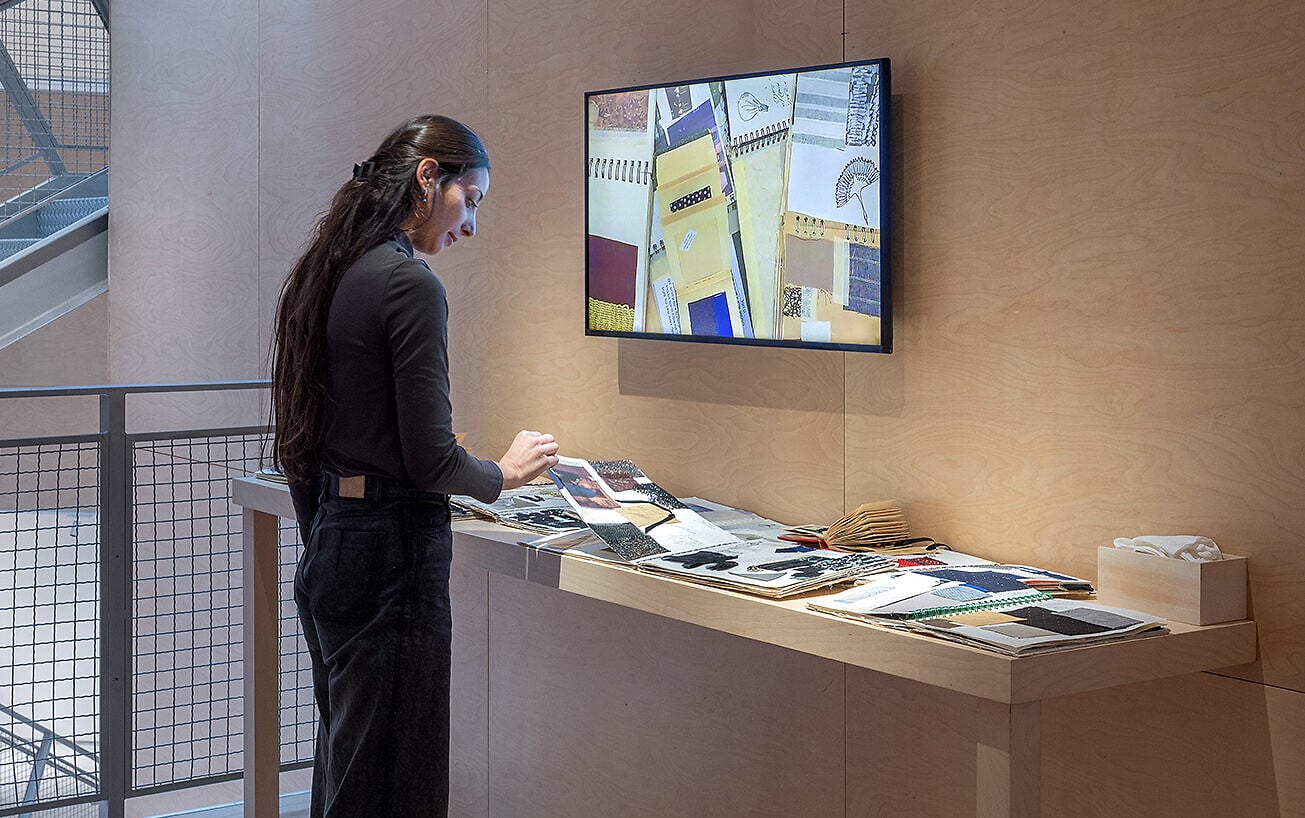
Frankfurt and Peretz divided the exhibit into sections offering a look at the designer’s work through the prisms of gender, craft, personal signature, muses, local industry, roots, sustainability, and inspiration.
Reduce, reuse, recycle
The designer, born in 1951, went to Paris to study fashion and returned home after the 1973 Yom Kippur War, as a recession shook the Israeli economy.
She started out designing by recycling clothing, just as her mother had once recycled old suits into overalls for Frankfurt.
The exhibit includes examples of Frankfurt’s earliest pieces, upcycled from remnants left behind by textile factories that had closed.
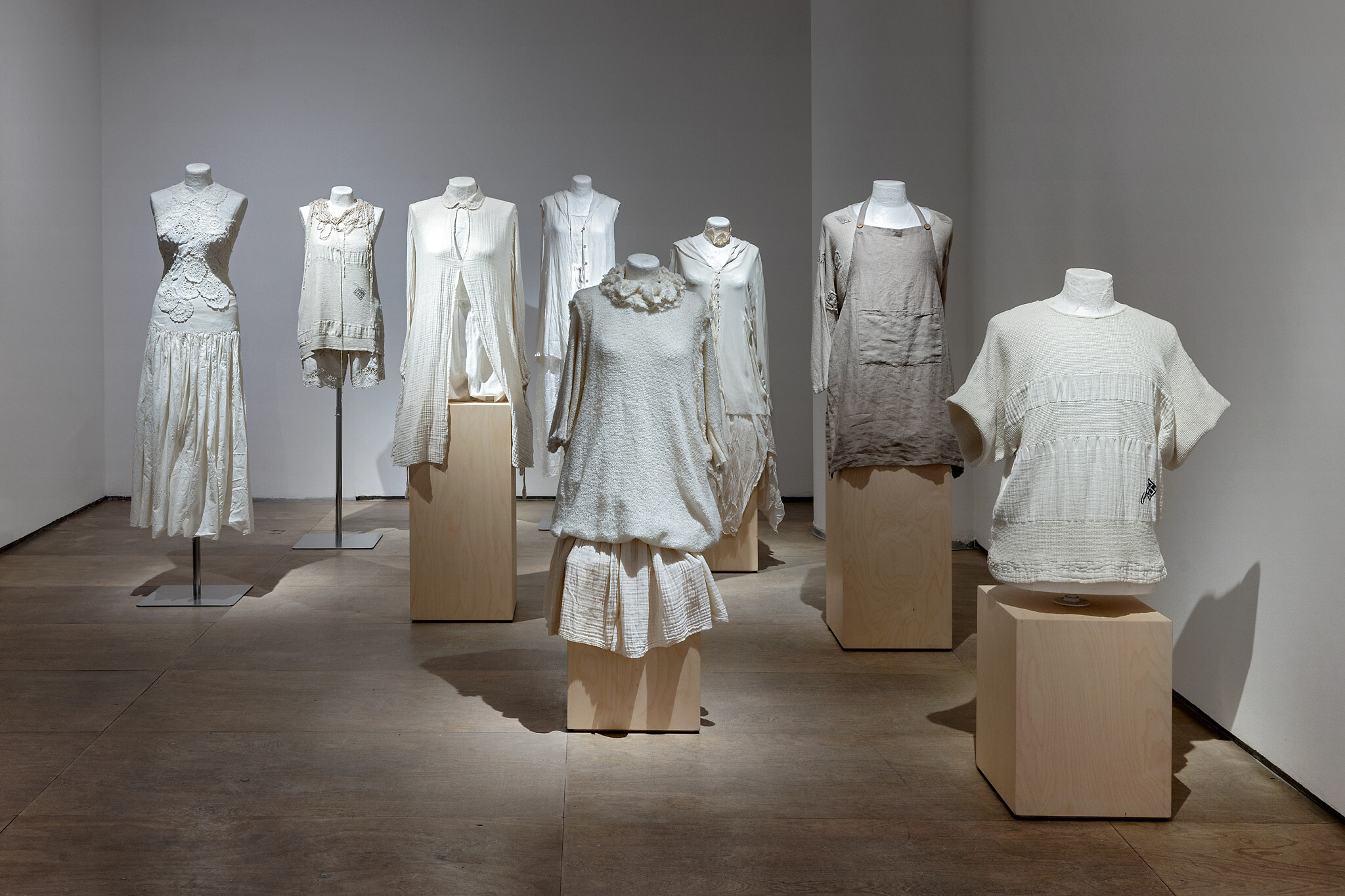
“It’s a way of life that followed me to the factory,” said Frankfurt. “You don’t throw things out.”
The galleries then move into samples of Frankfurt’s more familiar works, from black jackets with all kinds of ornamentation to a room of chiffon dresses in muted florals from her Japanese period.
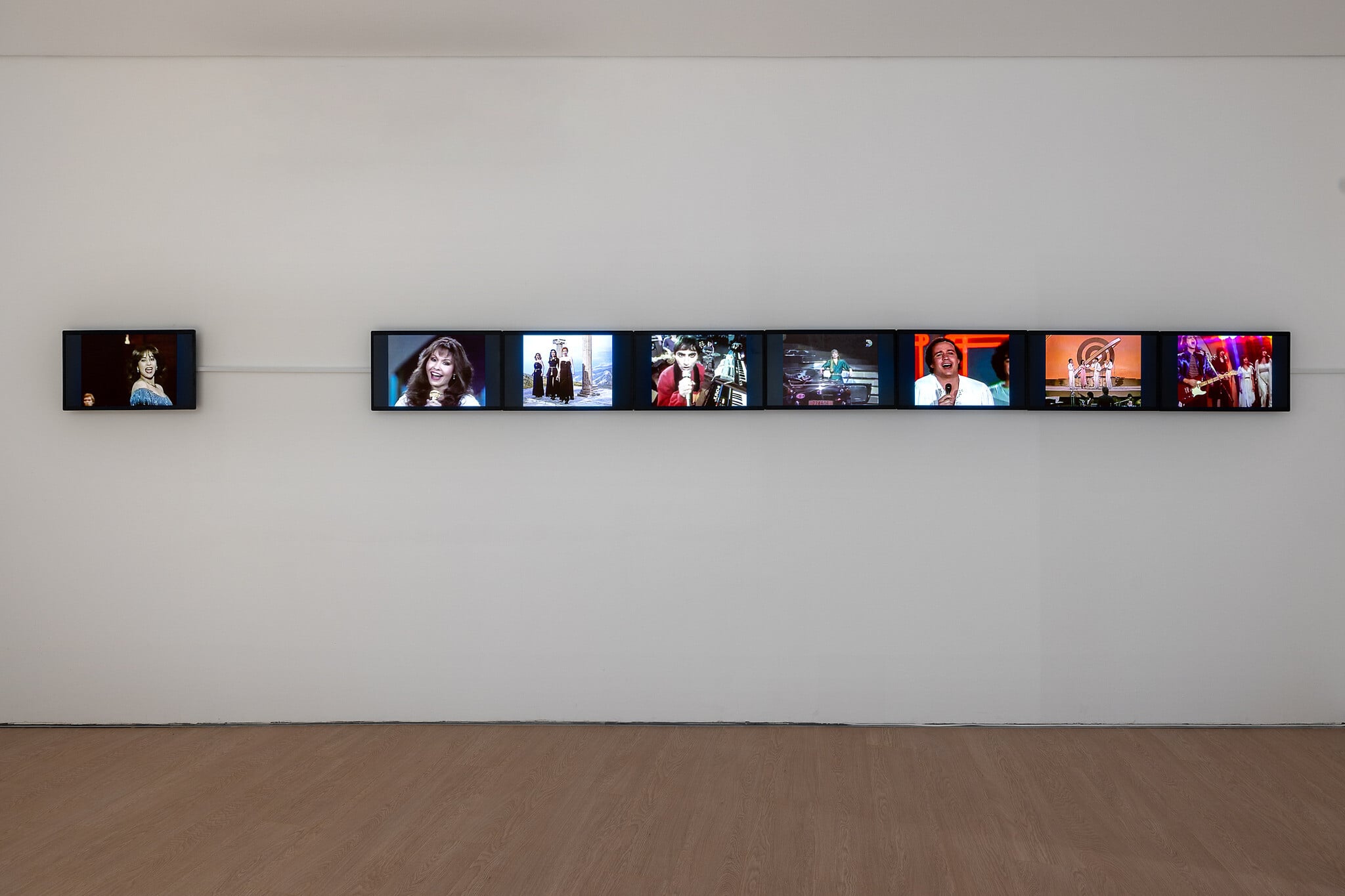
Frankfurt designed outfits for entertainers, including the yellow suits worn by Ofra Haza and her backup singers when they performed at the 1983 Eurovision Song Contest in Munich. The suits evoked the yellow Star of David that Jews were forced to wear in Nazi-occupied Europe.
She also designed the look for Shalom Hanoch’s 1981 “White Wedding” album cover, which appears in a gallery of photographs and videos featuring the singers.
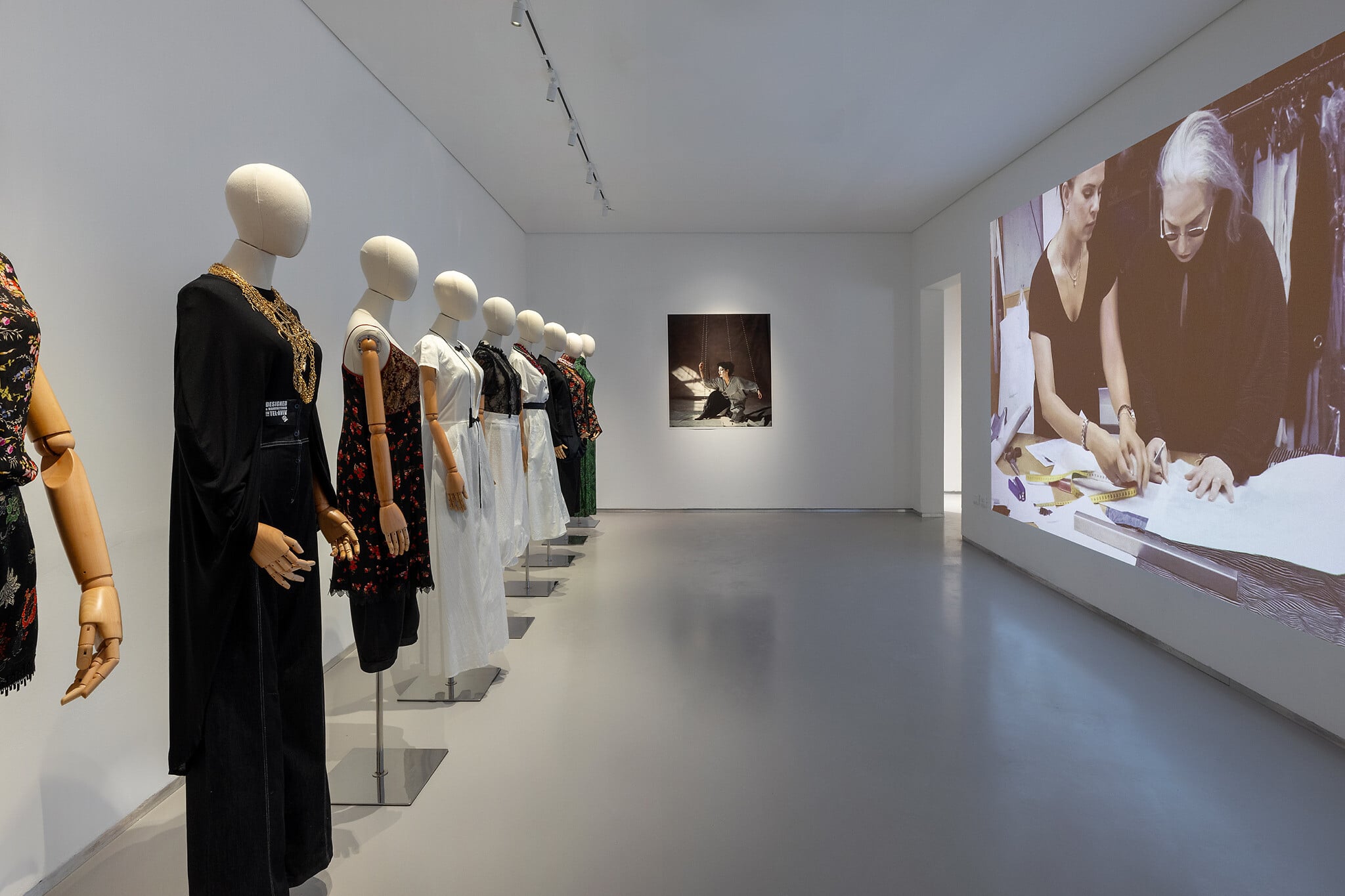
There is a section looking at Frankfurt’s robust retail chain, studio, and factory in south Tel Aviv, as well as the difficulty of deciding to close the business in 2022. Still, the exhibit doesn’t delve deeply into the scale of industry and activity carried out by Frankfurt.
Frankfurt established the Tel Aviv factory with her partner Margit Segal, operating it for 40 years and producing all of her garments in Israel.
Each piece carried the Dorin Frankfurt label, “Designed and manufactured in Tel Aviv.”
At the company’s height, Frankfurt owned 22 stores and had a shop in London’s Covent Garden, designed by architect Ron Arad. She ended up closing it after the birth of her twin daughters.
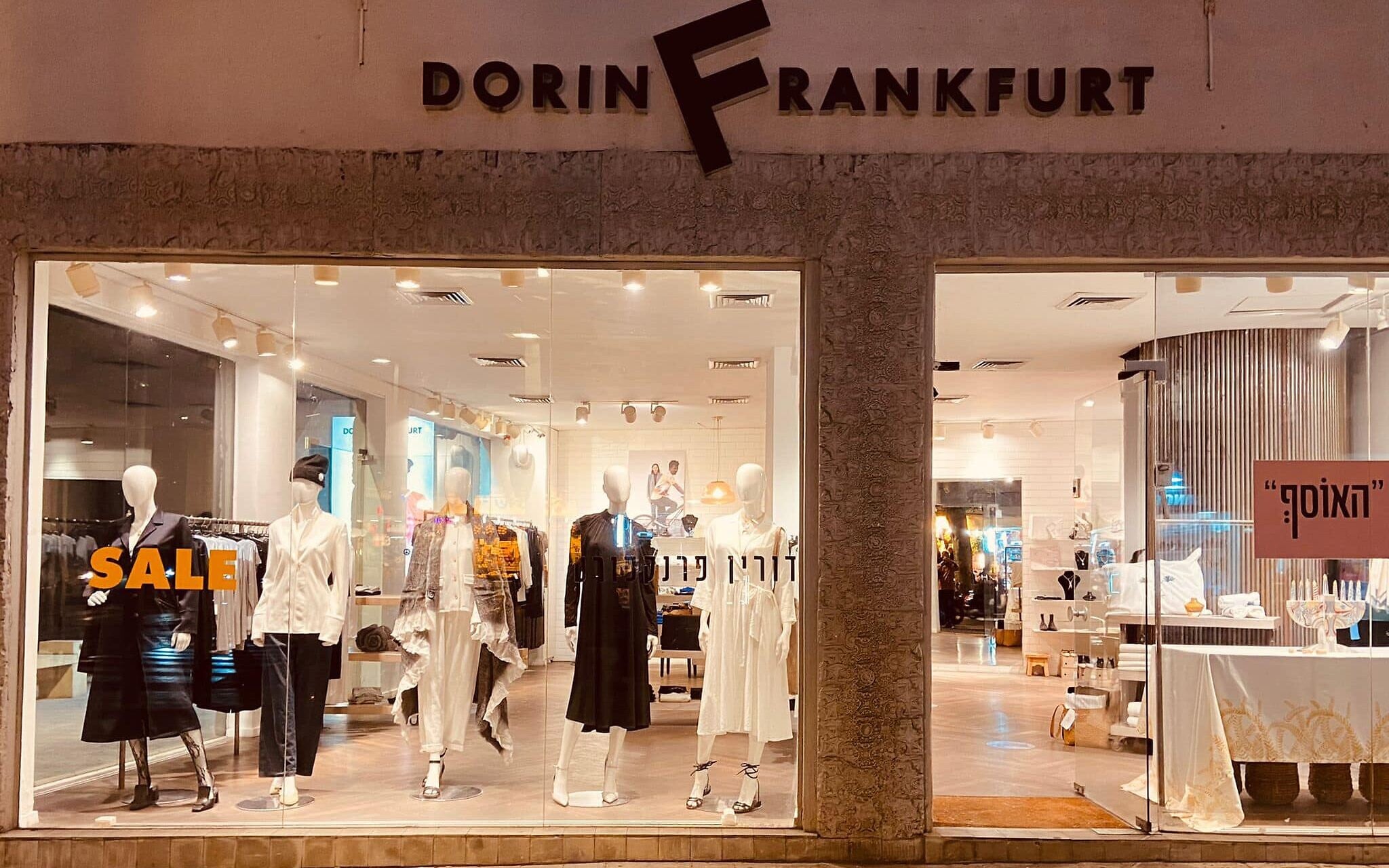
Her Tel Aviv studios remained active until about four years ago, said Frankfurt, when she decided to close the business.
One of her two daughters, Kianne Frankfurt, is also a designer who graduated from Shenkar College of Engineering and Design and has her own clothing line.
Frankfurt said she has found that the exhibit brings back memories and behind-the-scenes stories, forgotten challenges, and entire chapters of her life.
“My journey has always been a combination of ideology, curiosity, and adventure, alongside everyday life at the factory and the clothes I so loved designing and producing,” said Frankfurt.










The Times of Israel Community.