

Government watchdog, opposition politicians slam PM over Marmara incident
The state comptroller’s report on the 2010 flotilla bloodshed points out systemic flaws in the way government decisions are made; opposition echoes the charge
 Add ToI as a Preferred Source on Google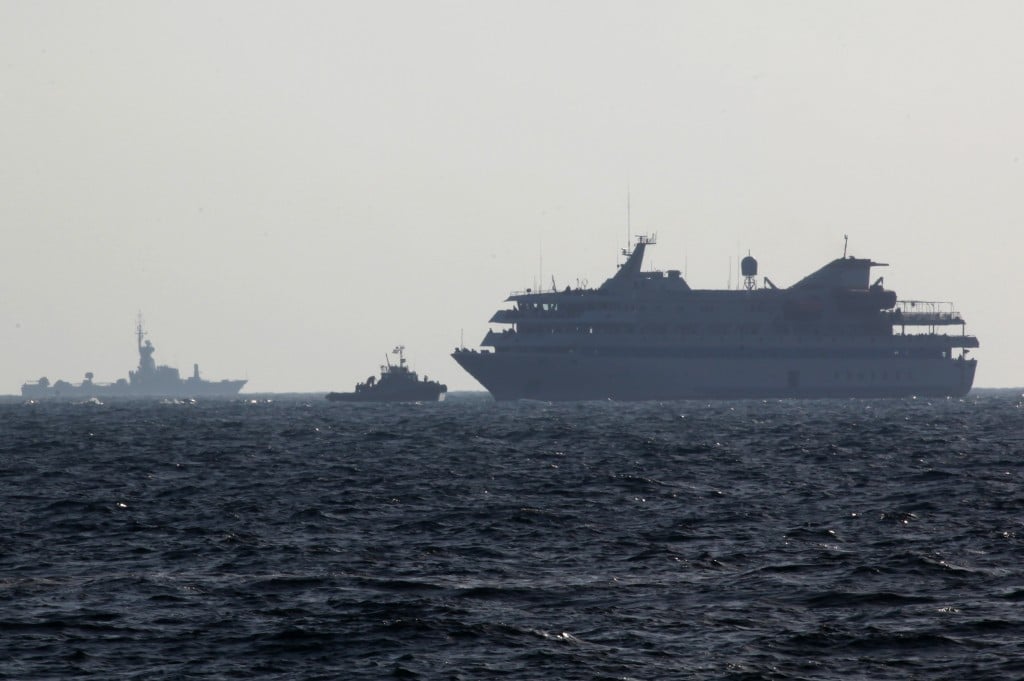
A government watchdog took Prime Minister Benjamin Netanyahu to task Wednesday in a report criticizing his handling of the Turkish protest flotilla that ended in bloodshed two years ago.
Flaws in the way decisions about the flotilla were made reflect broader problems in the way the country is run, the state comptroller, Micha Lindenstrauss, wrote. Israel’s opposition leader, Shelly Yachimovich, echoed the charges in a statement released shortly after the report, calling the prime minister “irresponsible” and “arrogant.”
In a response, Netanyahu brushed aside the report’s findings in a brief statement that gave no indication he believed there were any flaws that needed to be rectified.
Lindenstrauss, whose 153-page report follows two previous official assessments of the same incident, looked into the government decision-making process that preceded the nighttime boarding of the Mavi Marmara by Israeli naval commandos who rappelled from helicopters onto its deck on May 31, 2010. The Marmara was carrying 600 pro-Palestinian protesters who were trying to reach Gaza or to provoke an Israeli response that would bring critical attention to Israel’s Gaza blockade.
The operation, which the military expected to consist of a quick and easy takeover of a ship manned by peaceful protesters, went awry when the soldiers met violent resistance and ended with nine Turkish citizens dead and nine soldiers wounded.
The incident drew a wave of international criticism of Israel and led to a dramatic deterioration in Israel’s already strained ties with Turkey, once an important regional ally. Those ties have not recovered. The flotilla’s aftershocks also succeeded in pressuring Israel to loosen the blockade against the Hamas-ruled Gaza Strip.
The comptroller found “serious faults” in the way the prime minister made decisions leading up to the attempt to halt the Mavi Marmara.
“Decisions were made without staff work that was organized, agreed-upon, recorded and coordinated,” he wrote — despite the fact that both politicians and military officers realized this flotilla was different from the ones that had preceded it. Earlier flotillas had included far fewer passengers, and those that were not allowed to proceed to Gaza had been halted largely without incident.
The prime minister held numerous one-on-one meetings with different officials, according to the report, but did not convene a broad decision-making forum at an early stage and did not sufficiently rely on the National Security Council, which had been established precisely for that type of consultation. As a result, decisions did not take into account all necessary considerations.
Lindenstrauss also criticized the central spokesman’s office known as the National Information Directorate, also under Netanyahu’s direct supervision, for failing to function properly as the Marmara incident unfolded.
“This conclusion by the state comptroller — that the decision-making process was defective — does not mean the results would necessarily have been different, but I see the Turkish flotilla as an emblematic incident from which we must learn about the necessary decision-making process in future events, and not just in future flotillas,” Lindenstrauss wrote.
Strategic evaluations and preparatory work are still done, in many cases, only by the military, which by its nature does not have a broad view of Israel’s strategic and political concerns, and so “the decision-making process in the upper echelon of the state of Israel, in some of the most important matters, is not as good as it could be,” he wrote. The two previous government reports on the Marmara incident have made the same point.
In a second part of Wednesday’s report, Lindenstrauss called for an expanded role for the National Security Council, which was designed in large part to offset the outsize role of the military in deciding strategy.
In a response to the report released Wednesday morning, Netanyahu expressed his “appreciation” for the watchdog’s work while implicitly rejecting his findings.
“In the end result, Israel’s citizens enjoy security the likes of which they have not known for years,” according to a statement from Netanyahu’s office.
The country’s security, the statement said, “is a direct result of responsible administration and determined policy. The security discussions of the past three years are unprecedented in their scope and depth, as anyone who has participated will testify.”
The statement from the prime minister’s office offered no indication that Netanyahu accepted anything in the report or would act to correct any faults pointed out by the comptroller.
In a separate response, the National Information Directorate said it was already correcting many of the problems noted in the report.
Yachimovich, the Labor Party leader and head of the opposition, said she found the results of the report “infuriating.”
“It reveals a smug prime minister making decisions by himself and with Defense Minister Barak in a process that is irresponsible and smacks of excess self-confidence,” she said in a statement posted on her Facebook page. “It is a shame that the price for this complacency and arrogance was paid by the navy commandos, who — unlike the political leadership — acted with bravery, resourcefulness and mutual responsibility.”
The prime minister of the Hamas government in Gaza demanded that Israel apologize to Turkey and lift restrictions imposed on Gaza.
“The condemnation is coming out of (Israel’s) own mouth,” Ismail Haniyeh said in a statement. “We call on the world to pay attention to this report and to bring the occupation state to the international courts over its crimes.”
_________
Aaron Kalman, Raphael Ahren and AP contributed to this report.





The Times of Israel Community.