

Khamenei accuses US, Israel of leading ‘propaganda war’ against Iran
Supreme leader says campaign seeks to ‘contaminate public opinion’ and make people feel pessimistic about the government and the economy
 Add ToI as a Preferred Source on Google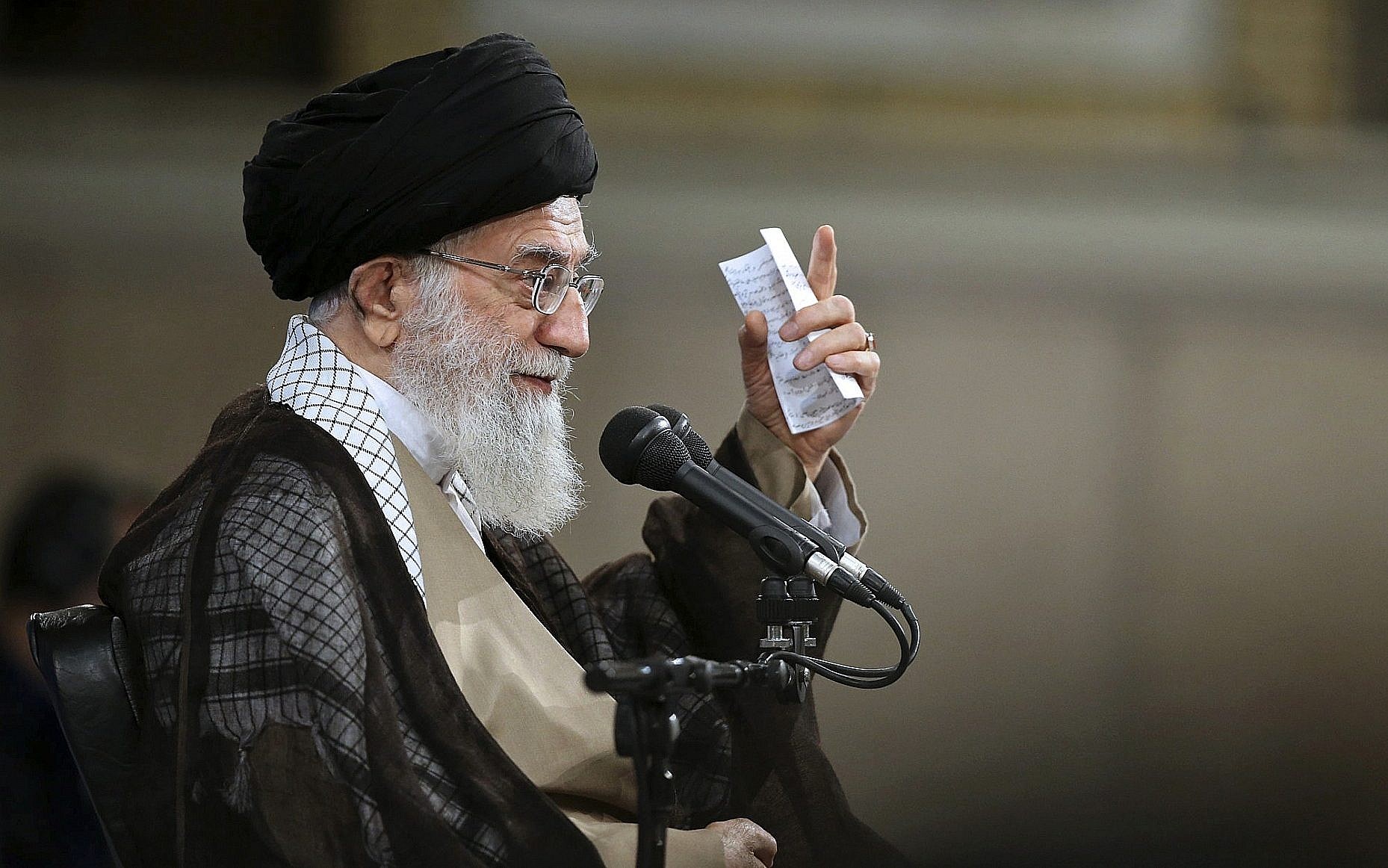
Iran’s Supreme Leader Ayatollah Ali Khamenei lashed out Thursday at the United States and Israel for leading a “propaganda war” he claimed was meant to undermine the internal stability of the Islamic Republic.
In remarks posted to his Twitter account, Khamenei said alongside the “all-inclusive economic war” against Iran, there is also a “crucial propaganda war” that is often overlooked.
His comments came the day after US President Donald Trump said that Iran is “in turmoil” and worrying about its survival as a result of Washington’s pressure on Tehran to force it into renegotiating a stricter nuclear weapons agreement.
“Based on our intelligence, the US and Zionist spy agencies, financed by the super-rich of our region, have set up an organization for this media war and are seriously planning and trying to infect the advertising space and the minds in our community,” he said, in a translation provided by Reuters.
“The goal of this media war is to create anxiety… and pessimism among people toward each other and the authorities, and to exaggerate economic problems in the minds of the public.”
Despite this, he said Iran was on its way to fulfilling the “concepts, ideals and truths” of the 1979 revolution that brought the country’s Islamist regime to power.
Today the Islamic Republic is facing an all-inclusive economic war which is directed by a war chamber, carefully and persistently. However, alongside this war, there is a crucial propaganda war going on which is often neglected. pic.twitter.com/TP0soyzv8c
— Khamenei.ir (@khamenei_ir) September 6, 2018
On Wednesday Trump said he was willing to meet with Iranian President Hassan Rouhani on the sidelines of the UN General Assembly.
“It’s possible, anything is possible,” Trump told reporters in the Oval Office when asked about the possibility of a face-to-face with Rouhani during the gathering later this month.
“We’ll see what happens with Iran. Whether they want to talk or not, that’s up to them, not up to me,” said the US leader, who decided in May to pull out of the 2015 nuclear deal between world powers and Iran.
“Iran is a much different place than when I took over the presidency,” Trump added, describing the country as “in turmoil.”
“When I took office it was just a question of how long until they took over the entire Middle East. Now they are just worrying about their own survival as a country.”
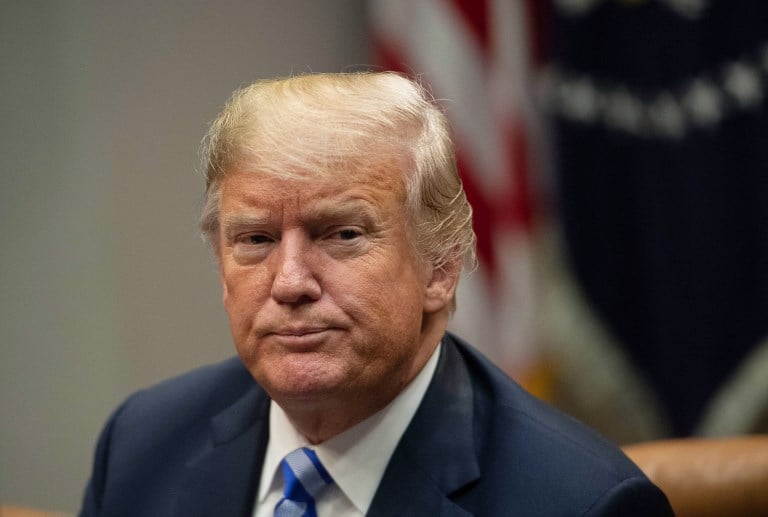
Trump is due to lead a September 26 meeting of heads of state of the UN Security Council, with the goal of ramping up pressure on Tehran over its alleged violations of council resolutions.
The US is seeking to renegotiate a stricter nuclear deal with Iran after Washington in May withdrew from a 2015 international agreement saying it failed to do enough to prevent Tehran from acquiring nuclear weapons and stop its ballistic missile program.
Israel, which had openly opposed the 2015 pact limiting Iran’s efforts to obtain atomic weapons, played a role in convincing Trump to walk away from the agreement, known as the Joint Comprehensive Plan of Action. Days before Trump pulled out, Israel’s Prime Minister Benjamin Netanyahu showcased a cache of over 100,000 secret Iranian files the Mossad spy agency spirited out of Tehran and which he said detailed Iran’s nuclear weapons development program.

Iran dismissed Netanyahu’s claims as “baseless accusations” and “propaganda” but Trump cited the stolen archive when he announced his withdrawal from the JCPOA.
With the United States now holding the presidency of the Security Council, UN Ambassador Nikki Haley on Tuesday said the aim was to put further pressure on Tehran.
Washington has sought to build up international pressure on Iran after reimposing tough, unilateral sanctions on August 7 and setting a November 5 deadline for halting Iran’s oil exports.
Iran’s economy has been battered as countries wrap up trade ties in fear of violating the US sanctions which Washington said would be strictly imposed.
Since the US pulled out of the deal, the Iranian rial has slipped to record lows, which has consequently led many in the authoritarian country to explicitly call for an end to the rule of Iran’s Islamist leadership.
Protests have sprung up in several major cities including Isfahan, Shiraz, Mashhad and Tehran, driven by concerns over the economy as well as wider anger at the political system. Videos have shown demonstrators cry out against “the dictator” in reference to Khamenei.
The numerous protests are a continuation of sorts of a nationwide anti-government movement that started gaining ground in late December and continued protesting sporadically throughout the year.


The Times of Israel Community.