

Israeli site pioneers do-it-yourself TV productions
Showbox’s 3D virtual television studio has everything a would-be broadcaster needs to get their message out to the world
 Add ToI as a Preferred Source on Google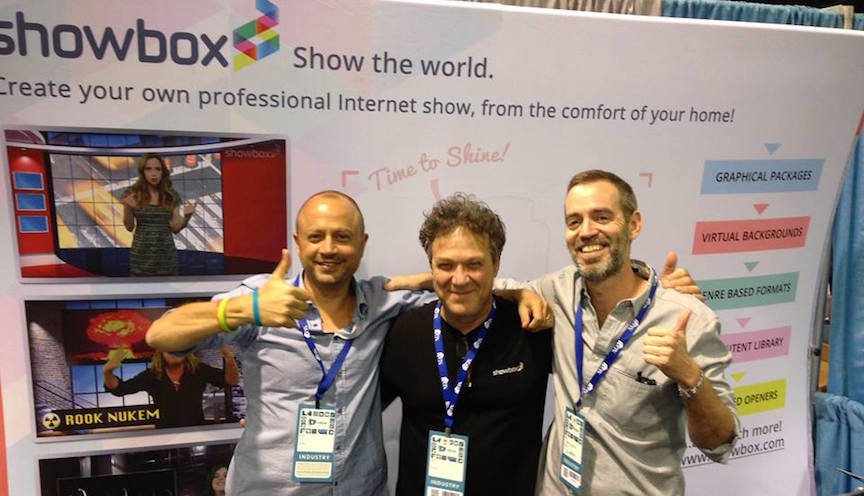
While anyone with a webcam can take video of themselves and upload it to YouTube, no one would mistake a “video selfie” for a real TV or movie. Now an Israeli site offers the tools to produce a real show – something people will actually want to watch – without a studio, props, music, opening music, and all the rest of the elements of a traditional production company.
Showbox.com, an Israeli-developed website, has the potential to remake the TV business – good enough for French TV network Canal+ to sign a deal with Showbox to provide its producers with the site’s 3D tools for development of content, allowing professionals access to sophisticated tools without having to invest a franc.
Canal+ isn’t the only TV network that sees Showbox’s possibilities. “We’ve been talking to a lot of TV people, and a European group is developing a professional web network based in a cafe that will allow professionals to use our tools to produce top-quality TV shows,” Effi Atad, CEO of Showbox, told The Times of Israel. “Those tools will allow not just professionals, but anyone to produce quality programs.”
There’s nothing more studied than television ratings – advertisers spend a lot more on popular programs – and study after study show network television viewership is falling, while on-line viewing is rising. The top YouTube videos get hundreds of millions of views. Korean one-hit wonder Psy recently hit 2 billion views with his ‘Gangnam Style’ music video. While many of the most-watched videos are music videos, there are also many “fun” videos, showing kids doing dumb things, cute animal tricks, and the like.
For those who have something they want to show the world, Showbox has the tools to make them look good. Similar to other do-it-yourself platforms like Wix, Showbox offers a “3D virtual studio” with a rich set of drag and drop tools to allow for a perfectly produced video. “Users choose a template – fashion, shopping, etc. – add the opener, theme, background, stage set – everything they need for a good-looking production,” said Atad. “The video is done in minutes, and users can upload it to their own YouTube channel, or put it onto our on-line gallery. It’s all done in the cloud, so there is nothing to download.”
In addition, Showbox offers a large content library users can insert into their productions, free of royalties. A wide variety of video clips, music, sketches, and more are all available, allowing users to enhance their production with interesting and fun additions. Showbox, which was established in 2012, is in closed beta and will be publicly available only by the end of the year, said Atad, but it already has thousands of users. The app has attracted the attention of many people in the TV business, and Showbox’s investors include some of the top names in the television and production industry.
One of the site’s virtues is its democratization of video production – and revenue, said Atad. “With our platform, anyone – a grocery store, a doctor, a freelance writer – can start their own TV channel, advertising their services, or getting ads from others and earning money from their work. A lucrative income stream that was previously open only to monied networks is now available to everyone.” The tools to enhance production values, said Atad, will improve a video’s quality, and hence its reach, giving Showbox users much more opportunity to attract viewers than a plain-vanilla YouTube upload.
The revenue model, he explained, is a “freemium” one, with basic services available free, and advanced ones (a larger array of tools, more content choices, longer programs) available for a fee.
At a panel discussing the new era of television at the Go4Israel conference, sponsored by the Cukierman and Co. Investment House, Atad said that Israel has always been known for its technological savvy – and in recent years, international broadcasters have flocked to Israel to buy up local formats for productions in their own countries. Among the recent international hits that are based on Israeli formats are HBO’s “Homeland” and “In Treatment,” NBC’s “Who’s Still Standing?” game show, and “Rising Star,” which was sold to ABC in the US as well as to several European broadcasters.
“We have a lot of experience in this part of the world in storytelling – just look at the Bible,” said Atad. “But beyond just stories, Israeli productions, which are of course less lavish than their Hollywood counterparts, are cheaper to make. The formats are less expensive to develop, and nowadays, even large broadcasters are suffering from small budgets, so they see Israel as a place to not only get technology, but content as well.” In a sense, Showbox is an extension of that trend, with Israeli-developed technology bringing down the cost of production to next to nothing, while the Showbox tools and content provide inspiration to users to develop their ideas into on-line broadcasts, said Atad.
Showbox, said Gil Picovsky, head of media technology and telecom and a managing director at Cukierman, came along at just the right time. “Because of YouTube, the entire value system has changed,” he said. “In the past, there were limited places where you could watch a show, but now, with mobile, smart TVs, computers, and many other devices, it’s all about individual choice. Showbox is providing the tools that allow content creators to produce high-quality products at a very low cost.”
The Canal+ deal, signed in September, is a sign of things to come, said Atad. Under the deal, Showbox will provide its virtual 3D studio and workflows for formats including news, cooking shows and travel programs. The site’s tools will be available to French web content creators via a “Showbox by Canal+” website, and for a fixed period, Showbox’s facilities will be reserved exclusively for Canal+’s multichannel network contributors. “To work closely with a world-class video group that has achieved great things in the MCN market is especially exciting,” said Atad. “We hope together to have a real impact on video creation in all francophone countries.”










The Times of Israel Community.