

Israeli transgender ref recalls trailblazing journey to world soccer
Sapir Berman, 31, struggled with her secret all her life until deciding to come out during COVID lockdown, became first transgender woman to officiate an international match in March
 Add ToI as a Preferred Source on Google
AFP — Israeli referee Sapir Berman beamed as she recalled the moment her “dream came true” earlier this year, when she became the first transgender woman to officiate an international soccer match.
“I always wanted to be a woman, and I always wanted to be a football referee — and then those two came together and fused into one dream that just exploded with joy,” the 31-year-old told AFP.
“It’s an uplifting, powerful feeling — the feeling that I’m doing the right thing, that I’m choosing myself, that I’m showing the world it’s possible.
“Since I was five, I remember wanting to be a woman, wanting to be a girl. And when I started playing football, I realized that the dream of being a woman and playing football didn’t go together,” she said.
“So I decided to hide who I was and just keep playing football. I hid myself for almost 26 years.”
Berman grew up in a soccer-loving family, playing as a defender for around 10 years from around the age of five.

When she realized her professional ambitions were not working out, she joined the referees association and worked her way up to preside over men’s matches in the Israeli Premier League.
But all the while, Berman felt she was hiding her innermost secret and was even frustrated during the initial stage of her hormone therapy.
It was when the COVID-19 pandemic hit and Berman was plunged into lockdown that she began reflecting on the future.
“I asked myself: ‘Is this what life will look like? Is this where it’s going?'” she said.
“I decided to reveal myself.”
Berman initially feared her career in soccer was over, but said her brother suggested she try to make it work.
‘A lot of questions’
England’s Lucy Clark became the first transgender woman in the world to referee a match in 2018, in the third tier of English women’s soccer, but has never officiated internationally.
When Berman officiated the Women’s Under-17 Euro qualifier between Northern Ireland and Montenegro in Belfast in March, it was a first for European soccer, according to UEFA.
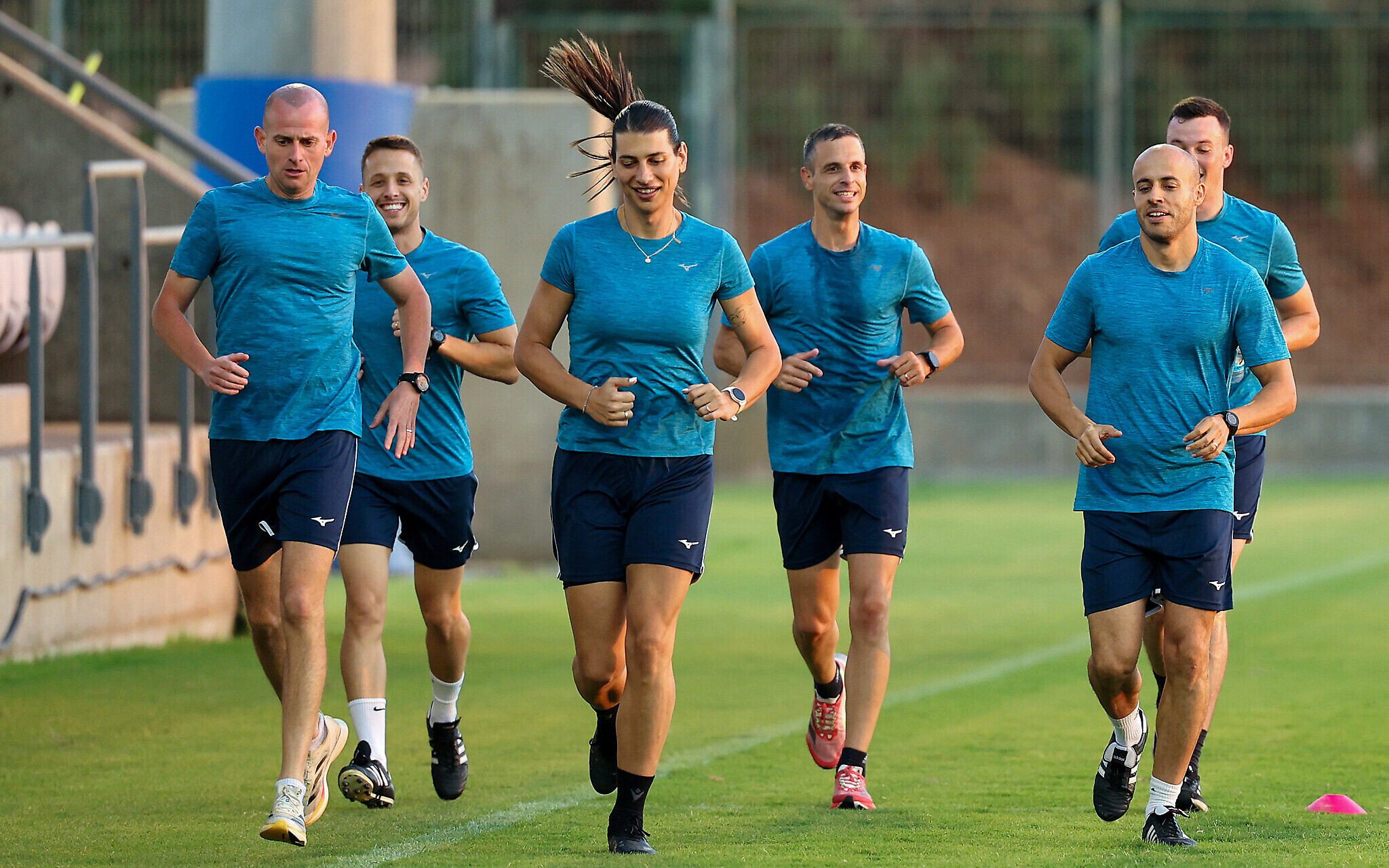
Berman said the journey was not always easy, despite great support and professionalism from Israel’s referees association.
“There were a lot of questions, and a lot of moments where they said: ‘We don’t know what to do.’ And I also didn’t know what to do, what it involved, what to expect, or how the process would go,” she said.
Berman said that when she began hormone therapy as part of her transition, she initially felt resentful towards her body.
“Outside the field, I felt amazing. On the field, I felt that I destroyed my career,” she said.
She failed two fitness tests and was moved down a league, but with the help of a sports psychologist and “a lot of trial and error,” she made her comeback.
Berman received her international badge earlier this year and dreams of refereeing a match in the Champions League, the European Championship, or the World Cup.
‘Different layers’
Transgender participation has become a hot-button issue as different sports try to balance inclusivity with ensuring fair competition.
Earlier this year, England’s Football Association announced that transgender women would no longer be allowed to play in women’s soccer.
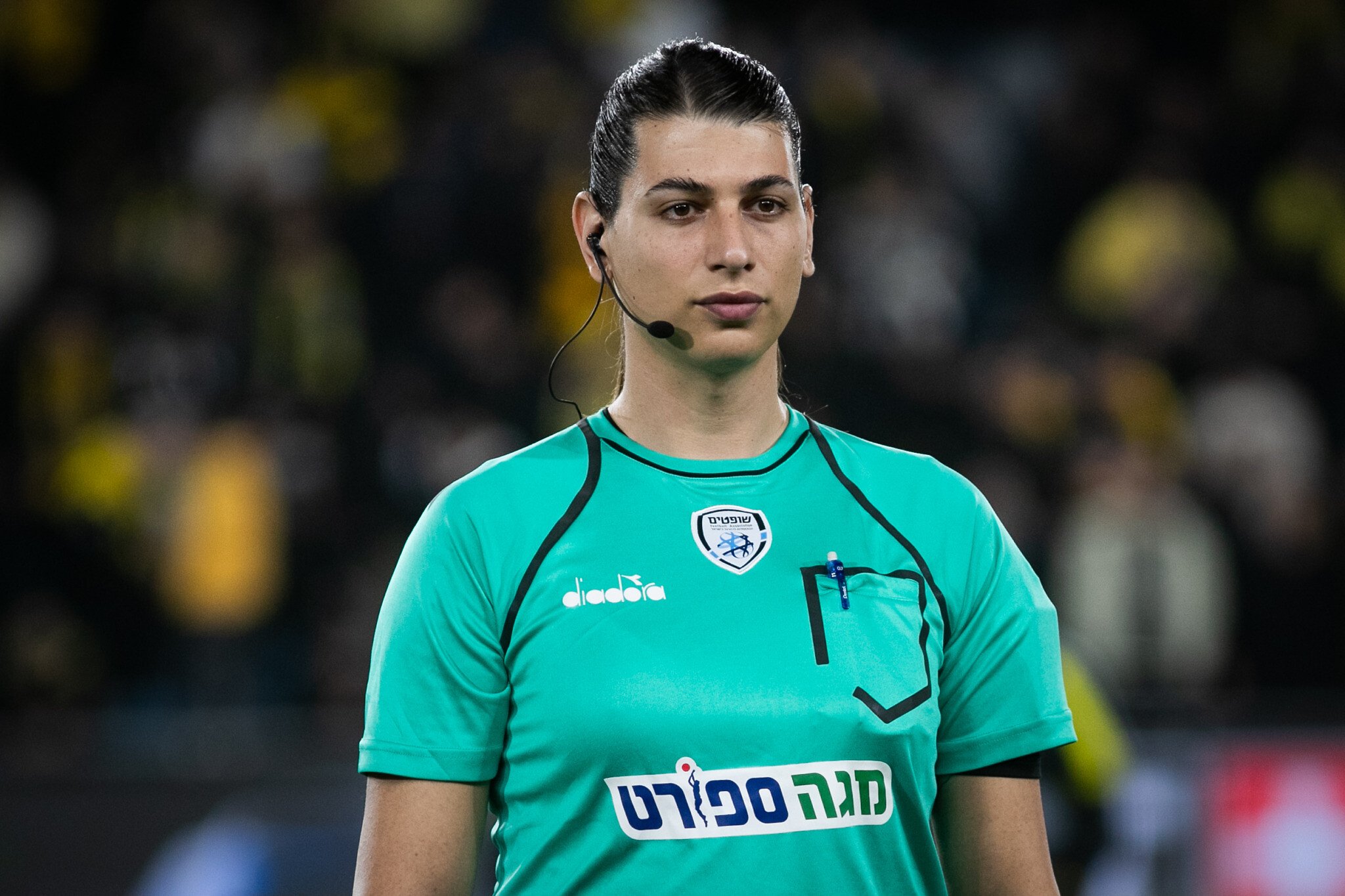
Berman said she trusted those in decision-making bodies and expected them to “find the way to integrate, to unite, to diversify”.
“Human beings are made up of so many different layers, and you come and reject us for just one reason,” she said, explaining how an athlete’s performance could also be affected by mental, financial, geographical, or familial factors.
On the pitch, Berman said she has received positive reactions from both players and supporters.
“The fans continued to curse me — only now, they did it in the feminine form,” she said, adding that it “was a kind of stamp of approval — that they see me exactly as I am.”
And on the street, young people have told her that her story has given them hope.
“That fills me up. It gives me so much strength to keep going and doing what I do — because at the end of the day, I chose myself.”







The Times of Israel Community.