

Italy deputy PM tweets support for Regev after Argentina soccer cancellation
Newly sworn-in Matteo Salvini posts: ‘It is not possible that hatred, threats and violence could block even a peaceful sport event’
 Add ToI as a Preferred Source on Google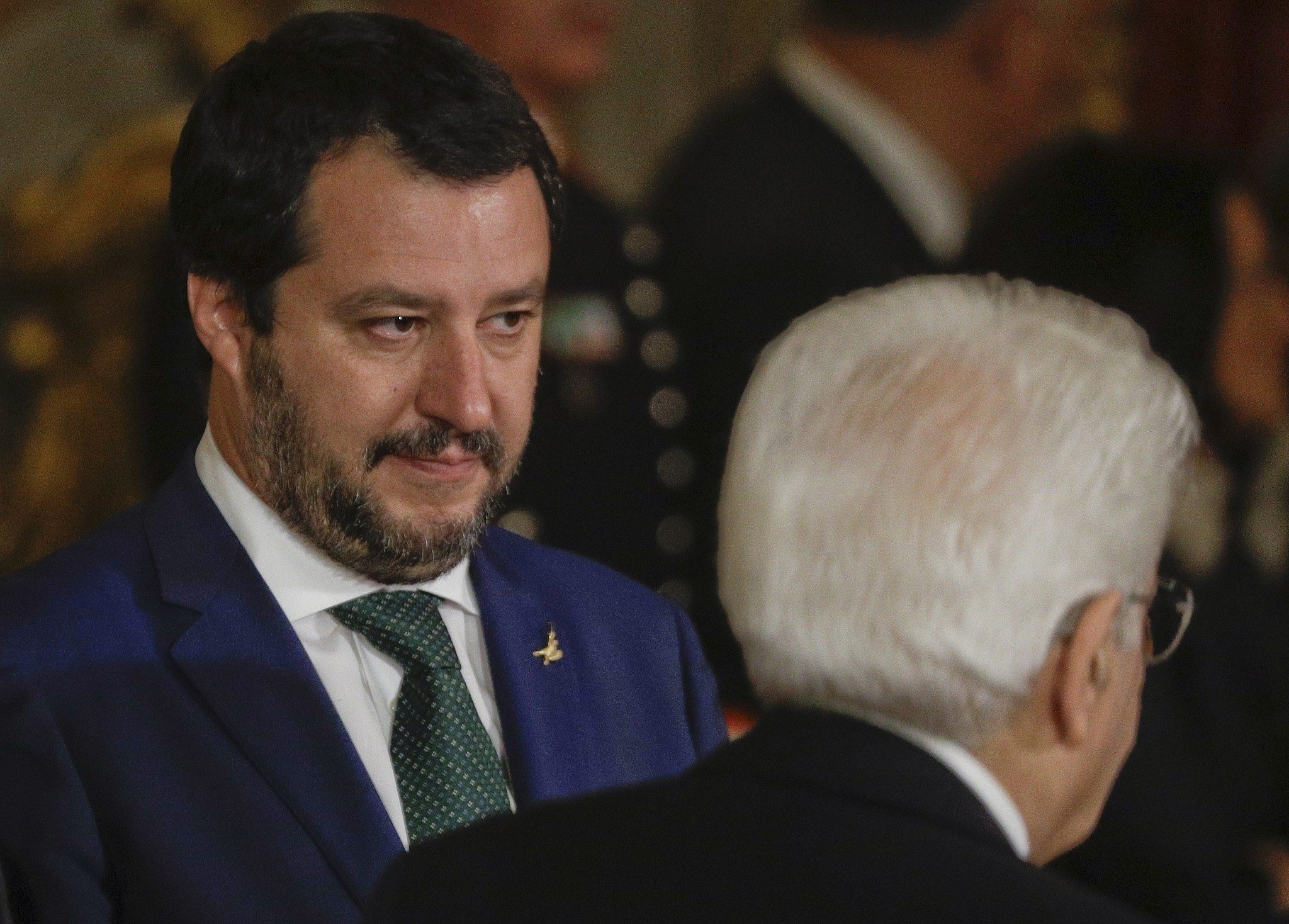
Italy’s newly sworn-in Deputy Prime Minister Matteo Salvini tweeted support for beleaguered Israeli Sports Minister Miri Regev Wednesday, following Argentina’s cancellation of a friendly soccer match that was to have been played in Jerusalem on Saturday night.
The Italian embassy in Israel tweeted the message of support from Salvini, of the populist, right-wing Lega party, who only took office on Saturday and also serves as Interior Minister.
“Vice Premier and Minister of Interior Matteo Salvini expressed ‘solidarity to the Israeli colleague Minister of Culture and Sport Miri Regev, because it is not possible that hatred, threats and violence could block even a peaceful sport event,'” the tweet read.
Regev described the scrapping of the match as a capitulation to terrorism.
Vice Premier and Minister of Interior @matteosalvinimi expressed "solidarity to the Israeli colleague Minister of Culture and Sport @regev_miri, because it is not possible that hatred, threats and violence could block even a peaceful sport event". ⚽️ #Israele #Argentina
— Italy in Israel (@ItalyinIsrael) June 6, 2018
Some have suggested the event was cancelled due to Regev’s efforts to move the game to Jerusalem.
Opposition MKs charged that Prime Minister Benjamin Netanyahu and Regev were to blame for Argentina’s cancellation of its national team’s game in Israel, accusing them of politicizing the game by insisting it take place in Jerusalem.
Opposition chairman Isaac Herzog said in a statement that Israel scored a “spectacular own goal” for the Boycott Divestment and Sanctions (BDS) movement, questioning claims that Israel’s international standing is improving and describing Argentina’s decision as “a symbolic failure of a government that is burying its head in the sand.”
Zionist Union number two Tzipi Livni said the move was a result of “Regev and Netanyahu’s insistence on turning the game from a display of sportsmanship into a display of personal politics.
“We should have left the players on the pitch, the fans in the stands and the politicians outside,” she wrote on Twitter.
An online petition garnered over 2,500 signatures in just a few hours after the match was called off.
Regev said earlier Wednesday that the cancellation of a friendly match in Jerusalem with Argentina’s national soccer team was not the result of pressure applied by Israel boycott activists, but was rather a capitulation to terrorism.
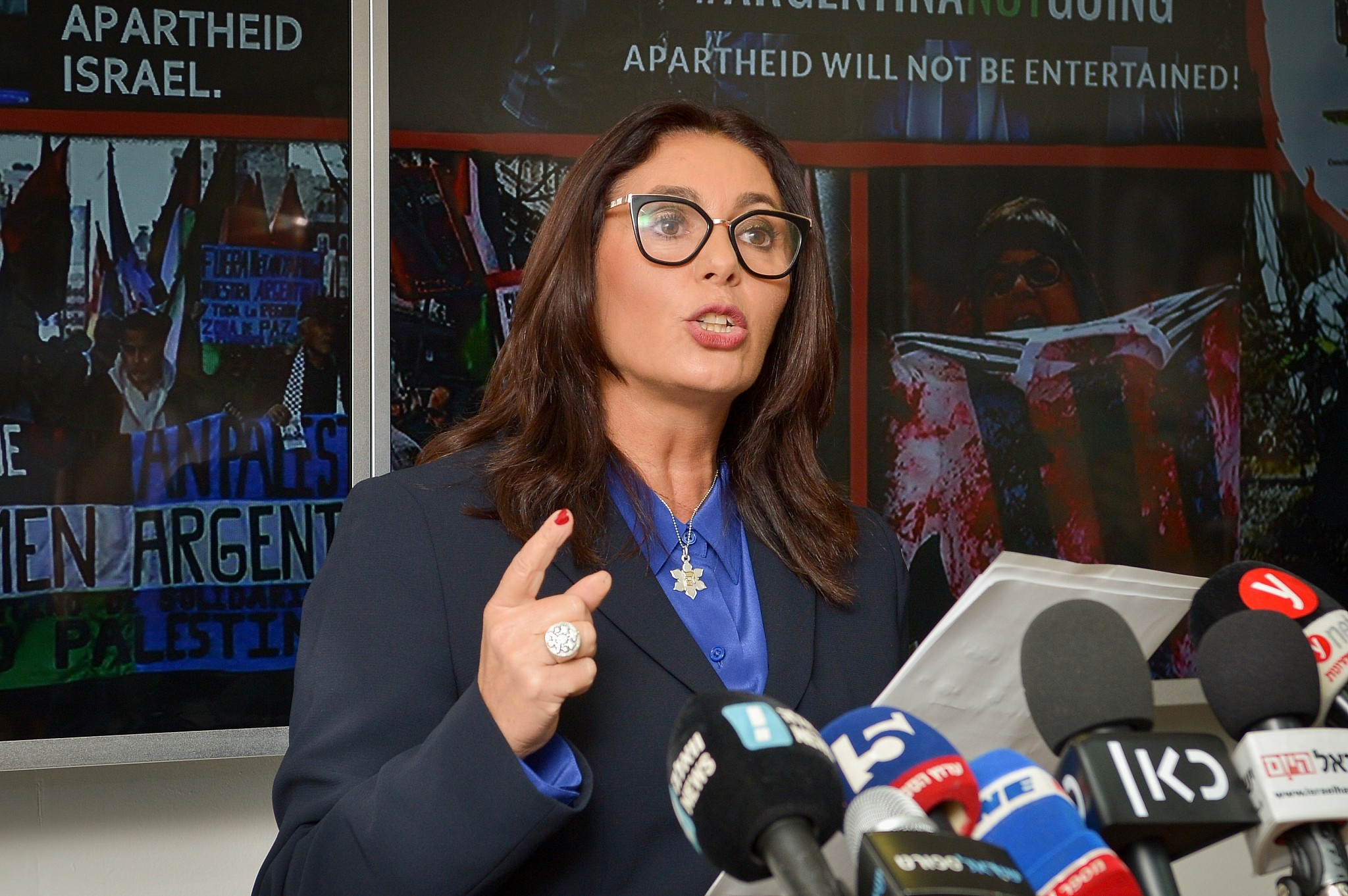
At a press conference, the Likud minister also lashed out at criticism of her decision to relocate the match to Jerusalem and likened Palestinian threats against the Argentine players to the 1972 Munich massacre of Israeli Olympians.
“The game was canceled for one reason only — threats to the life of the star Messi,” Regev told reporters. “The terror threats against him and his family overwhelmed the world soccer star,” she said, adding that this information came from the producers of the event.
Showing images of some of the threatening posters sent to players and officials from the Argentine team, Regev drew a comparison between the threats and the deadly 1972 attack, when Palestinian terrorists kidnapped and killed 11 Israeli athletes competing in the Munich Olympics.
“These are photos by terror factions threatening Argentina’s team members,” she charged. “This is a new-old form of terrorism which scares, deters and terrorizes athletes. This is the terrorism that causes the Munich attack.”
Regev vehemently denied the prevalent explanation given for the cancellation — her insistence on hosting the game in Jerusalem rather than Haifa — calling that criticism “despicable” and a “lie.”
“It’s not Jerusalem or Haifa,” she said. “It’s not BDS [Boycott, Divestment, Sanctions movement]. These are real threats.”
However, Netanyahu voiced concern over Argentina’s “disappointing” decision, saying he hoped it did not foreshadow cancellations of future cultural events in the Jewish state.
But he stopped short of blaming Regev for the debacle, saying that although she was the one who insisted the game be played in the capital, “it was natural to request to transfer the game to Jerusalem,” according to Hebrew media reports.









The Times of Israel Community.