

It’s not over, and uncertainty abounds, but Israel’s COVID-19 stats are stunning
Are we younger, more hygienic, less kissy? No. We have great doctors and nurses, but so do other countries. And we’ve made many mistakes. So how has Israel kept a lid on the virus?

 Add ToI as a Preferred Source on Google
David Horovitz is the founding editor of The Times of Israel. He is the author of "Still Life with Bombers" (2004) and "A Little Too Close to God" (2000), and co-author of "Shalom Friend: The Life and Legacy of Yitzhak Rabin" (1996). He previously edited The Jerusalem Post (2004-2011) and The Jerusalem Report (1998-2004).
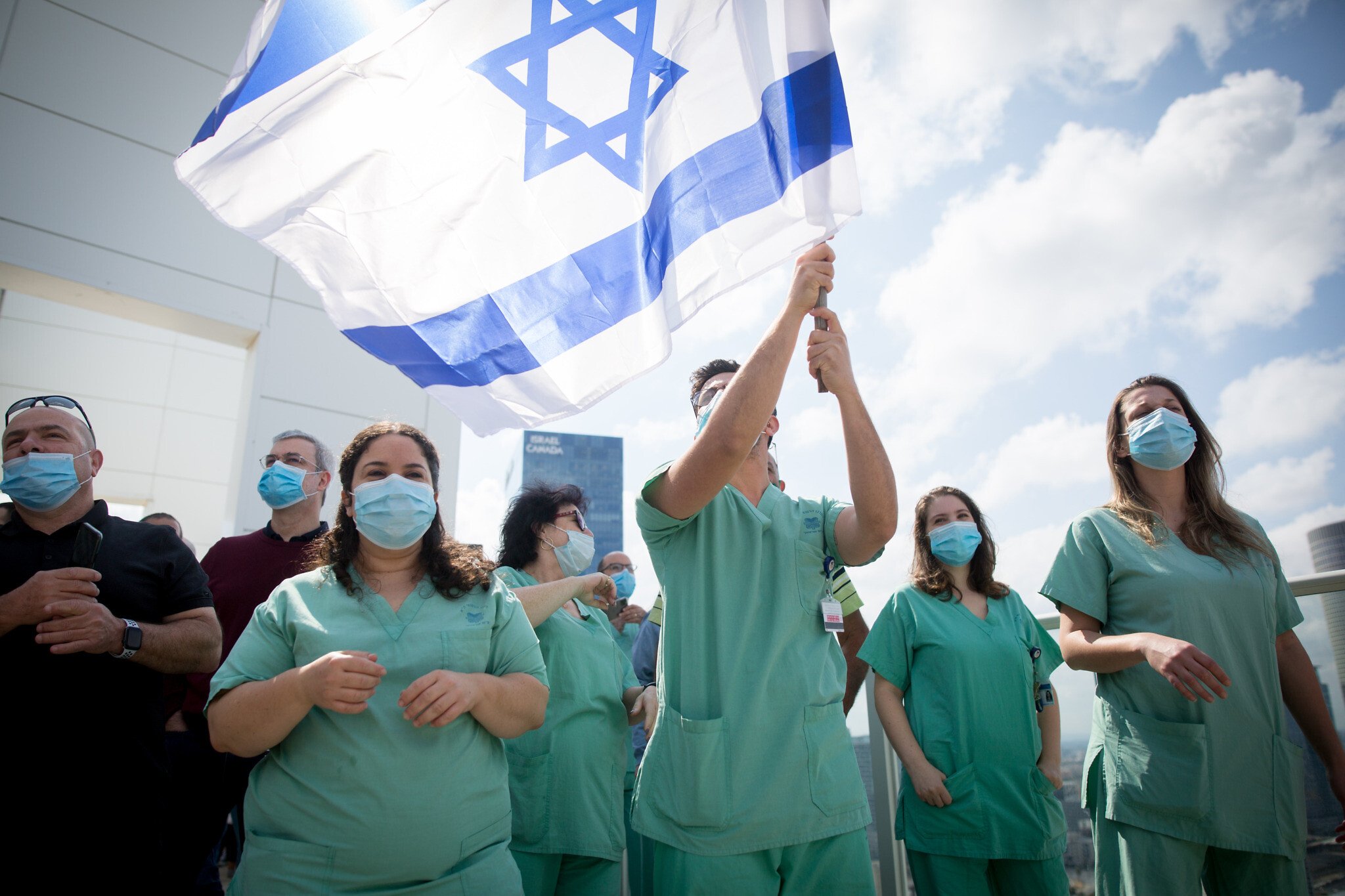
The economy is in tatters. An unemployment rate that was below 4% last month is now above 25%. Businesses that looked solid just a few weeks ago may never recover. Promised loans and grants have proved hard to obtain or inadequate, been delayed, or not come through at all.
Lockdown and reopening policies have been inconsistent and illogical. IKEA is doing a roaring trade, but bereaved families were barred from military cemeteries on Memorial Day. We were allowed to run 500 meters from our home, but not to walk 500 meters from our home… unless we were on the way to the shops. Restaurants were allowed to make deliveries, but not to have customers come and pick up takeout food, although some cafes were permitted to sell food and drink to passersby. Supermarkets never closed, even though social distancing rules were not always upheld; open-air food markets have not yet been allowed to re-open, even though they promised to impose social distancing.
We had days and days of screw-ups at the airport. Passengers boarded flights knowing they were carrying COVID-19. Arrivals strolled straight through Ben Gurion and into taxis home, without so much as having their temperatures checked. Prime ministerial pledges that all arrivals were being sent to state-overseen quarantine facilities were disproved time and again.
In the early weeks of the crisis, major failures of communication and minor instances of obstinance and stupidity contributed to disproportionately high contagion rates in ultra-Orthodox areas — notably the densely populated, 200,000-strong city of Bnei Brak and several Jerusalem neighborhoods. Communication was less than perfect in the Arab sector and in East Jerusalem, too, where Israel was also slow to set up adequate testing facilities.
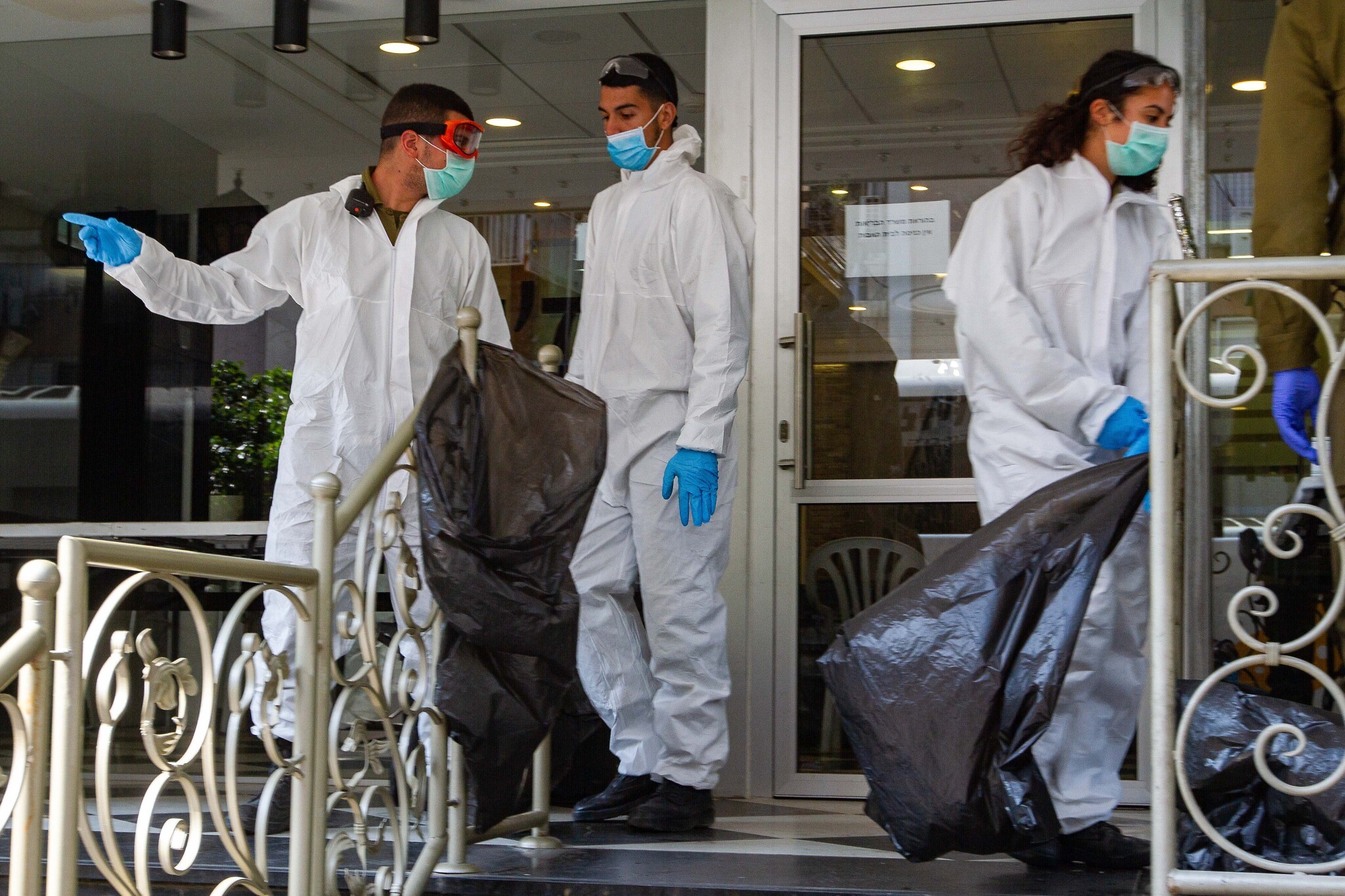
There were turf wars between our would-be COVID-19 czar, Defense Minister Naftali Bennett, on one side, and our actual COVID-19 czar, Prime Minister Benjamin Netanyahu, the Health Ministry and most everybody else, on the other. Foul-ups and shortages and arguments afflicted the entire testing process. Our health minister caught the virus amid reports — strenuously denied — that he’d been breaching his own ministry’s guidelines.
And yet…
And yet, just look at the numbers — the horrifying, heartbreaking death tolls around the world.
As of this writing, Israel, population 9.2 million people, has suffered 219 fatalities in the coronavirus pandemic. Of the nearly 16,000 confirmed cases, more than half have now recovered. Fewer than 100 Israelis are currently on ventilators.
Compare those figures to other countries.
By the Worldometers count, based on approximately the same stats, Israel has 25 fatalities per million citizens — which puts us at about 50th in the world, and better than the global average. (With many countries providing less reliable statistics, furthermore, Israel’s global ranking is actually almost certainly considerably better.) Certainly not peerless, but striking nonetheless.
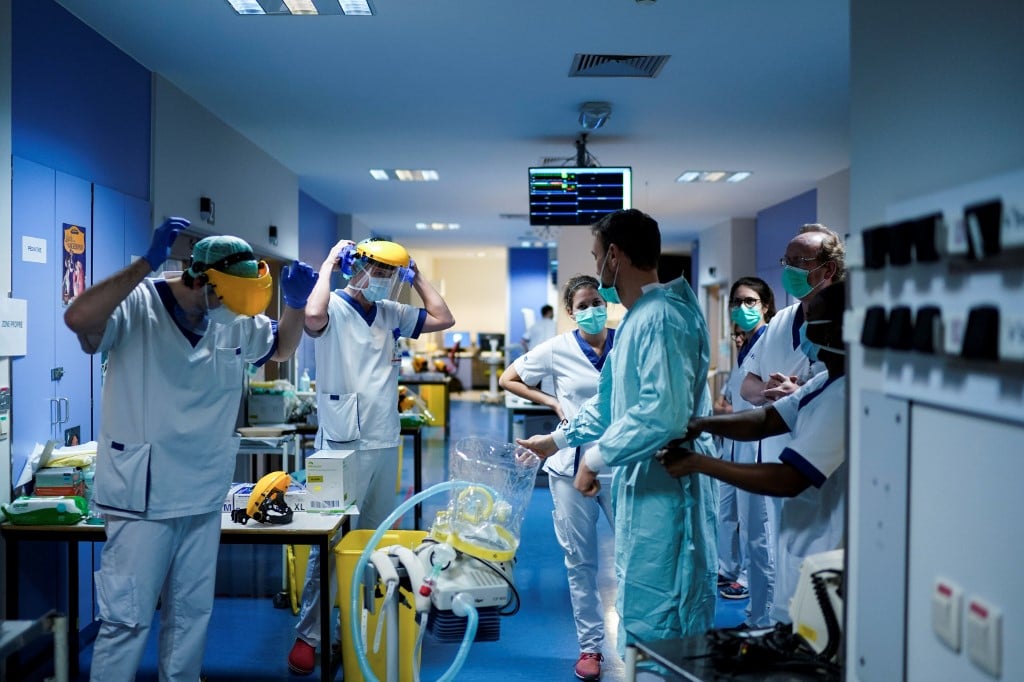
Sweden, which chose a radically less interventionist approach, has about 10 times as many deaths as Israel — about 2,500 — in a population only slightly larger than ours at 10 million. Belgium, population 11 million, has over 7,500 fatalities – 34 times as many as Israel. Britain, with a population six times ours, has buried 26,000 victims. Spain, with five times our population, has 24,000 dead. Italy, population 60 million, has a death toll closing in on 28,000. The United States, with 36 times our population, has almost 300 times as many dead.
Austria and Germany, ahead of Israel in their moves back toward a more normal routine, also have markedly higher death tolls: Austria, with over 8.5 million people, has almost 600 dead; Germany, with some 80 million, has 6,500.
Compare Israel’s numbers to other Jewish communities. In Britain, with a Jewish population of 350,000 at most, there are well over 300 confirmed deaths in the community. In the United States, with a similar-sized community to Israel’s, the most conservative estimate puts the death toll among Jews deep into four figures. (An estimated 2 million Jews live in New York State, which has a population of some 20 million. The death toll in New York State is over 23,000 — which would suggest some 2,300 Jewish fatalities, even before taking into account strong indications that the Jewish community has been disproportionately heavily hit.)
Israel’s relative success, as reflected in such comparative statistics, indeed, is prompting growing calls for Israel to reverse the norm by which Diaspora Jewry rushes to help it at times of emergency, and to urgently reach out with effective assistance to a Diaspora in pandemic crisis.

There is so much the experts have yet to understand about COVID-19. They think it doesn’t mutate, but they’re not completely sure. They think children are at radically lower risk, but there are concerns here too. Can you be infected a second time, after you’ve beaten it? Is it susceptible to climate change? Does it peak at 40 days and gradually disappear by 70, whatever lockdown measures you take to try to thwart it?
Is it emphatically not airborne, or might it just possibly be, under certain circumstances? Is the likelihood of contagion from mucus droplets on solid surfaces marginal, or significant?
How is it simultaneously so radically contagious — spreading like wildfire among the elderly and those with preexisting conditions — and yet evidently not always so radically contagious? There are major outbreaks in innumerable elderly care facilities, and shockingly high death tolls, but most residents of the same facilities, elderly and vulnerable, are unscathed.
How many of us are actually carrying the virus, cheerfully asymptomatic?
In the specifically Israeli context, are our numbers so low because we’re not reporting them properly? That seems highly unlikely.
Because we’re not a huggy, kissy nation? But we are.
Are we doing so relatively well because we’re a relatively young population? Are our hygiene norms notably better than those in other, worse-hit countries? Are our wonderful healthcare professionals, in our perennially underfunded healthcare system, uniquely outstanding?

If the flow of tourism was a factor in the high contagion rates in the likes of Italy, Spain and the UK, then how come we didn’t get more heavily battered for the same reason?
If population density is a major factor, then how come Sweden, all 174,000 square miles of it, is suffering so much more than tiny Israel, 8,550 square miles? And if Bnei Brak, with its large ultra-Orthodox families and its high contagion rates, was identified as an epicenter, how is it that a lockdown, confining large numbers of known carriers to a closed area, proved able to reduce the danger rather than incubating it?

Amid profound concerns at the economic meltdown, at the impact of the restrictions on people’s mental health, at the shunting aside of all kinds of other medical imperatives, at the “collateral damage” of lives and livelihoods ruined, Moshe Bar Siman-Tov, the Health Ministry’s director general, was asked in a TV interview a few days ago whether Israel hadn’t overreacted. Wasn’t his, and the prime minister’s, talk of “tens of thousands” of Israeli fatalities if we didn’t heed the rules and batten down “an exaggeration”?
Characteristically unruffled, he replied that “We have a very simple check. We were at a rate where the number of new patients was doubling every three days… There was a single day when the number of seriously ill patients rose by 50%. If that trend had continued, today we’d have over 600,000 people [sick], over 10,000 on ventilators, and many thousands who would have died.”
Pressed again: Bar Siman-Tov made one of the comparisons I cited above: “I don’t think so,” he said. “There are enough control groups — look at Belgium.”
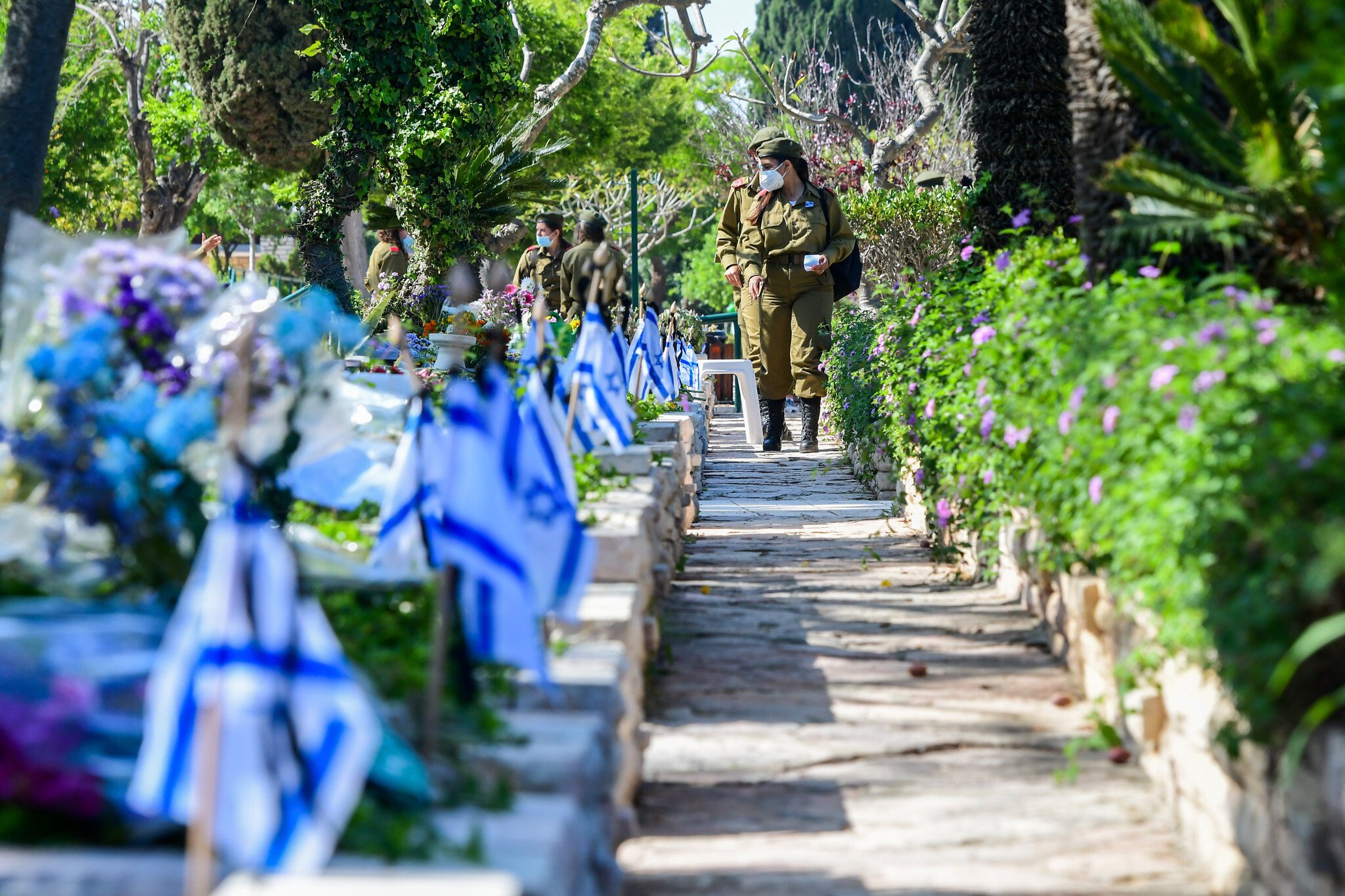
Israel has just marked its Memorial Day and its Independence Day. This is always a surreal time, as we transition from the depths of grief for our fallen soldiers and victims of terrorism — men, women and children who lost their lives in the defense of this country and/or amid the hostility to this country — to the heights of celebration. This year, it was doubly so — our sorrow and our joy physically constrained.
But all those numbers above underline that, turning 72 in these nightmare circumstances, Israel has at least wary cause for encouragement. They were not always perfectly executed, but the decisions Israel’s leaders and authorities made, and that its citizens generally heeded, were designed to maximize the defense against a mysterious virus that disproportionately targeted the elderly — our parents, our pioneers. For now, the numbers and the comparisons suggest, that strategy has been remarkably effective.








The Times of Israel Community.