

 From the Liveblog of
Thursday, July 9, 2026
From the Liveblog of
Thursday, July 9, 2026
France returns 23 Syrian treasures after 15 years as Macron visits Damascus
 Add ToI as a Preferred Source on Google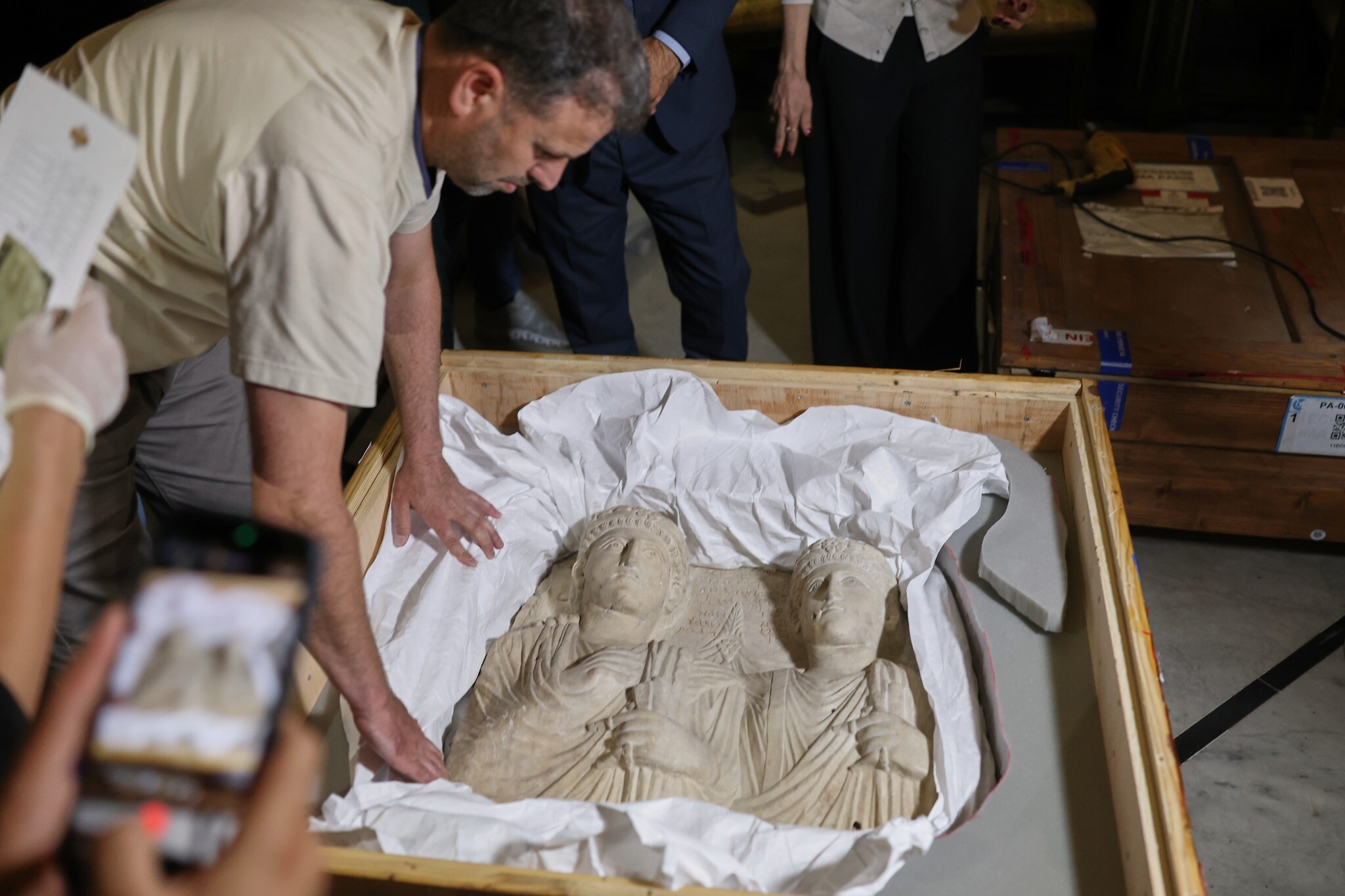
France returns 23 Syrian archaeological treasures that remained in the country for about 15 years after being loaned for an exhibition. Their return coincides with French President Emmanuel Macron’s landmark visit to Damascus — the first by a major Western leader since the ouster of Bashar Assad in late 2024.
The artifacts, flown aboard Macron’s presidential aircraft on Tuesday and returned to Syria’s National Museum, include Roman bronze objects, Byzantine and Islamic-era pieces and a richly colored mosaic panel that once adorned the Umayyad Mosque. The collection was loaned in 2011 to an exhibition of Syrian antiquities at the Arab World Institute in Paris.
The Syrian Foreign Ministry says that the artifacts belong to museums in Damascus, Aleppo, Latakia and Palmyra and remained in France after diplomatic ties between the two countries were severed under Assad’s rule. It describes France as the first country to cooperate with Syria under a national campaign to recover antiquities held abroad.
“Today we are unveiling a selection of archaeological artifacts that have been returned to Syria,” says Ayman al-Nabo, deputy director-general of Syria’s Directorate-General of Antiquities and Museums, at the opening of an exhibition at the National Museum in Damascus featuring two of the returned pieces.
At the National Museum, curator Nivine Saadeddine says the returned collection spans some of the most significant periods of Syrian civilization.
“They date from the ninth millennium BC to the 14th and 15th centuries AD. Every object represents a distinct chapter in Syria’s history,” she says.





The Times of Israel Community.