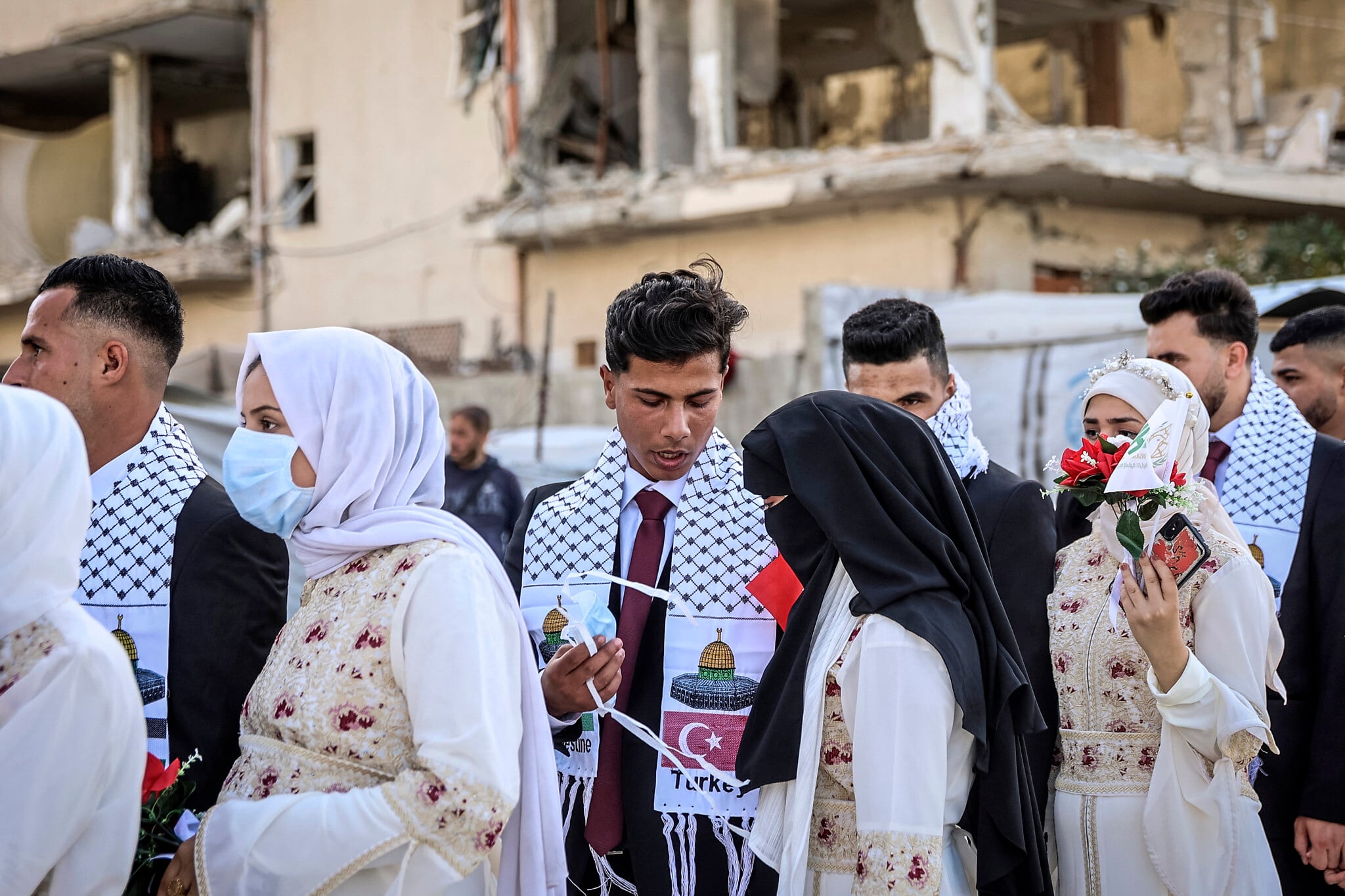
Wearing traditional Palestinian dresses, the white fabric intricately embroidered in a rainbow of colors, dozens of smiling brides clutch red bouquets as they walk with their grooms past the tents and ruined buildings of Gaza City.
To the tune of popular songs played from loudspeakers in a city square, the couples whose marriages have been long delayed by war and displacement sit on stage with joy written across their faces.
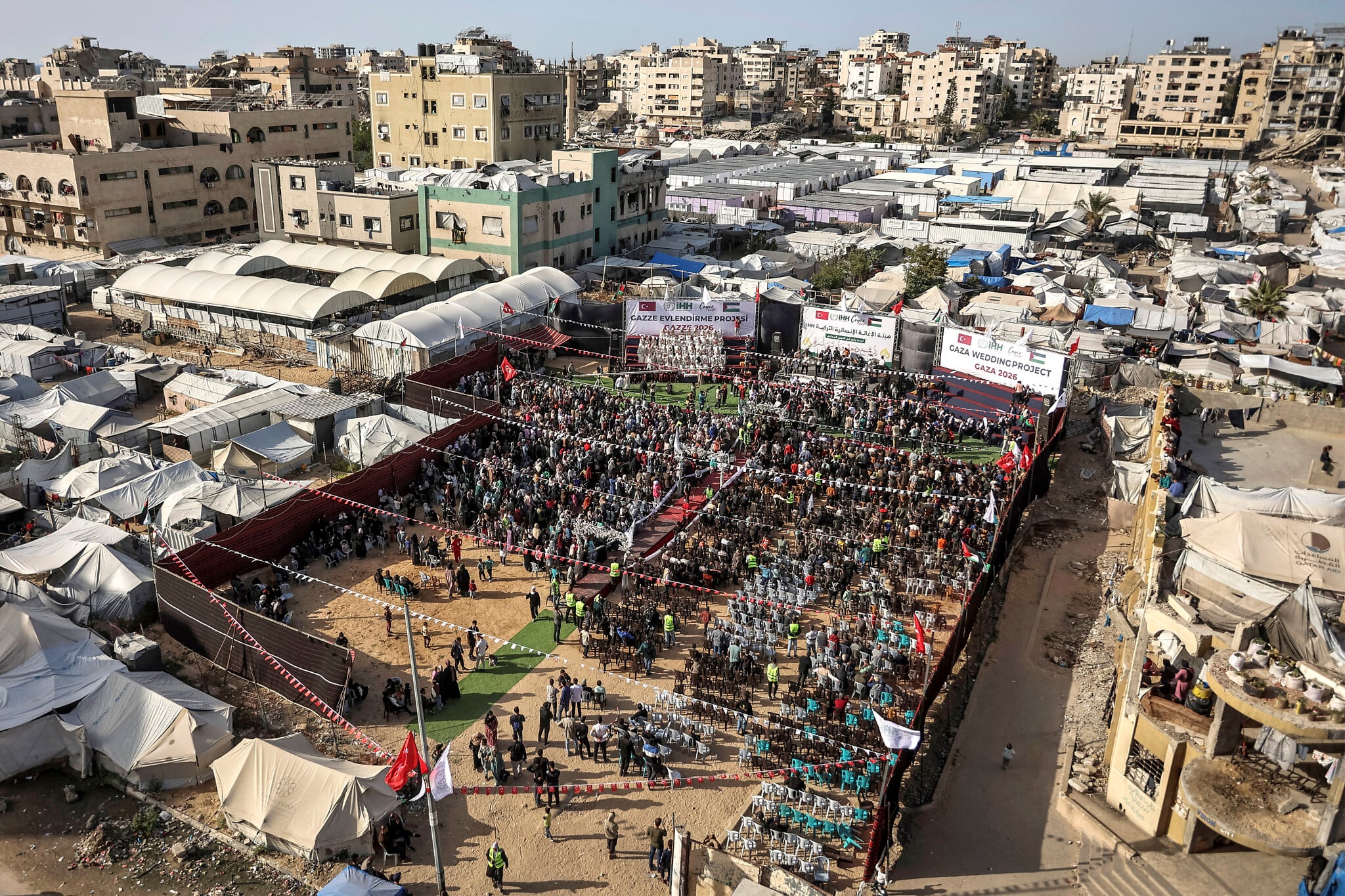
Thousands turn out to watch the mass wedding against the backdrop of buildings gutted by Israeli strikes over the course of the devastating two-year war.
Palestinian brides and grooms gather during a mass-wedding celebration organised by the Turkish Humanitarian Relief Foundation (IHH) in Gaza City on May 11, 2026. (Photo by Omar AL-QATTAA / AFP)
Attendees clapped and smiled as a troupe performed the dabke, an Arabic folk dance, while women’s ululations echoed through the crowd.
“I can’t quite believe that I’m finally getting married,” Ali Mosbeh told AFP at the start of the ceremony.
“I was sitting in the tent when my phone rang… I couldn’t believe it. I’m still in shock,” he said, recounting the moment he received the call informing him that he was among the 50 young men selected.
People gather during a mass-wedding celebration for Palestinian brides and grooms organised by the Turkish Humanitarian Relief Foundation (IHH) in Gaza City on May 11, 2026. (Photo by Omar AL-QATTAA / AFP)
The mass wedding is one of many to have been organized since a ceasefire took effect in Gaza in October. This particular event was organised and funded by the Turkish humanitarian organization IHH.
The smartly-dressed grooms wore traditional Palestinian kuffiyeh scarves adorned with the Turkish organisation’s logo, while the brides’ bouquets were dotted with small Turkish flags.
For Mosbeh and his bride, Huda al-Kahlout, the high cost of weddings had also posed an obstacle to tying the knot.
“I never imagined I’d get married in such circumstances,” he says.
Animal lovers, this one's for you
In 1935, Rabbi Max Shorenstein left Denmark to pursue his lifelong dream: building a zoo in Tel Aviv and teaching children to love animals. The Tel Aviv Zoo became one of the city’s greatest attractions, but envy, greed, and corruption drove Shorenstein from the paradise he created.
The film 'There Are No Lions in Tel Aviv' is available to screen November 19-26 for members of our reader support group, The Times of Israel Community. Join the Community todayto support our work and watch our DocuNation series of outstanding Israeli documentary films.
We’re really pleased that you’ve read X Times of Israel articles in the past month.
That’s why we started the Times of Israel - to provide discerning readers like you with must-read coverage of Israel and the Jewish world.
So now we have a request. Unlike other news outlets, we haven’t put up a paywall. But as the journalism we do is costly, we invite readers for whom The Times of Israel has become important to help support our work by joining The Times of Israel Community.
For as little as $6 a month you can help support our quality journalism while enjoying The Times of Israel AD-FREE, as well as accessing exclusive content available only to Times of Israel Community members.
Thank you, David Horovitz, Founding Editor of The Times of Israel


 From the Liveblog of
Friday, May 15, 2026
 Add ToI as a Preferred Source on Google