

 From the Liveblog of
Tuesday, September 9, 2025
From the Liveblog of
Tuesday, September 9, 2025
Israeli schools have among largest class sizes, lowest teacher salaries, OECD report finds
 Add ToI as a Preferred Source on Google
Ariela Karmel is a political correspondent at The Times of Israel. She previously reported for Calcalist and Haaretz. She holds an MA in Middle Eastern and African History from Tel Aviv University and a BA in Political Science from the University of British Columbia.
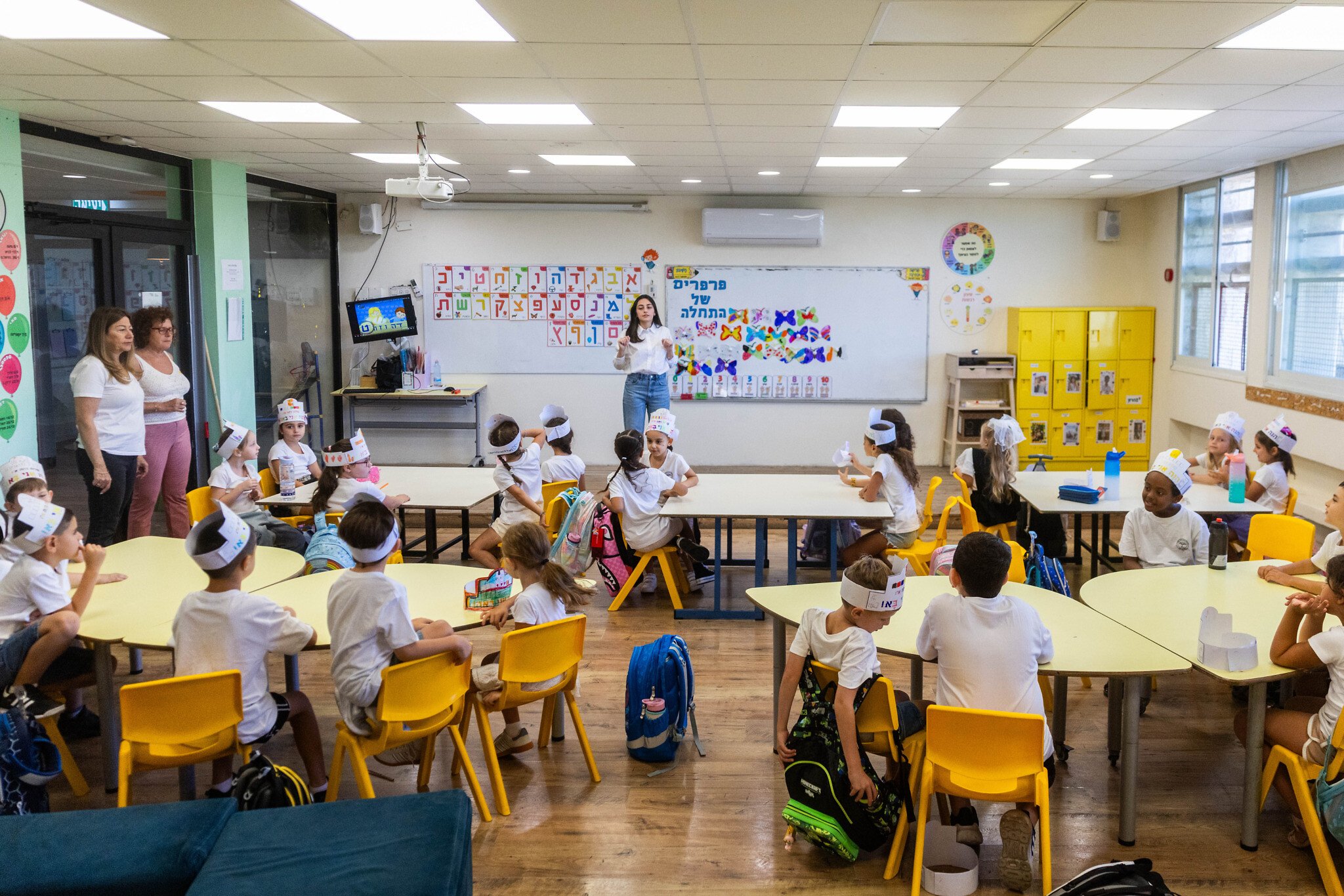
Israel has the second-most crowded classrooms among developed countries and salaries for its teachers are among the lowest despite spending more of its GDP on primary, secondary, and post-secondary education than any other country in the Organization for Economic Co-operation and Development, the group says in a new report.
The latest OECD figures show that Israel’s average elementary school class size stood at 27 students in 2023, unchanged from a decade earlier. For middle school, class sizes have grown from 28 in 2013 to 30 in 2023. Only Chile’s classes are more crowded, the report finds.
The report notes that in most OECD countries, the average class size in elementary schools is 21 students, and that all have fewer than 25, except for Chile, Israel, Japan, and the United Kingdom.
The annual Education at a Glance report is considered the most comprehensive international comparison of education systems, covering access, outcomes, financing, and teaching conditions across the developed world.
Most of the underlying statistics are from 2022 or 2023, since that’s the latest full dataset available when the report was compiled.
The report finds that Israel’s low spending on teacher salaries combined with large class sizes results in relatively low costs per student compared to the OECD average. However, “this is counterbalanced by longer instruction time and shorter teaching time, which increase staffing requirements.”
Responding to the findings, Education Minister Yoav Kisch said that the ministry is working with the Finance Ministry and the Prime Minister’s Office “to re-examine the staffing model and measures to reduce class sizes,” to address overcrowding and teacher burnout.







The Times of Israel Community.