

Mindfulness and matcha meet in new display at Haifa’s Tikotin Museum of Japanese Art
Curator Shir Meller-Yamaguchi brings her knowledge of Japanese culture to ‘From Dao to Dō – Spirit of the Way,’ highlighting the tradition of slowing down and appreciating life
 Add ToI as a Preferred Source on Google
Jessica Steinberg, The Times of Israel's culture and lifestyles editor, covers the Sabra scene from south to north and back to the center
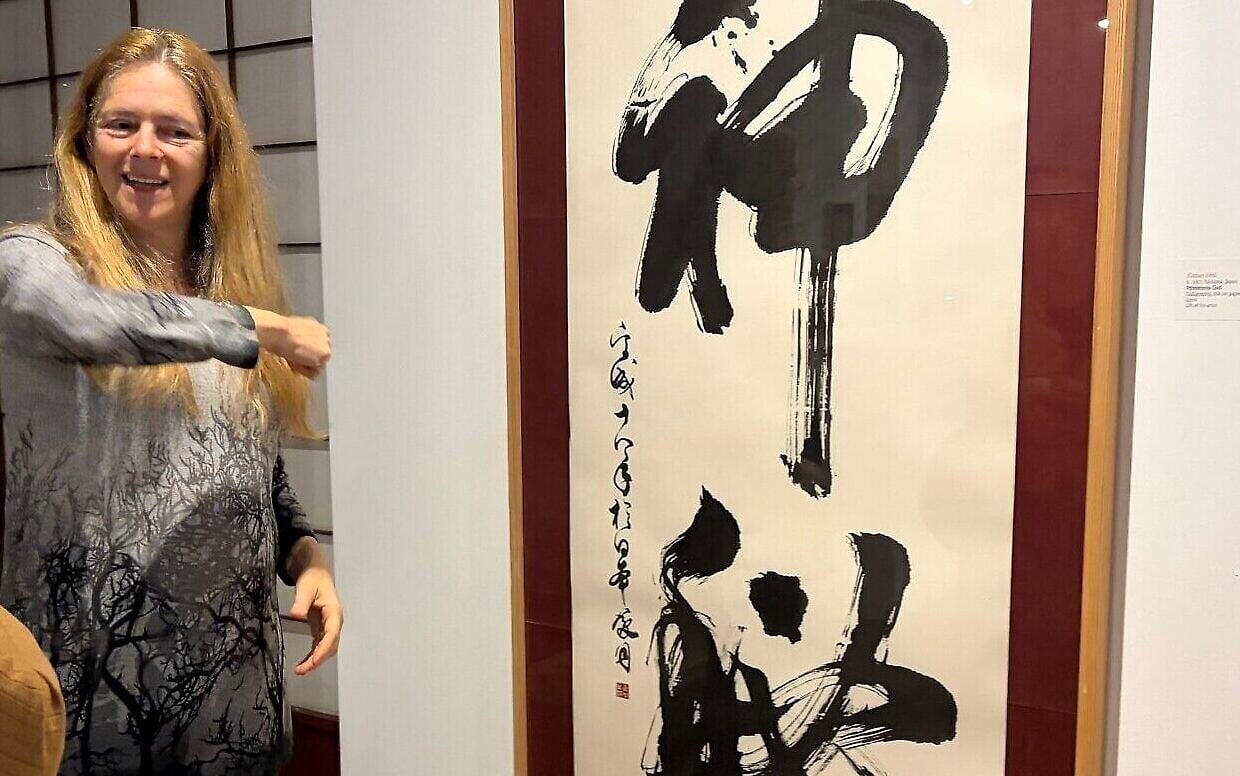

Curator Shir Meller-Yamaguchi lives in the Ein Hod artists’ village, but she is bringing her knowledge of Japanese life to her fellow war-weary Israelis in a new exhibit at Haifa’s Tikotin Museum of Japanese Art, “From Dao to Dō – Spirit of the Way,” which invites visitors to slow down and appreciate the Asian world of mindfulness.
“I felt like we’ve lost our way right now after two years of war and the coronavirus. There’s a sense of, ‘Where do we go from here?'” said Meller-Yamaguchi. “The ‘Torah’ of Dao puts us back inside ourselves, finding what we can do to feel complete with ourselves.”
The origin of Dō, meaning “way,” lies in the Chinese concept of Dao, which has been integrated into Zen Buddhism over the centuries. The exhibit presents a wide range of Japanese arts that bear the suffix “dō,” each utilizing meditation in motion.
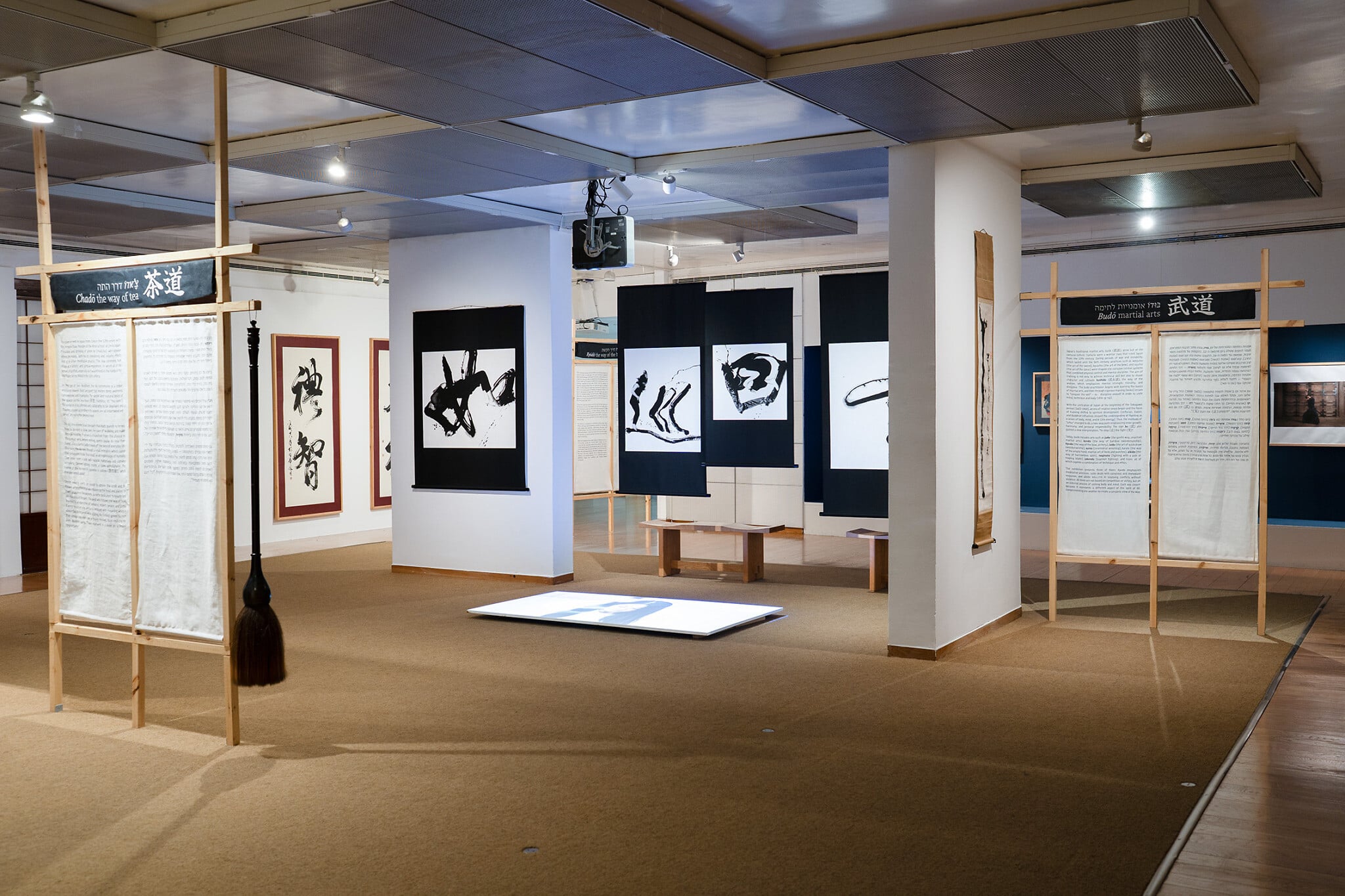
Meller-Yamaguchi’s exhibit takes visitors through Chadō, a Japanese tea ceremony; Shodō and the intricate works of calligraphy; the quiet strength of martial arts exhibited in Budō; and a collection of contemporary artworks, all aimed at introducing visitors to finding meaning in the path itself — especially in an era marked by constant hurry, worry, and multitasking.
The exhibit opened in January, with a sister exhibit at the Wilfrid Israel Museum of Asian Art in Kibbutz Hazorea, both curated by Meller-Yamaguchi and drawing on the holdings of two longtime collectors, Felix Tikotin and Wilfrid Israel, who spent years appreciating and gathering Asian art. The exhibits close on May 30.
“From Dao to Dō” begins with a tea room, its arched doorway lowered according to Japanese tradition to encourage visitors to leave their ego outside the door, enter the space, and focus on the ceremony.
“We hold a tea ceremony each Saturday, and there is total quiet in this space,” said Meller-Yamaguchi, gesturing to the museum’s small lobby. “There are hundreds of people, and there is complete silence. It’s an experience that people seem to need, after all the rockets and sirens and fears. That’s the idea of this exhibit, to offer some calm, that we’re okay for now, we don’t know what will be tomorrow, but for today we’re okay.”
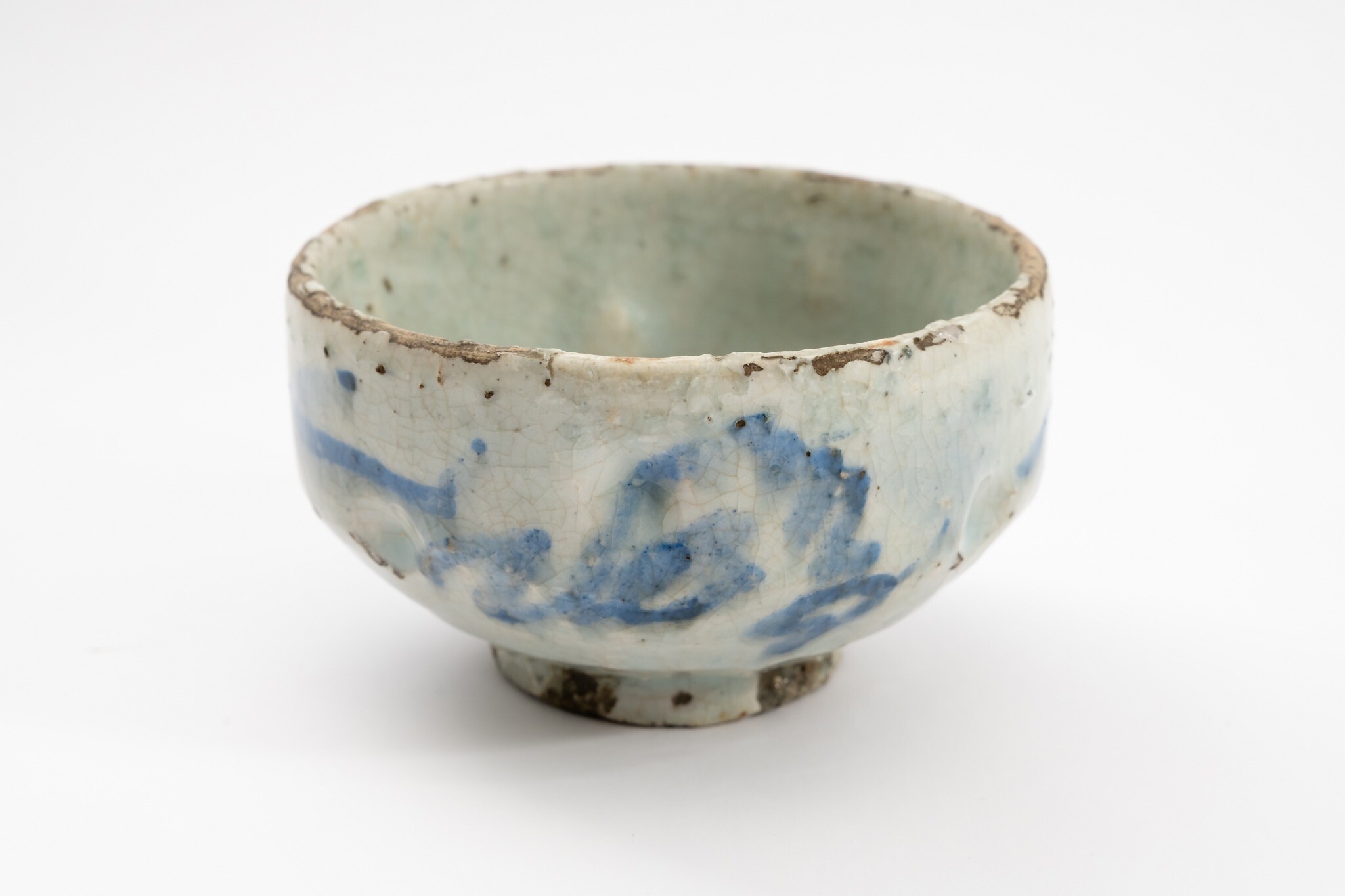
During the rest of the week, a video takes visitors through the steps of a tea ceremony, alongside a vitrine of tea utensils and ceramic tea bowls from the museum’s collection.
Meller-Yamaguchi noted that green matcha tea is drunk at a tea ceremony, for its ability to simultaneously calm and energize, which is why it was used by Japanese military Shoguns before battle.
(For those looking for a more personal experience, the excellent Talek Tikotin cafe upstairs serves a particularly frothy matcha latte.)

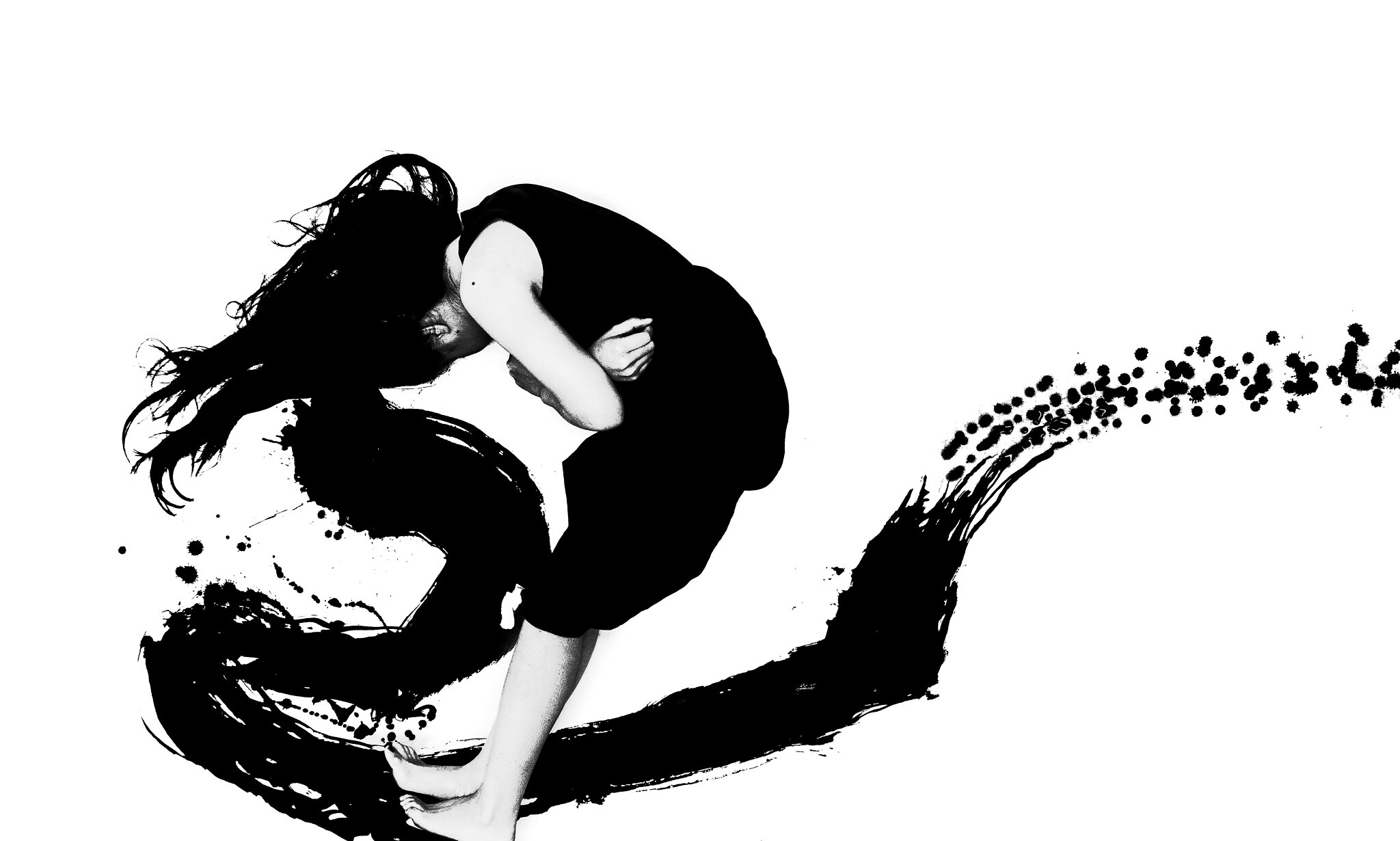
The rest of the exhibit encourages visitors to consider Japanese art that allows deeper meditation and focus, with a close look at calligraphy, including works and scrolls by traditional calligraphy artists alongside works by contemporary Japanese artist Tomoko Kawao, whose body postures become part of her calligraphy in her oversized, 10-meter (32-foot) works that utilize performance art, dance, and a brush.
Meller-Yamaguchi also examines martial arts, choosing three disciplines, Kyudo, Aikido and Iaido, with a focus on those that emphasize the individual, rather than victory or competition, such as judo and karate.
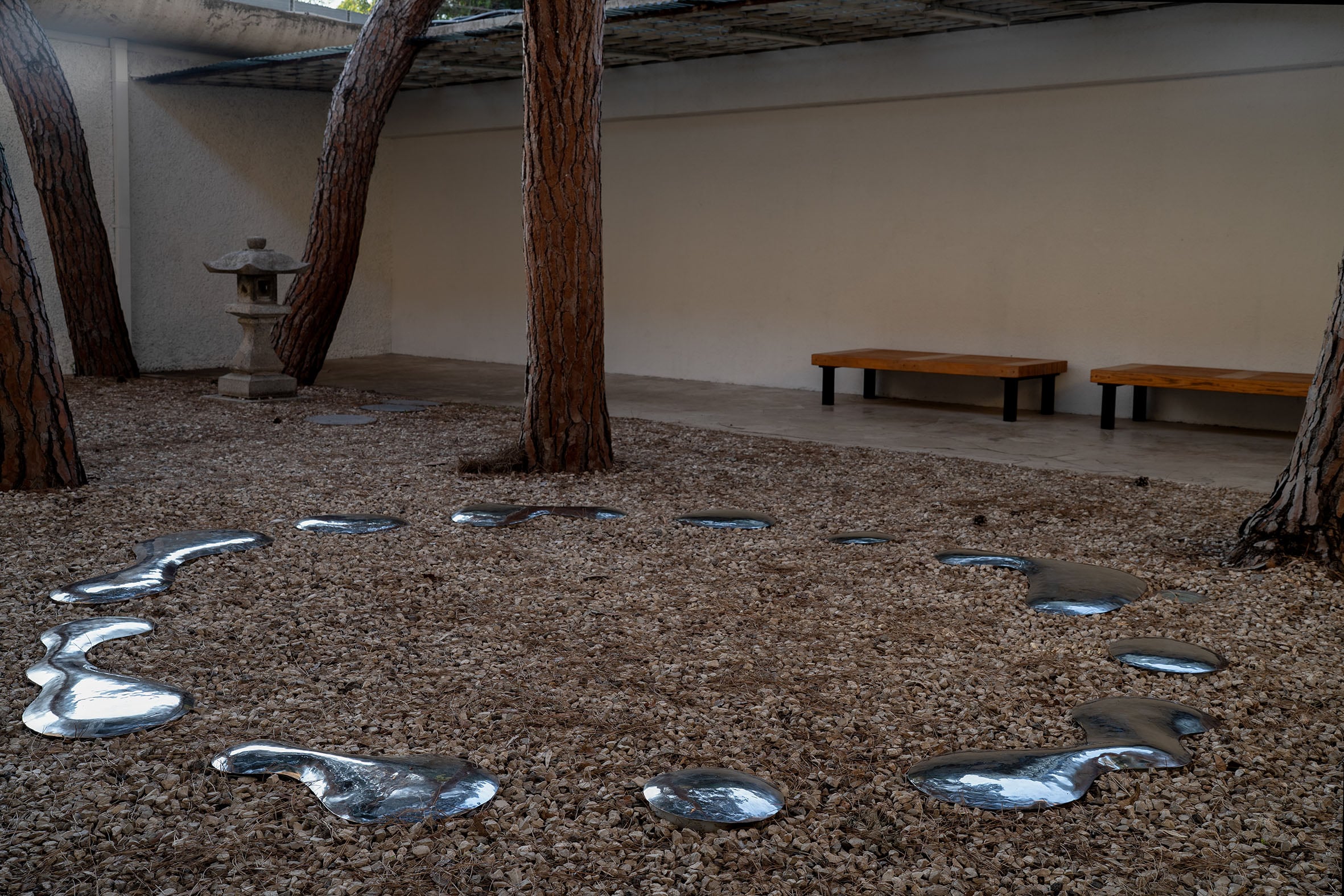
Visitors who step outside to the courtyard can look at a work by Nobuya Yamaguchi, “Walking Between the Drops,” a circle of gleaming water drops made of forged stainless steel, evoking an infinite circle without beginning or end.
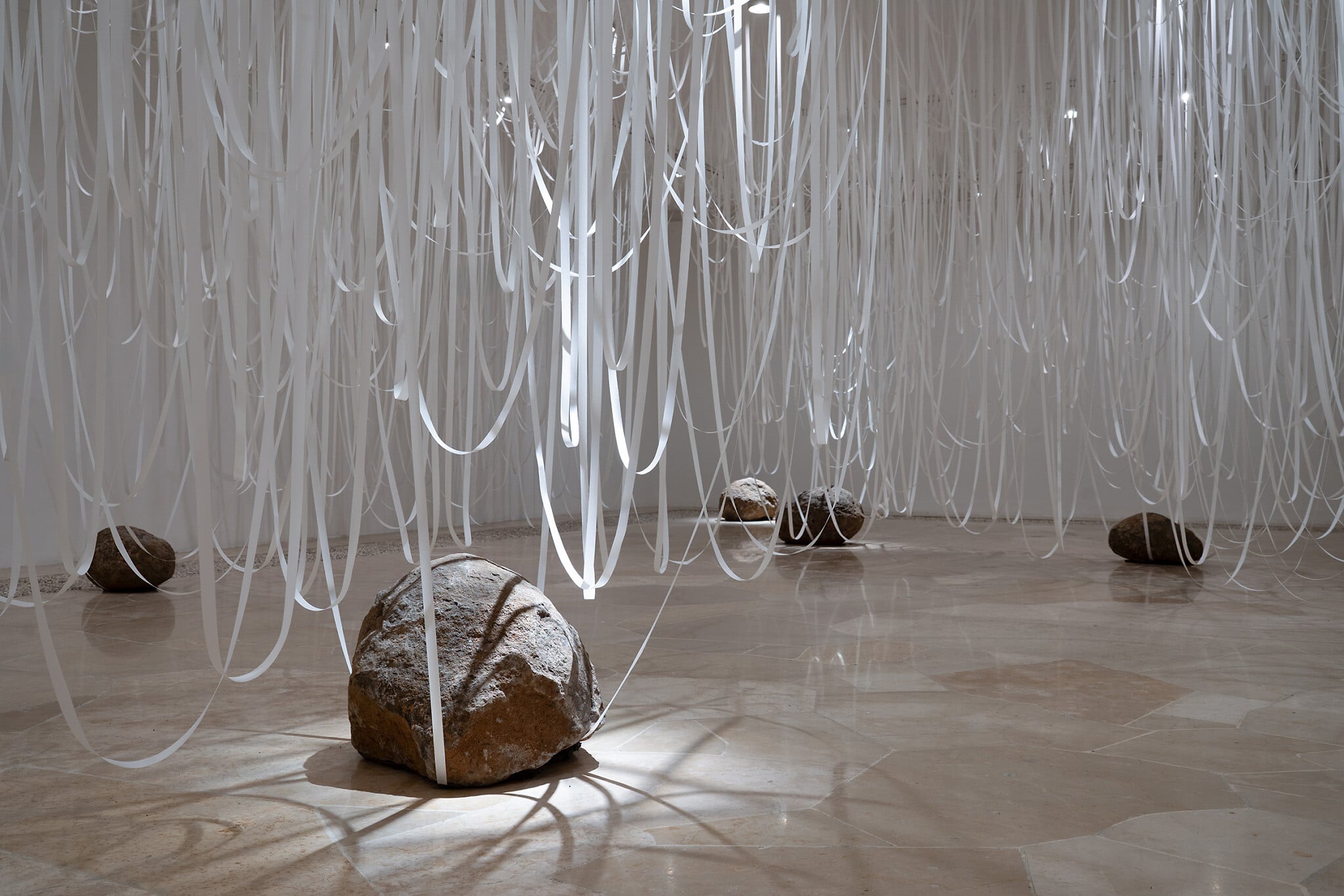
A powerful portion of the exhibit is the site-specific installation, “Kudo,” or “The Way of the Void” by artist Onishi Yasuaki, who hung hundreds of strips of white paper in loops and tangles from the ceiling of one of the museum’s galleries.
Yasuaki forces visitors to walk a winding path between the strips of paper, some of which are held down by ancient basalt rocks, creating a quiet, contemplative space.
That concept of a path with steps leading the way continues into the contemporary art gallery, where a mix of Israeli and Japanese artists’ works, including several by Alex Kremer, Elica Masuya, Avi Eisenstein and Maya Cohen Levy, utilize calligraphy, oils, photographs and video.
The featured Japanese artists were happy to participate, said Meller-Yamaguchi, unlike other artists from European and American countries who have joined an ongoing cultural boycott against Israel since the bloody October 7, 2023, Hamas invasion sparked the war in Gaza.
“It’s less political there,” she said. “They’re not involved in it because there aren’t a lot of Muslims in Japan, not like Europe and the US. No one refused.”
The Tikotin Museum of Japanese Art is open Tuesday through Sunday, while the Wilfrid Israel Museum of Asian Art operates Monday through Saturday. The public can buy a combined admission ticket for both exhibitions for NIS 55 ($18), which can be used for four months, during which the two exhibitions are displayed simultaneously.









The Times of Israel Community.