

New drama ‘The Eichmann Trial’ at Jerusalem’s Beit Ha’am takes same stage as actual trial
Through May 4, the portrayal of the 1961 hearing offers a captivating glimpse at the human psyche, along with a history of budding relations between Germany and the Jewish state
 Add ToI as a Preferred Source on Google
Jessica Steinberg, The Times of Israel's culture and lifestyles editor, covers the Sabra scene from south to north and back to the center
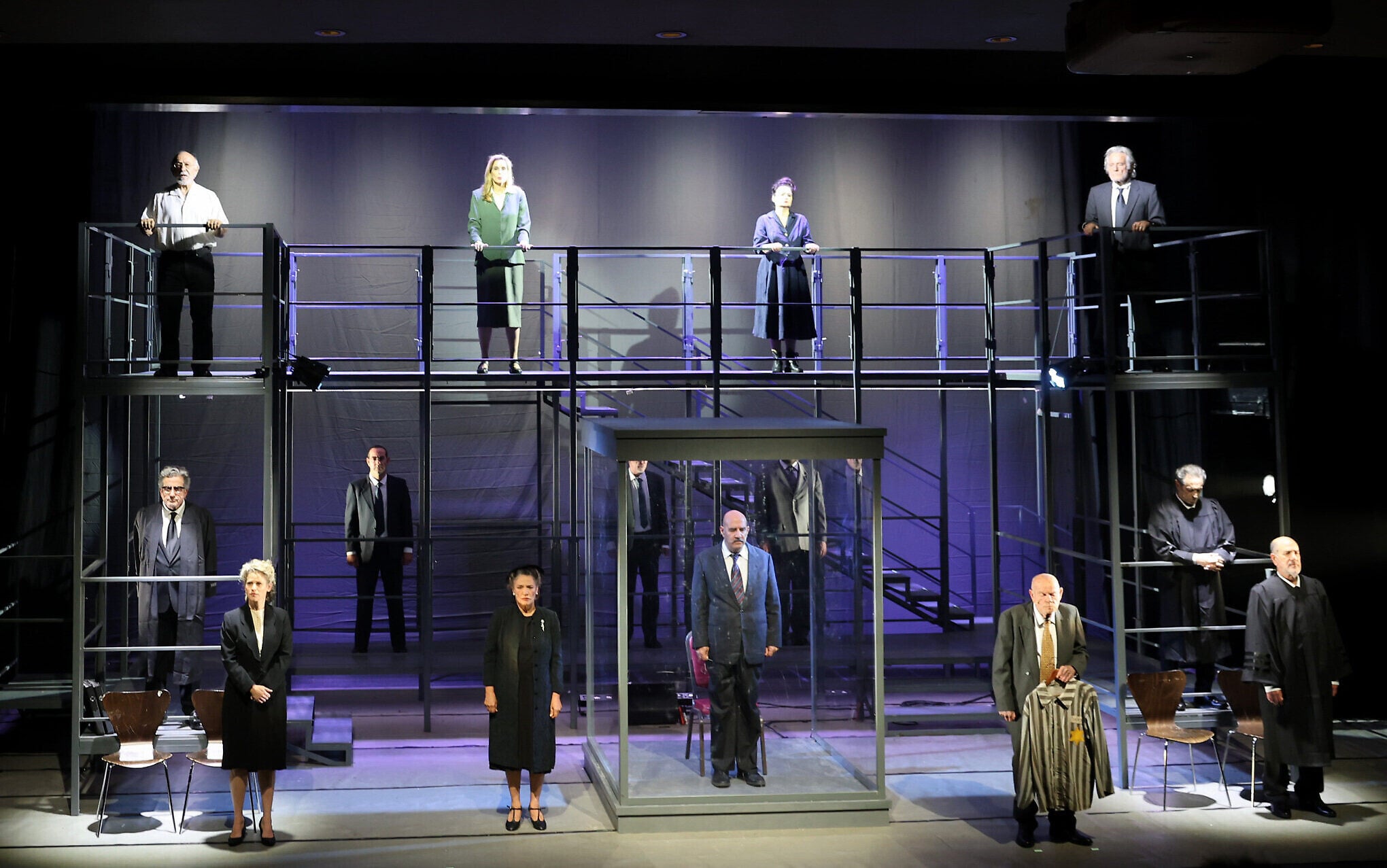
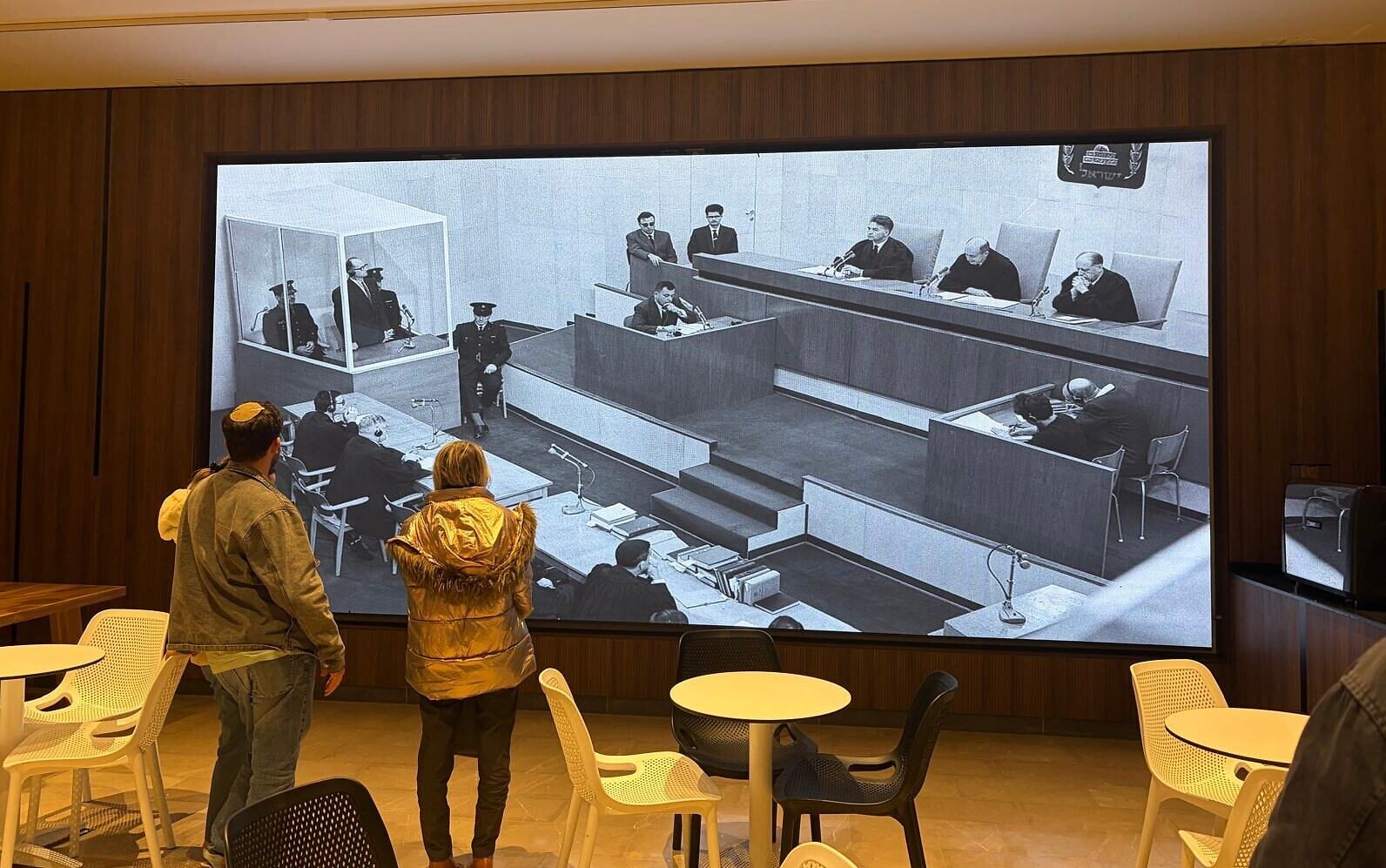
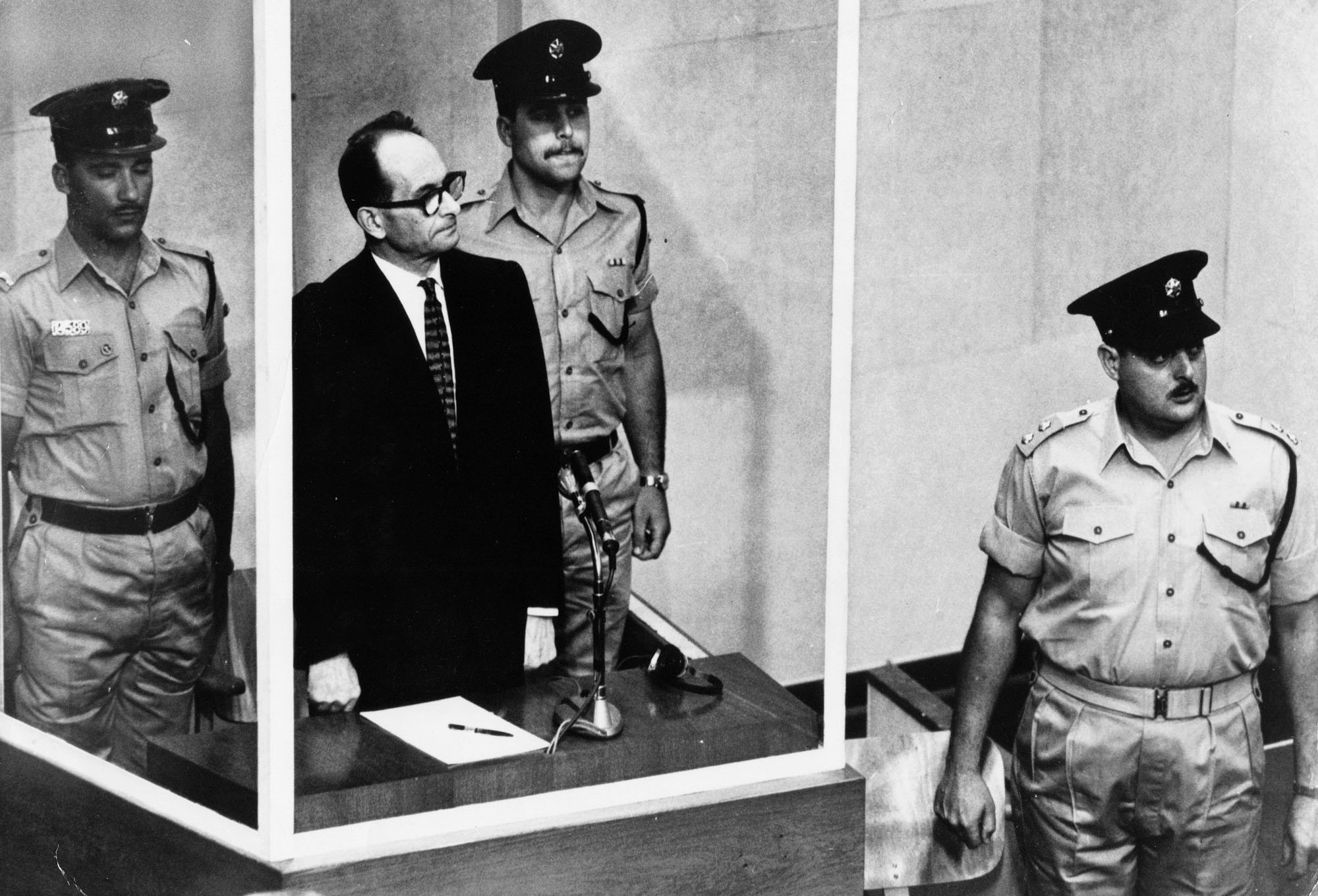
The trial of notorious Nazi Adolf Eichmann was held from April 11 to August 15, 1961, at Jerusalem’s Beit Ha’am, then a recently completed theater temporarily reconfigured to serve as a courtroom capable of accommodating 750 observers.
Until then, much of the younger Israeli generation had not known the details of what happened to Jews in the Holocaust.
Foreseeing the horrific testimony, then-Prime Minister David Ben-Gurion insisted that the trial be held in a large hall with capacity for extensive media coverage. The premier wanted the world to hear what the Jewish people had endured during the Holocaust when, for the first time, Holocaust-survivor witnesses stood before the audience and told their harrowing stories.
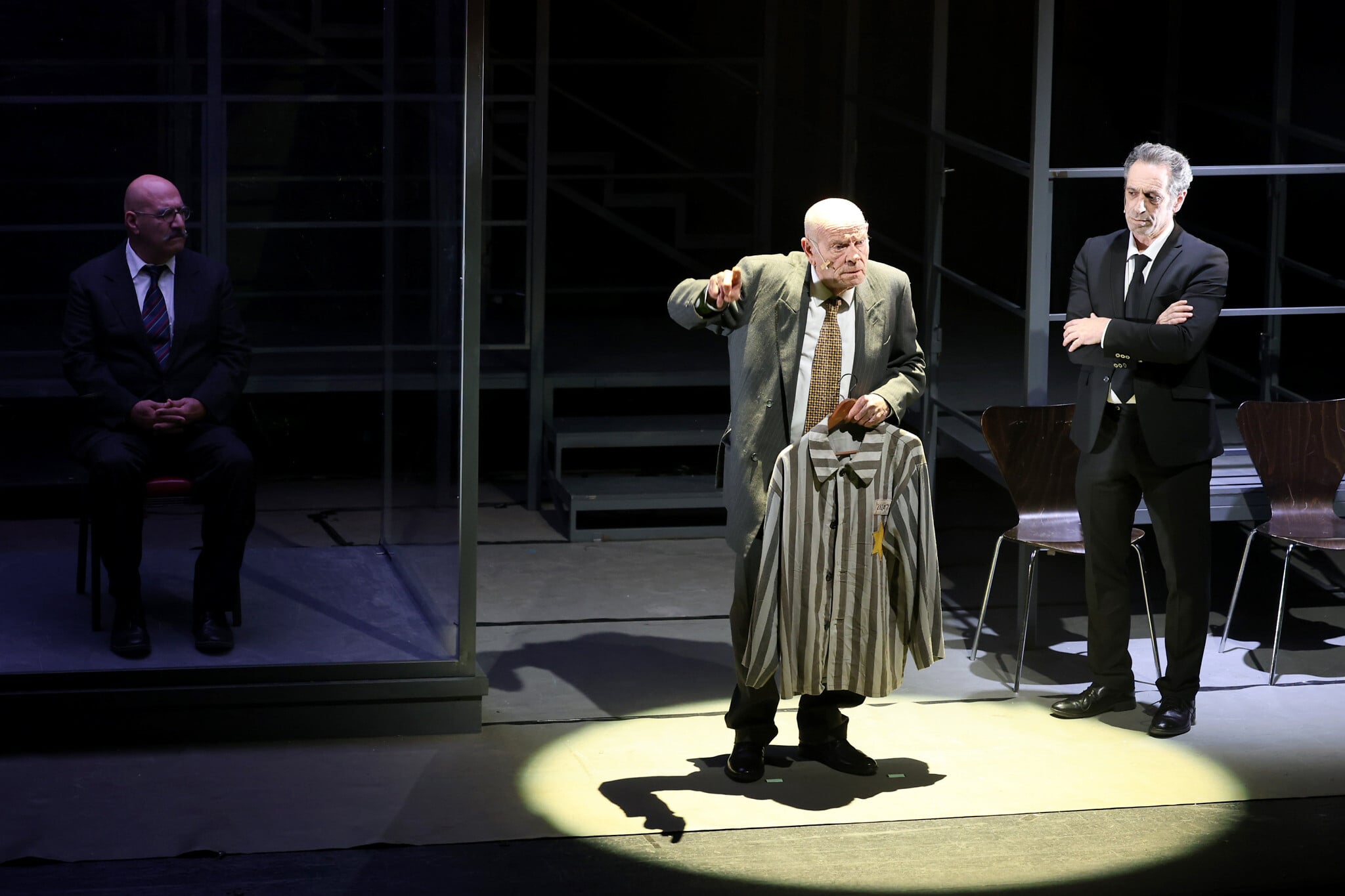
Several of those accounts are part of “The Eichmann Trial,” a new play written by Motti Lerner and directed by Ilan Ronen. Performed exactly where the senior Nazi party member was prosecuted 65 years ago as survivors shared emotional stories, the play reenacts chilling accounts of their testimonies about what happened in the war, in concentration camps, in ghettos, and in the forests.
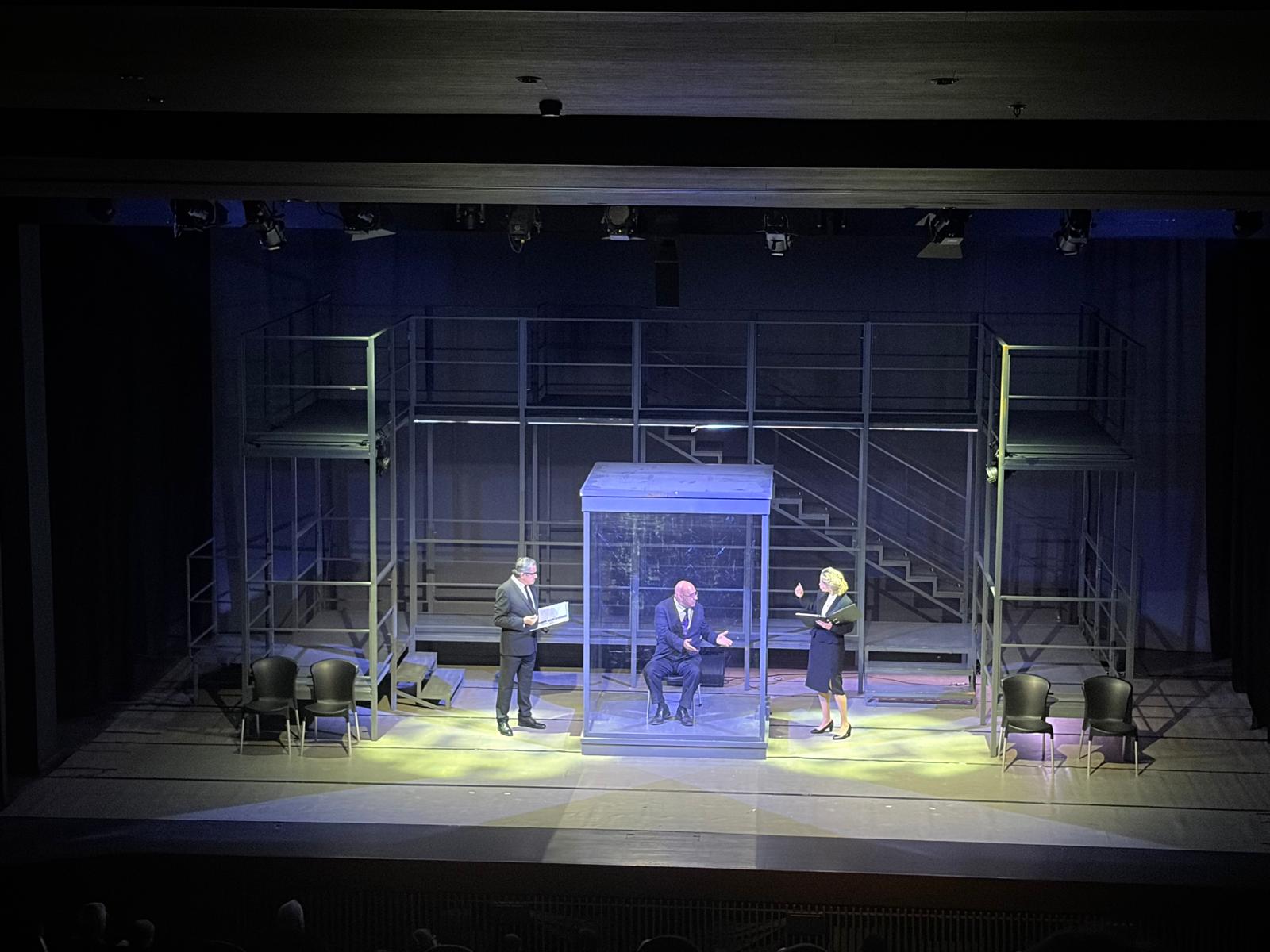
Well-known Israeli actor Igal Naor, in the role of Eichmann, sits onstage in a facsimile of the armored glass booth used at the trial, with the defense and prosecution on either side.
Behind the booth is a metal framework of platforms and stairways, used by the actors entering and exiting the trial, and where complex diplomatic relations between Israel and West Germany are acted out.
“I waited to write this,” said Lerner. “The question was, how would I distill months of a trial into a play? That was the big question.”
Lerner is no newcomer to works about the Holocaust; “Kastner,” “Kapo in Jerusalem,” and “Spring 1941” are three of his productions about that time period.
But he knew that handling 110 witnesses, “a mountain of documents,” and the trial of Eichmann, one of the main Nazi architects of the Final Solution, would be complex to wrangle.
Historian Ora Herman’s revelatory 2017 book, “The Furnace and the Reactor: Behind the Scenes at the Eichmann Trial,” gave Lerner the dramatic angle he needed.
Behind the scenes, on the platforms of the metal framework, are the conversations and discussions playing out between Ben-Gurion’s advisers and German policymakers who did not want the trial to ignite a wave of hatred for Germany among the Israeli public or to create an obstacle for Israel receiving financial aid from Germany.
That intrigue was only revealed some 50 years after the trial.

Ben-Gurion’s announcement of Eichmann’s 1960 capture in Buenos Aires and upcoming trial in Jerusalem happened right as secret talks between the first Israeli prime minister and West German chancellor Konrad Adenauer were moving forward.
“Ben-Gurion had decided he [would] receive money from Germany to build the nuclear reactor in Dimona,” said Noam Semel, the play’s producer.
West Germany secretly financed a substantial portion of the Dimona project between 1961 and 1973, with total funding estimated at nearly 2 billion German marks, or roughly $5 billion in today’s money.
That arrangement played out during the real Eichmann trial, as it does in this staged version.
“Now it’s clear and dramatic, and I hope it answers the big question framed by prosecutor Gideon Hausner: that we want to understand how it happened that Germany created such war criminals,” said Lerner. “Eichmann called himself a regular guy; he didn’t see himself as a monster.”
A play without a theater
The play was staged at Beit Ha’am (also known as the Gerard Behar Center) twice in April, with the last currently scheduled performance on May 4. Since the run has been well-received and well-attended, the producers hope to schedule more performances later in the year.
When Lerner wrote the play three years ago, he discussed staging it at Tel Aviv’s Habima with Semel, then the theater’s interim CEO.
“He brought us the play, and then I retired,” said Semel.
But when Semel later noted that the play still had not been staged at Habima or anywhere else, he wanted to ensure it was produced, and took on the task.
“It deals with the memory of the Shoah, and the strongest way to remember it is with artistic works,” said Semel. “All that’s left for this generation is works like ‘Schindler’s List,’ which, if Spielberg hadn’t made, [many] people wouldn’t have known about the Holocaust.”
Semel first staged “The Eichmann Trial” in Romania, including an operatic version at the Romanian Opera House that is still being performed with a libretto written by Lerner and music composed by Gil Shohat.
He then turned to Beit Ha’am, working with the Jerusalem municipality, which renovated the building in 2021, redoing the interior and including a permanent display in the lobby featuring photographs and explanations about the Eichmann trial.
“It’s appropriate that it’s being staged here, where it happened,” said Semel.










The Times of Israel Community.