

New Jerusalem high-speed train stalls in tunnel, as rail woes persist
Around 150 passengers traveling from Ben Gurion Airport forced to wait for new engine to tow them back, after technical glitch, in 2nd straight day of problems
 Add ToI as a Preferred Source on Google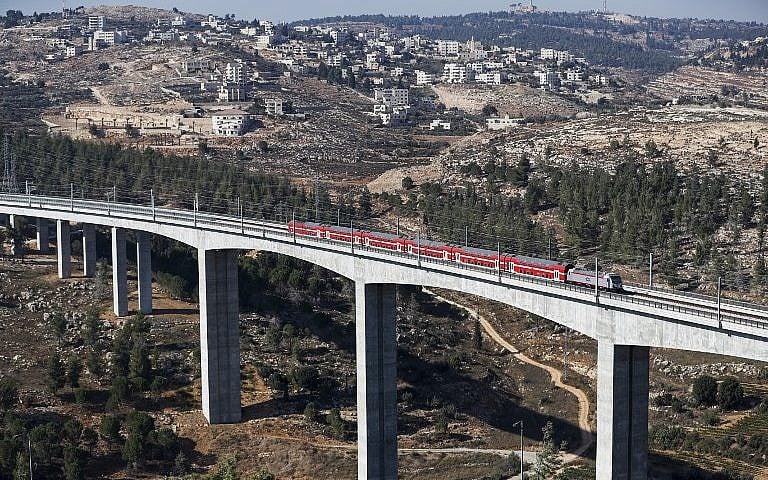
A train on the newly inaugurated high-speed line between Jerusalem and Ben Gurion Airport was forced to stop on the tracks Monday evening while inside a tunnel, the latest in a series of malfunctions to plague the new rail.
The train had left the airport toward the capital with 155 passengers and crew on board when a malfunction occurred in the engine, forcing the train to halt.
Israel Railways said a replacement engine was sent to connect to the train and pull it back to Ben Gurion Airport. It said buses were sent to the airport to transport the passengers to Jerusalem, and that all further trains for the evening had been canceled.
The company also said it had provided the stranded passengers with snacks and drinks while they waited.
Monday’s technical glitch was the second in as many days. On Sunday, technical problems caused the delay and cancellation of numerous trains in both directions throughout the morning and early afternoon.
On September 27, a train from Jerusalem was stuck in a tunnel for half an hour.

The train opened last month after years of delays with promises of bringing relief to passengers who previously had to endure a ride between Jerusalem and Tel Aviv that could take as long as two hours each way.
But the route from Jerusalem currently goes only as far as Ben Gurion Airport, with the line expected to be extended to Tel Aviv in several months.
Carriages for the line also have yet to arrive, meaning Israel Railways had to divert trains from the busy coastal track to meet the needs of the Jerusalem line, leading to crowded cars and disgruntled passengers.
The project was conceived in 2001, at an estimated cost of around NIS 3.5 billion ($978 million).
Works began in 2005, only to be halted by environmentalist opposition until 2009. Tunneling recommenced in 2012. The final cost has amounted to around NIS 6.5 billion ($1.8 billion).










The Times of Israel Community.