

Prosecution at trial of Nazi camp secretary: Gas chamber cries ‘clearly audible’
Indictment against Irmgard Furchner, 96, who absconded last month, says all in Stutthof heard victims suffer; says defendant’s work gave her ‘knowledge of all occurrences, events’
 Add ToI as a Preferred Source on Google
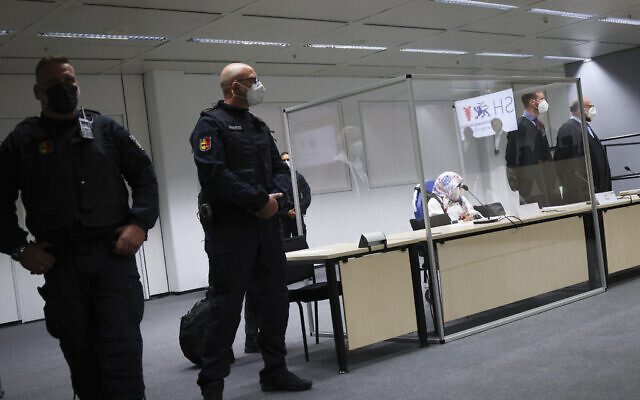
ITZEHOE, Germany (AFP) — A 96-year-old former Nazi concentration camp secretary who absconded before her trial appeared in court in Germany on Tuesday to face charges of aiding and abetting murder.
The first woman to be prosecuted for Nazi-era crimes in decades, Irmgard Furchner is charged with complicity in the killing of more than 11,000 people at Stutthof camp in Poland.
A bailiff brought the pensioner into the regional court in the northern town of Itzehoe seated in a wheelchair, with her head covered by a scarf and her face by a coronavirus mask. She clutched a handbag in her lap.
Furchner confirmed her identity to the presiding judge, Dominik Gross, but did not otherwise address the court.
Prosecutors told the court that the suffering of victims sent to the camp’s gas chambers, including cries and jostling at the bolted doors, would have been “clearly audible” to all at the camp.
Furchner’s attorney Wolf Molkentin said she did not deny the “terrible murders” but disputed bearing criminal responsibility.
He said the proceedings against her were “unreasonable” at her advanced age, because of which hearings have been limited to two hours a day.
Furchner would “not make a statement at this time, nor answer any questions”, Molkentin said.
Outdoors the court, a small group of demonstrators bearing signs reading “fascism never again” held a vigil for the Stutthof victims.
It was the second attempt to start proceedings against Furchner after she fled the retirement home where she lives on September 30, as her trial was set to begin, and headed to a metro station.
The defendant managed to evade police for several hours before being apprehended in the nearby city of Hamburg and temporarily held in custody by authorities.
Furchner was released five days later “under the condition of precautionary measures,” said court spokeswoman Frederike Milhoffer.
According to media reports, the accused was fitted with an electronic tag to monitor her whereabouts.
Victims’ cries ‘clearly audible’
Between June 1943 and April 1945, the accused worked in the office of camp commander Paul Werner Hoppe. Prosecutors say she took dictation of the SS officer’s orders and handled his correspondence.
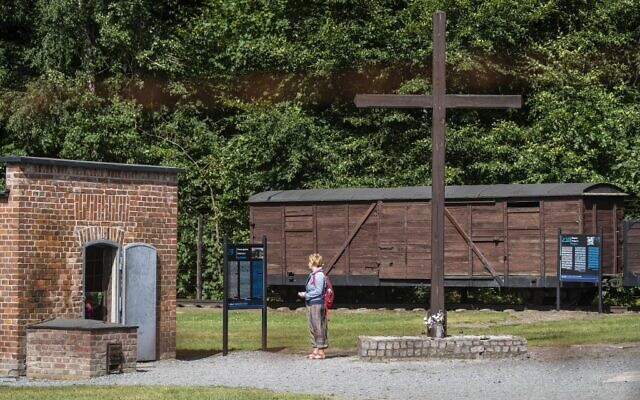
Roughly 65,000 people died at the Stutthof camp near Gdansk, among them “Jewish prisoners, Polish partisans and Soviet Russian prisoners of war,” according to the indictment read out by public prosecutor Maxi Wantzen.
A teenager at the time the alleged crimes were committed, Furchner is being tried in a juvenile court.
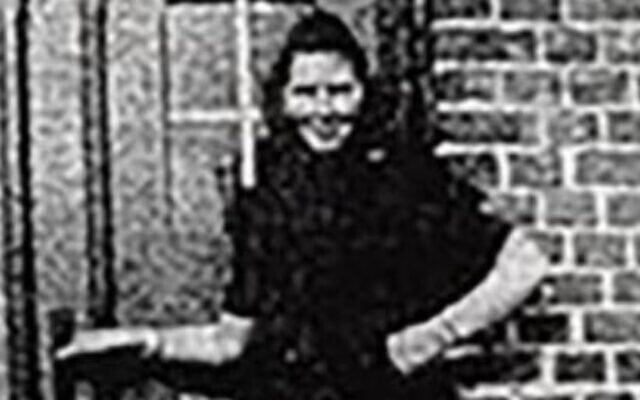
Wantzen said the defendant’s clerical work at Stutthof “assured the smooth running of the camp” and gave her “knowledge of all occurrences and events at Stutthof,” including mass killings.
The prosecutor said that the suffering of victims sent to the camp’s gas chambers including cries and jostling at the bolted doors were “clearly audible” to all at the camp.
Moreover, the “life-threatening conditions” with food and water shortages and the spread of deadly diseases including typhus were intentionally maintained and immediately apparent.
‘Healthy enough’
In a letter sent ahead of her first scheduled hearing, the defendant told the presiding judge of the court that she did not want to appear in person in the dock.
Her failure to present herself in September showed “contempt for the survivors and also for the rule of law,” the vice president of the International Auschwitz Committee Christoph Heubner told AFP at the time.
“Healthy enough to flee, healthy enough to go to jail!” tweeted Efraim Zuroff, an American-Israeli “Nazi hunter” who has played a key role in bringing former Nazi war criminals to trial.
Around the same time Furchner fled her trial, a 100-year-old former Nazi concentration camp guard appeared before judges at a court in Neuruppin, northwest of Berlin.
Josef Schuetz, who stands accused of assisting in the murder of 3,518 prisoners at the Sachsenhausen camp between 1942 and 1945, told the court he was “innocent” and “knows nothing” about what happened at the camp.

He and Furchner are among the oldest defendants to stand trial for their alleged role in the Nazi system.
Seventy-six years after the end of World War II, time is running out to bring people to justice.
Prosecutors are investigating another eight cases, according to the Central Office for the Investigation of National Socialist Crimes.
In recent years, several cases have been abandoned as the accused died or were physically unable to stand trial.
The last guilty verdict was issued to former SS guard Bruno Dey, who was handed a two-year suspended sentence in July at the age of 93.









The Times of Israel Community.