

Ra’am leader expects compromise to be reached on family reunification law
Mansour Abbas refuses to confirm details of reported deal, but says a way will be found to ‘maintain the coalition and solve the issue’; Ra’am no. 2 to reportedly vote against bill
 Add ToI as a Preferred Source on Google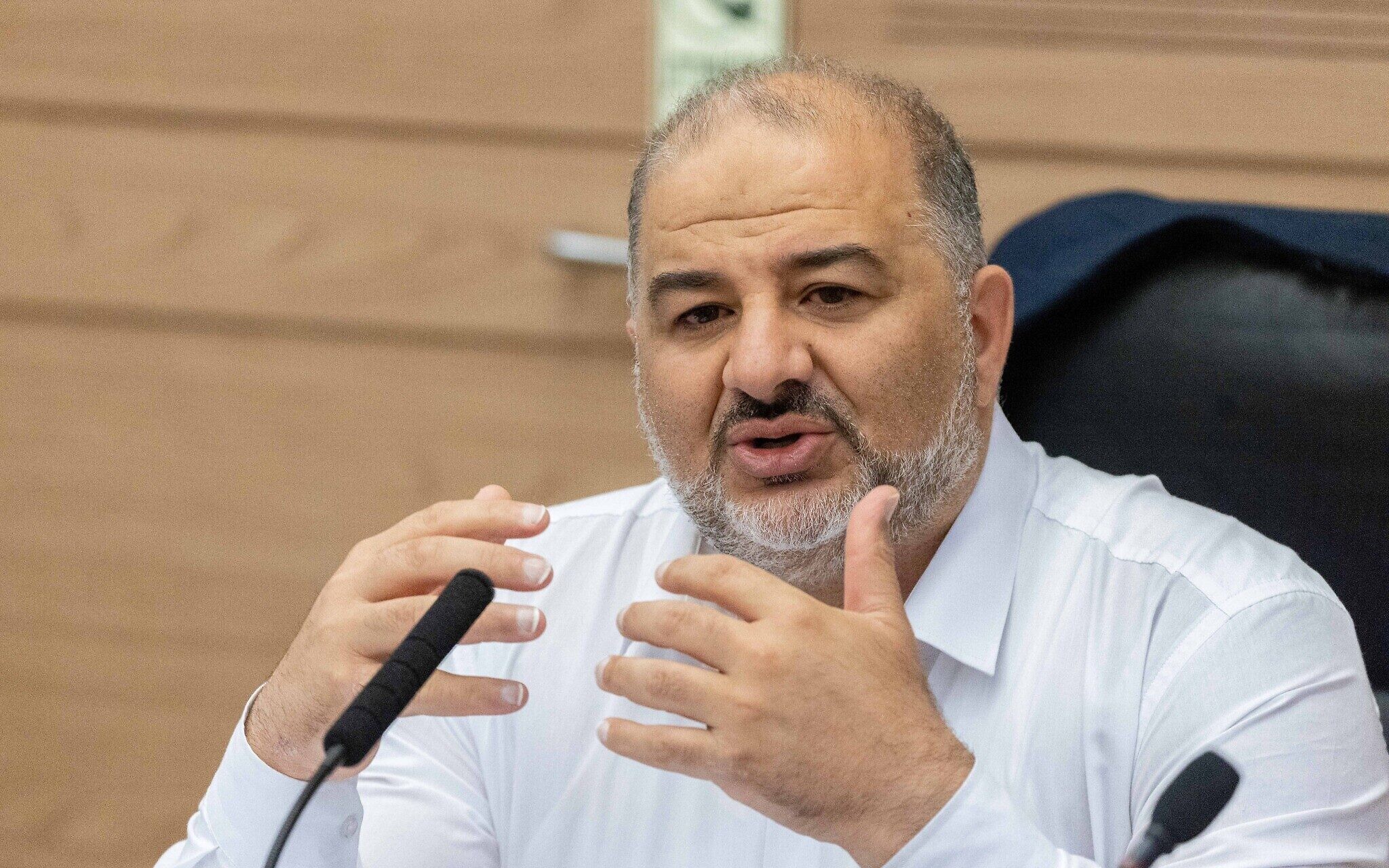
Ra’am leader Mansour Abbas said Saturday he expects a compromise to be reached over an extension to legislation preventing Palestinians who marry Israelis from automatically getting citizenship.
The coalition has, so far, struggled to muster the majority required to back the law, owing to the disparate ideologies of its factions.
“There should be a compromise. Obviously, we are not in support of this law, and the coalition and opposition don’t expect Ra’am to support it,” Abbas told Channel 12. “But there is a difference between handling this issue in partnership, or from an oppositional stance.”
Under a compromise proposal reported on Friday, the “family reunification law” will not be changed, and hundreds of Palestinians who married Israelis before the legislation was first approved in 2003 will receive the status of residency, but not Israeli citizenship, according to Channel 12 news.
Channel 12, which did not cite a source, said the Islamist Ra’am party would abstain rather than voting to extend the law.
Abbas said on Saturday he could not confirm the claim, or the details of the compromise reported by the network.
“I believe that by next Wednesday we will find a way both to maintain the coalition, and also give this issue a solution that will satisfy us at this stage,” he said.
However, MK Mazen Ghanaim, the second-ranked member of Ra’am, will vote against the law, no matter what the party decides, the Kan public broadcaster reported Saturday.
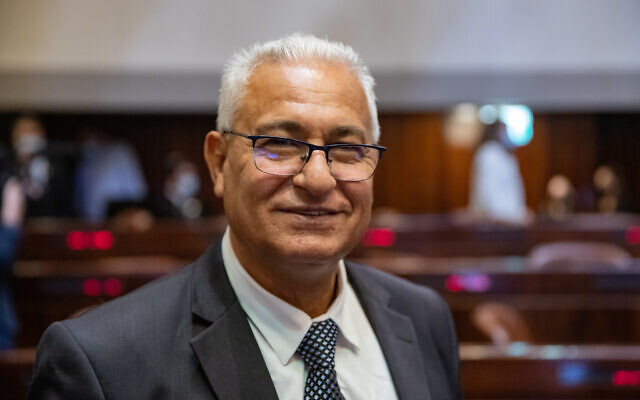
Earlier this week, another Ra’am MK, Walid Taha, denounced the legislation as “racist and anti-democratic.”
However, even if Ra’am were to abstain, the rest of the 61-seat coalition would still be outnumbered by opposition MKs.
Furthermore, several left-wing coalition lawmakers have said they will oppose extending the law. The Channel 12 report did not say whether the proposed compromise would be acceptable to them.
Yamina MK Idit Silman, the coalition whip, said Thursday the law would be voted on next week, even though it remains unclear whether a majority of lawmakers will back the extension.
“I’m confident the right-wing opposition in the State of Israel, that defines itself as right-wing nationalist, will support this law,” she told the Ynet news site.

Most opposition lawmakers back the legislation in principle, but many have indicated that they will nevertheless vote against it in order to undermine and embarrass the new coalition.
Meretz MK Issawi Frej said on Thursday he would oppose the law, even if he were to lose the Regional Cooperation Ministry. Labor MK Ibtisam Mara’ana reiterated her opposition to the legislation in its current form, denouncing it as “racist and discriminatory.”
“For Jews [family reunification] is allowed, but for Arabs it’s forbidden. With laws like these… the Jews are [legally considered] a supreme race. There is no connection to Israel’s security,” Mara’ana said in an interview with Kan.

The battle over extending the Palestinian family reunification law is testing the new coalition composed of right-wing, centrist and left-wing parties and Ra’am. The vote on extending the law was pulled last Sunday from the agenda for the next day, with the coalition apparently unable to muster a majority to pass the measure.
The coalition has accused former prime minister Benjamin Netanyahu and his allies of “playing with the country’s security,” by “putting political considerations before the security interest of the citizens of the State of Israel.”
Family reunification in Israel typically involves an Israeli citizen requesting citizenship for his or her non-Israeli spouse. Most unification applications are submitted by Arab Israelis on behalf of a Palestinian spouse living in the West Bank or the Gaza Strip.
But the 2003 measure, passed due to concerns that it was being abused by members of terror groups to gain access to Israel, put limits on the process, making it harder for Palestinians to gain Israeli citizenship or residency through marriage. The controversial law has been extended every year since, usually with strong backing from Likud and other right-wing parties.
The current legislation expires July 6.










The Times of Israel Community.