

Building communities, strengthening roots: Africa Israel Residences
From Jerusalem to Tel Aviv and beyond, keeping the founders’ dream alive—developing homes, communities, and connections that bring Jews closer to Israel.
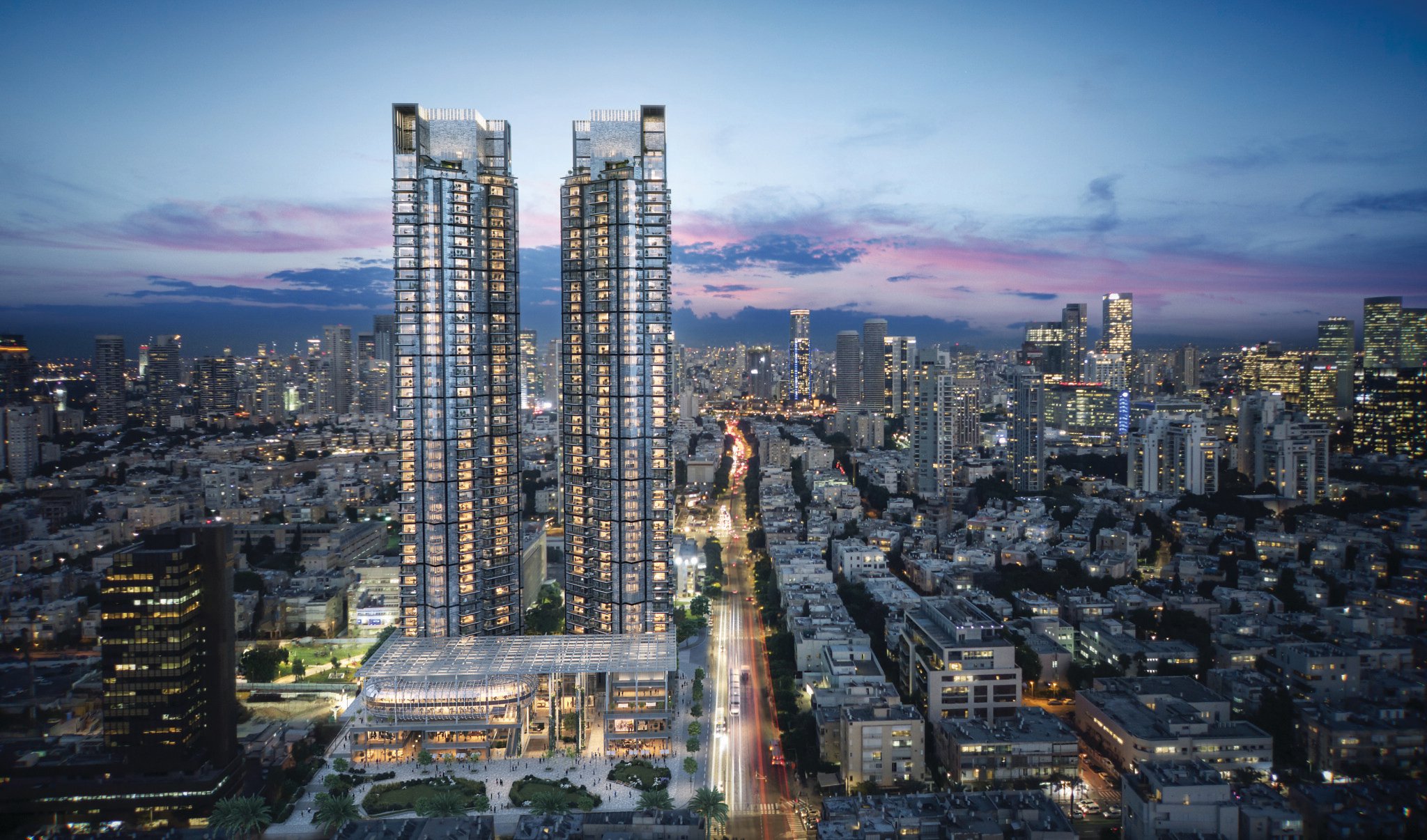
Ninety years ago, more than a decade before Israel declared statehood, a group of idealistic Jewish businessmen from South Africa had a vision: to develop the Land of Israel in the hope that diaspora Jews would return to their ancestral homeland.
The founders of Africa Israel Residences Ltd, which is part of the Africa Israel Group, could not have known that the company they created in the mid-1930s would build dozens of thriving neighborhoods and more than 100,000 homes throughout the country. Nor could they have imagined that AIR, today valued at 3.8 billion shekels ($1.7 billion), would one day be traded on the Tel Aviv Stock Exchange.
Decades of experience, solid financials, high construction standards and continuous innovation have made Africa Israel Residences one of the largest and most sought after residential real estate development companies in Israel. Many of its clients are diaspora Jews seeking a primary or second home in Israel.
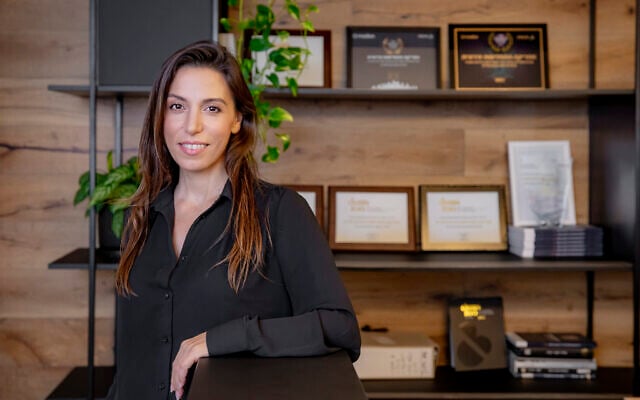
“When you buy something from abroad you want it to be financially solid so you can sleep at night knowing that you’ve put your money in a safe place,” said Ronit Eshed Levy, the company’s CEO, who noted that Israel’s real estate market remains remarkably stable, despite the challenges of the past two years. Having a home in Israel “is not only an investment. It is a safe haven, an anchor during these turbulent times, and a source of identity for families across the Jewish world,” Levy said.
Although the scale of Africa Israel’s projects has grown exponentially over the years, the company’s goals have remained the same: to build quality homes and thriving communities.
“We take a plot of land and make a neighborhood,” Levy explained. “We think of the facilities needed, we think of how children will play and parents will feel secure knowing their children are safe outside. When we build a neighborhood, we want it to have a little shopping area, with some offices, some shops and medical centers that residents can use, close but not too close to the apartments. An area that offers all the necessary services but without a lot of noise. We also build the ecosystem: the kindergartens, the schools, the synagogues, the bike trails. We look at things holistically.”
Purchasing a home in another country can feel daunting, which is why has streamlined the process, Levy said.
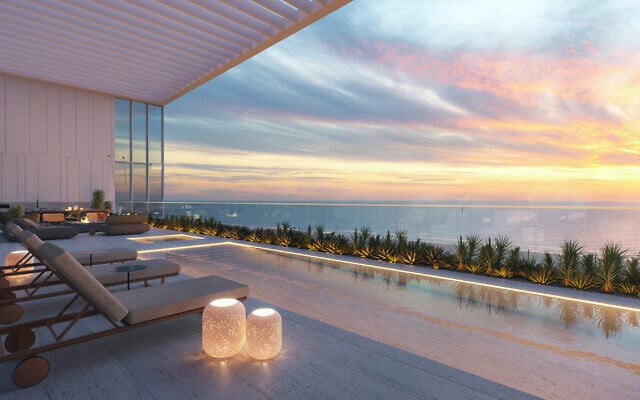
“When it comes to out-of-country buyers, they need an extra layer of support. They don’t know the things we know about Israel, so we always try to put ourselves in their shoes.”
The availability of public transportation, for example, can make or break a commute to work or school, and choosing a neighborhood that most aligns to the buyer’s “hashkafa,” or religious outlook, is vital, Levy said.
“When it comes to religious people, we also keep in mind what kind of communities exist in the neighborhood. Not every neighborhood is religiously the same, so if we see that a client is part of a certain stream in Judaism, we offer a variety of options. We want them to make the right match. Every neighborhood in Jerusalem, from our projects in the Katamonim to Ramat Sharet and Arnona, has a different vibe religiously.”
Ultimately, Levy said, AIR wants buyers to have a positive experience from beginning to end, through the entire purchasing journey. “When we hand over the keys to the buyers, they see that the synagogue is where we said it would be, that the schools and other facilities we said would be there are there. Clients who bought their homes 20 years ago can still pick up the phone and call us, and we try to help.” When buyers are satisfied with both their home and the buying process, “they tell their friends, who tell their friends.”
In addition to building new neighborhoods, AIR is also carrying out “pinu’i binu’i” urban renewal projects around the country. These projects involve the demolition of old, often dilapidated, buildings and the construction of modern, safe buildings that are beautiful and earthquake-resistant, and include individual safe rooms/shelters. When a building is completed, the apartment owners return to a new, often larger home, and the rest of the apartments are sold to new buyers.
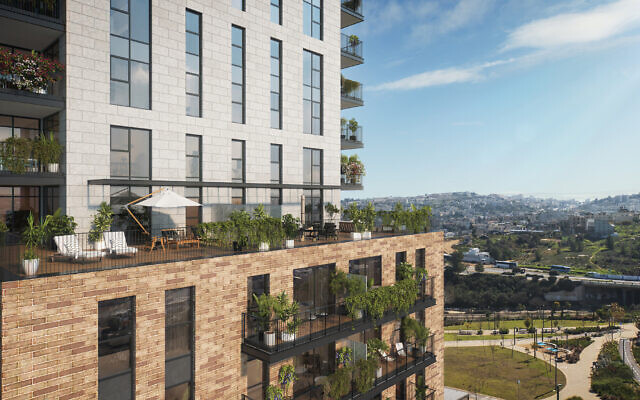
Urban renewal “is the place where the country and the company are merging the old and the new,” Levy said. Whether building a new neighborhood or refurbishing an old one, “we really do make an effort to be innovative while maintaining a zero amount of risk.” Examples include installing the most technologically advanced air conditioning system and Smart window shutters (trissim) that block radiation.
In addition to projects in Jerusalem, Tel Aviv, Herzilya, Rehovot and many other municipalities, Africa Israel hopes to launch projects in the south of Israel most affected by the war, such as Ashkelon and Sderot.
“We believe it’s the right time,” Levy said. “The south was hit hard these past two years, and I think it is a place people want to live. The communities there are very strong and very resilient. They’ve been together for decades.
“We see ourselves as building Israel.”
Africa Israel Residences is launching a sales campaign in Europe starting in England and France to introduce prospective buyers to the company. For more information, click here