

The undelivered speeches that reveal a series of unrealized alternate US histories
In his new book, presidential speechwriter Jeff Nussbaum opens the archives, uncovering the scenarios American leaders had prepared for — and the ones they avoided by keeping mum
 Add ToI as a Preferred Source on Google
Reporter at The Times of Israel
On Election Day 2000, Jewish-American speechwriter Jeff Nussbaum had written no less than three possible speeches for his boss, then-United States vice president Al Gore.
That year, Gore was the Democratic candidate in what turned out to be an epically contested presidential race against Republican George W. Bush. With all eyes on the state of Florida — on which the results of the entire election hung in the balance — none of Nussbaum’s speeches ended up being delivered, and Bush was declared the winner over a month later.
Nussbaum found new employment in the Senate during a period of one crisis after another — the 9/11 terror attacks, the Iraq War and the controversy surrounding the Patriot Act. He reflected that less than 600 votes in Florida had determined the outcome of the Bush-Gore election and the resulting course of history.
“There was a whole alternate history you could build assuming Al Gore won,” said Nussbaum, who was also a senior speechwriter for US President Joe Biden. “I had a pretty clear sense of what an Al Gore administration would have looked like.”
And, he explained, “It got me thinking, what are these other instances in history when the outcome is so in doubt, not just in politics? The things so close to a different outcome, there was some speech prepared to account for it?”
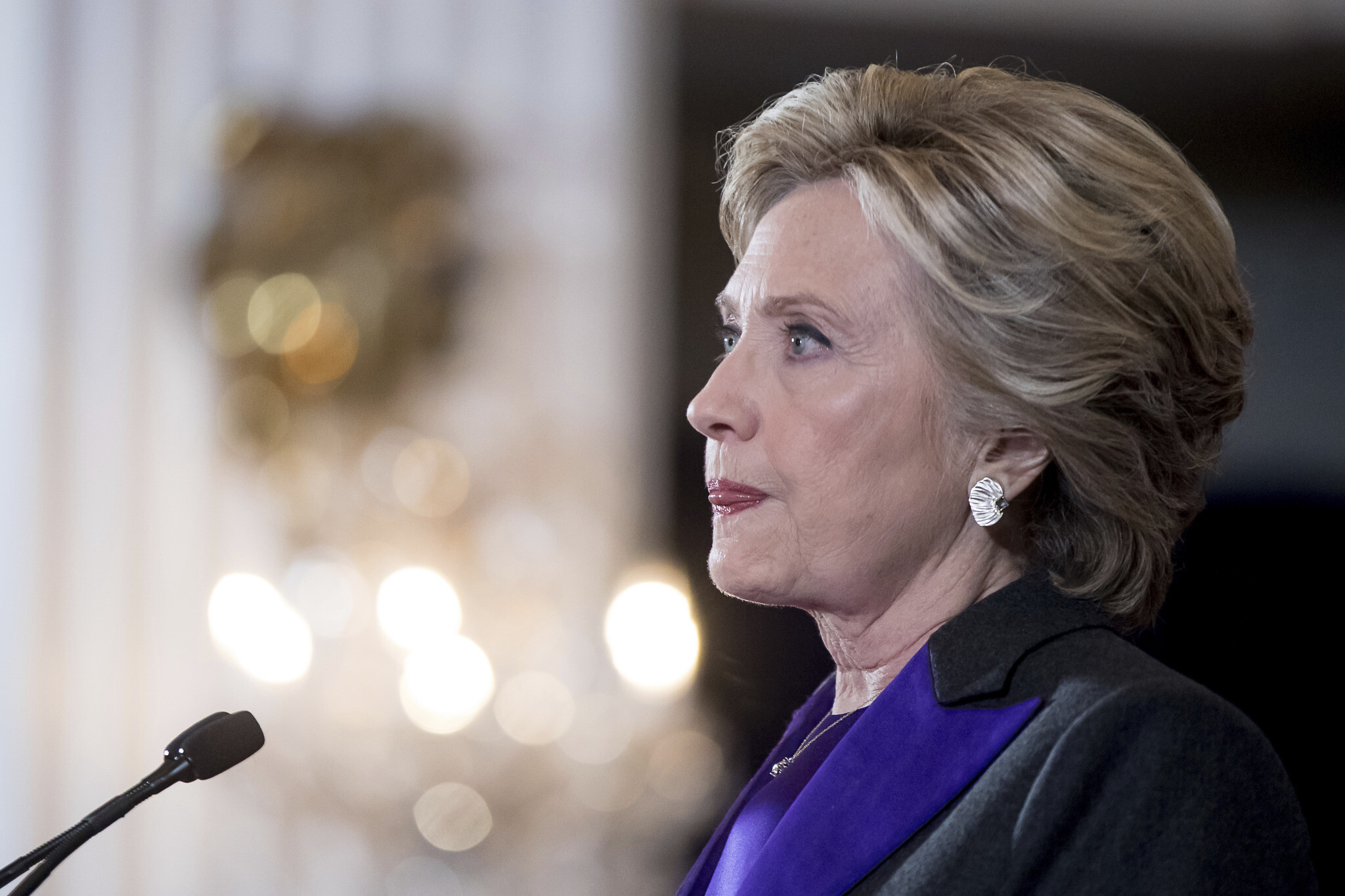
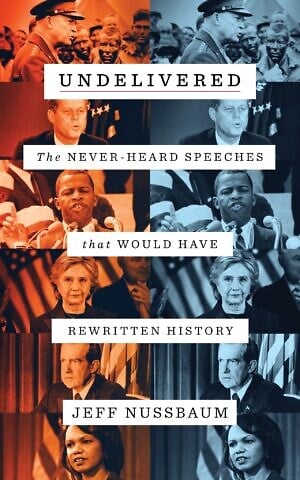
As it turned out, there were quite a few — from an intended speech by civil rights activist John Lewis that nearly derailed the 1963 March on Washington to a victory address by Democrat Hillary Clinton that she never gave following her 2016 loss to Republican Donald Trump in another notoriously close presidential election.
These historical close calls are reflected through the prism of speechwriting and shared in Nussbaum’s new book, “Undelivered: The Never-Heard Speeches that Would Have Rewritten History.”
“I’m not a historian, I’m not a journalist,” Nussbaum said. “In excavating these chapters of history, I was able to be both, really, which was fun for me.”
He added, “one of the real joys of the book was to pull back the curtain a little bit and share what was actually going on in the speechwriting process.”
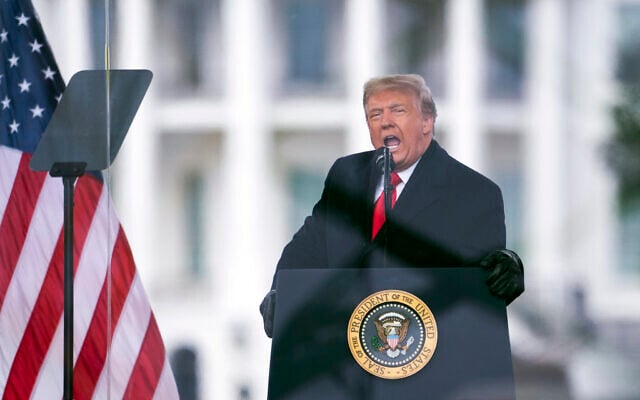
The topic has become more relevant thanks to a recent disclosure by the House committee investigating the January 6 uprising at the US Capitol: There were significant differences between a speech that then-president Trump planned to give the day following the US Capitol riots and the speech he eventually delivered. A photo shared by the committee shows that multiple lines condemning the rioters were crossed out, including the statement, “Legal consequences must be swift and firm.”
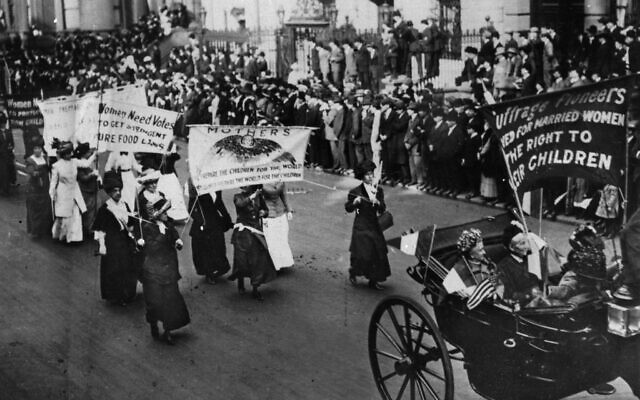
The book reveals an eerily similar moment from the previous century — the disruption of a 1913 march of suffragettes, or women seeking the vote. Starting at the Capitol, the speaker list included Helen Keller, the inspirational deaf and blind girl who had overcome adversity to acquire speech, had grown up into an adult advocate of progressive causes, which made her unpopular with many former admirers. Because of the fracas, Keller never got to deliver her call for women’s liberation.
“You picture 5,000 women marchers set up against a half-million basically drunk, angry men,” Nussbaum said. “It’s really just a terrifying scene… almost a January 6 feel to it — angry men who don’t want to see democracy expand or embrace voices of people who don’t look like them.”
Readers will find the victory speech that a more recent pioneer — Hillary Clinton — planned to deliver had she not lost the 2016 presidential race to Trump. Clinton envisioned a poignant tribute to her late mother, Dorothy Rodham, while reflecting on the election of the nation’s first female president, which remains unrealized.
There’s also an address president John F. Kennedy would have given if American forces had launched airstrikes during the Cuban Missile Crisis, and a speech president Richard Nixon had planned before his resignation during Watergate. The shortest speech in the book is from World War II: Allied commander-in-chief (and future president) Dwight D. Eisenhower’s terse apology for the failure of D-Day. Thanks to the success of the Normandy landings, it became a historical curiosity instead of an acknowledgment of disaster.
Most of the speeches in the book are publicly available in archives, but tracking them down was still challenging.
“In a lot of cases, I had to play detective,” Nussbaum said.
He solved the mystery of a missing speech from Abe Beame, the mayor of New York City when it faced bankruptcy in 1975. President Gerald Ford refused to help, sparking a memorable front-page headline from the New York Daily News: “FORD TO CITY: DROP DEAD.”
Beame drafted a speech to give if the city declared bankruptcy. The teachers’ union saved the day and averted a financial nightmare. As for the speech, a series of contacts ultimately helped locate it in a file cabinet.
An arranged (political) marriage
“It was a super-fun journey,” Nussbaum said of writing the book.
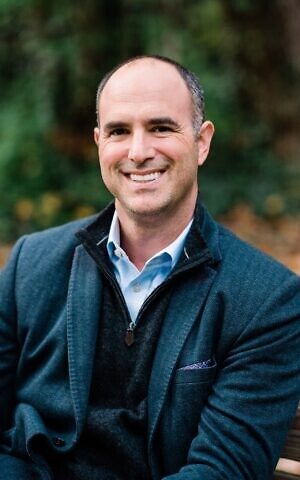
He can say the same about his speechwriting journey, marveling that it involves many of the same rhetorical tools used by the ancient Greeks, such as logos (logic), pathos (emotion) and ethos (evoking the trustworthiness of the speaker). Another element Nussbaum has used with gusto is humor. For him, it has less to do with the Thessalian plain and more with the Borscht Belt: He grew up in a Jewish family and learned Jewish humor through his father’s hotel business in the Catskills.
Humor is “an incredibly powerful way to stick a dagger in an opponent and do it with a smile,” Nussbaum explained. “It’s also a way to connect on the ethos side… basically, with a self-deprecating joke, you can laugh at yourself, show you see yourself clearly.”
He added, “I think humor is actually quite a serious business. It can help accomplish a lot of serious goals. I realize there is nothing funny in what I just said. There’s an old joke — describing humor is like dissecting a frog. It’s not particularly funny, and the frog dies.”
Nussbaum’s most recent gig was as a speechwriter for Biden, with whom he had a memorable introduction in 2008 when Nussbaum was working on the presidential campaign of Barack Obama. After Obama picked Biden as his running mate, Nussbaum got a new position writing for the then-senator from Delaware.
“When I met Sen. Biden, he crossed himself, looked skyward and said, ‘I’ve been in the Senate longer than you’ve been alive, what are you going to teach me,’” Nussbaum recalled.
He and Biden ended up bonding through Biden’s son, the late Beau Biden. Nussbaum worked with Beau Biden on a speech introducing Joe Biden at the 2008 Democratic convention.
Although the speech lasted all of seven minutes, it riveted the convention, and, Nussbaum said, “It brought me the credibility to write with then-Sen. Biden for the duration of the campaign. I’ve stayed connected to him since. It was an arranged marriage, but he gave me the opportunity to make it work.”
Hot on a speech’s trail
Nussbaum was able to make things work for the book, too — although he could not always find every speech he was looking for. This happened when he heard that president Jimmy Carter had drafted an address for the imminent collapse of the 1978 Camp David Accords between Israel and Egypt before the peace deal was dramatically revived. On another occasion, he used the Freedom of Information Act to piece together fragments of a still-classified speech — a foreign-policy address by Bush’s national security advisor, Condoleezza Rice, that was preempted by 9/11.
But in the case of civil rights activist Lewis, he did manage to find the original speech.
At the time of the March on Washington, the future longtime congressman was the head of a civil rights organization, the Student Nonviolent Coordinating Committee.
One line in his intended speech was anything but nonviolent: “We will march through the South, through the heart of Dixie, the same way Sherman did” — a reference to a devastating Civil War campaign by Union Gen. William T. Sherman. The speech then promised a “scorched earth policy” that would “burn Jim Crow to the ground — nonviolently.”
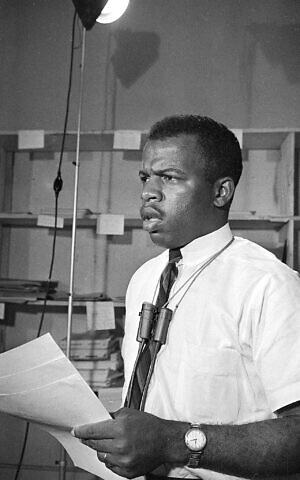
Overall, its language dismayed Patrick O’Boyle — the Roman Catholic archbishop of Washington, DC, whose support the organizers needed — and heightened the tense atmosphere in the nation’s capital. The march’s best-remembered speaker, the Rev. Dr. Martin Luther King Jr., told Lewis that the line about Gen. Sherman “doesn’t sound like you.” But even as the march got underway, Lewis wouldn’t soften his stance.
“He wouldn’t even change the speech for Martin Luther King,” Nussbaum reflected.
The book quotes how civil rights veteran A. Philip Randolph finally persuaded Lewis in a last-second sit-down behind the Lincoln Memorial. “I have waited twenty-two years for this. I’ve waited all my life for this opportunity. Please don’t ruin it,” Randolph reportedly said. Lewis couldn’t turn him down, reflecting, “It would be like saying no to Mother Teresa.”
“At the end, he was a little disappointed with the speech he ultimately gave,” Nussbaum said. “It was still the most fiery speech of the event. It served its purpose, basically. The thing I say is that it gave people enough of the nightmare but didn’t totally stop them from hearing about the dream.”
This article contains affiliate links. If you use these links to buy something, The Times of Israel may earn a commission at no additional cost to you.


The Times of Israel Community.