

Two long-time negotiators dissect what’s at the heart of the Israeli-Palestinian conflict
In new book ‘Tomorrow is Yesterday,’ Jewish US diplomat Robert Malley and veteran Palestinian negotiator Hussein Agha team up to look at the hard truths behind the stalled two-state solution
 Add ToI as a Preferred Source on Google
Reporter at The Times of Israel

Name a peace initiative aimed at ending the Israeli-Palestinian conflict over the past 25 years, and chances are either Robert Malley or Hussein Agha has been involved. So it was almost inevitable that the former United States diplomat and the veteran Palestinian negotiator would team up to write a book.
That book is titled “Tomorrow is Yesterday: Life, Death, and the Pursuit of Peace in Israel/Palestine.” Published on September 16 by Farrar, Straus and Giroux, it is the latest collaboration between the two authors, who have penned articles together over the past quarter-century.
It comes out at a particularly urgent moment — the latest iteration of the Israeli-Palestinian conflict, marked by the bloody Hamas invasion of October 7, 2023, and the ensuing, devastating war against Hamas in the Gaza Strip, recently halted by a ceasefire.
“The book is not about October 7,” Agha told The Times of Israel in a joint interview with the authors over Zoom. “It is about the processes and realities and politics that eventually led to October 7 and the Gaza war.”
“October 7, for me, is the culmination — and the Gaza war is the culmination — of 30 years of failed, futile diplomacy,” he added.
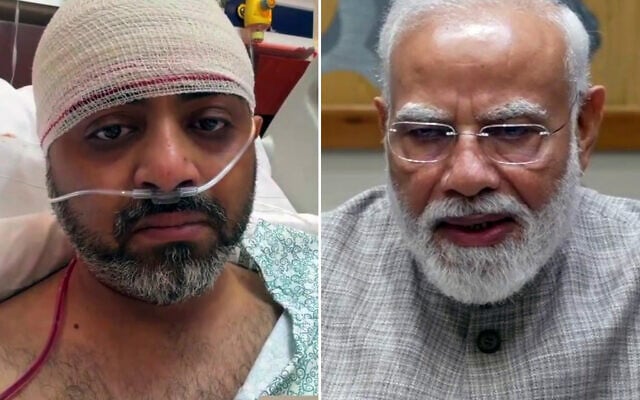
The authors bring firsthand experience from the negotiating table to the narrative. Agha, who has Iranian, Iraqi and Lebanese roots and advised the late terrorist-turned-Palestinian Authority president Yasser Arafat, drafted a groundbreaking paper intended to facilitate a two-state solution with Israeli negotiating partner Yitzhak Molcho in the previous decade. Malley — the son of a Syria-born Jewish anti-Zionist journalist who immigrated to Egypt and then relocated to the United States — has represented the Clinton, Obama and Biden administrations in numerous talks focusing on Mideast peace.
October 7, for me, is the culmination — and the Gaza war is the culmination — of 30 years of failed, futile diplomacy
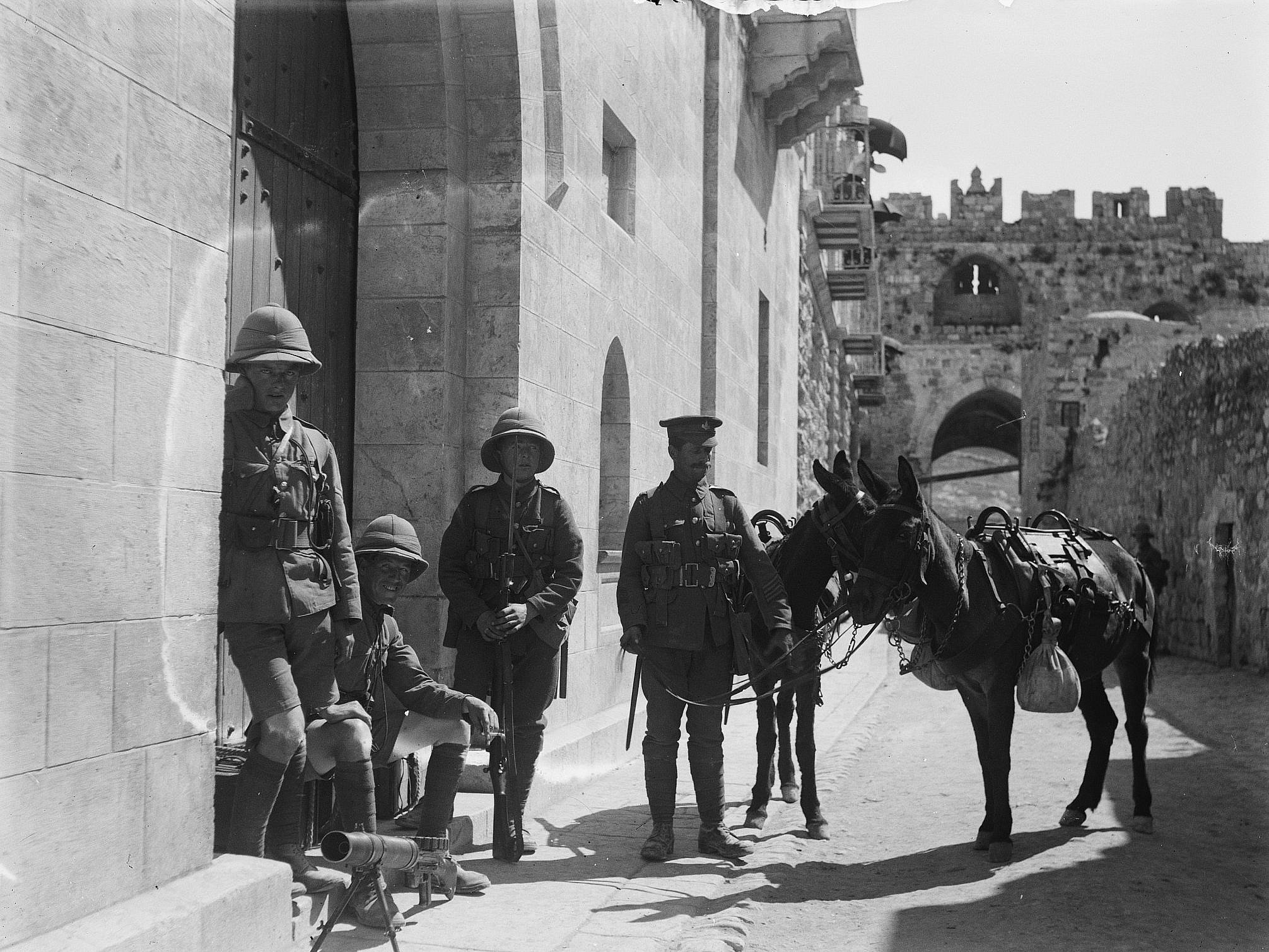
Due to their professional and personal backgrounds, Agha and Malley take more than current events into account when considering the Israeli-Palestinian conflict. When they say “tomorrow is yesterday,” the “yesterday” they refer to might be 1947, the year the British Mandate ended… or 1948, when Israel won a war of independence and some 750,000 of the indigenous Arabs fled or were expelled… or even 1917, when Great Britain issued the Balfour Declaration, promising a national homeland to Diaspora Jews in what was still a part of the Ottoman Empire.
Is it any wonder that when Agha looks at the present US plan for governing postwar Gaza, he sees an echo of a mandate?
There’s another sense of deja vu that troubles the authors. In their many sit-downs trying to reach a deal, the proceedings have tended to follow the same script. Diplomats and heads of state with fixed amounts of time to work on the conflict focus on issues that they see as lower-profile on the agenda but offering a greater chance of being resolved — think water rights or security arrangements. The authors note that what often gets shelved are topics connected more directly to the conflict and thus more likely to arouse opposition — i.e., the right of return for Palestinian refugees, or Jewish identification of Israel as a Jewish state. For such hot-button issues, there are only hazy promises of addressing them after a peace deal has been reached.
“Diplomats want the quick fix,” Malley said. “I was in those shoes. They don’t want to start dealing with history, but [with] what you can control.”
Diplomats want the quick fix. I was in those shoes. They don’t want to start dealing with history, but [with] what you can control
Too bad, the authors say, because the conflict is about often-uncontrollable issues — in Malley’s words, “intangibles, emotions, fears, anxieties, aspirations, yearnings.”
“We have to deal with emotions,” Agha said. “You cannot deny the attachment of the Jewish people to Eretz Yisrael [the Land of Israel]. That is a given. You cannot try to convince [someone] they should not have this attachment. It’s the same with Palestinians’ attachment to Palestine, the land of Palestine… It’s like being in love.”

To the authors, that most worked-over of diplomatic pursuits — the two-state solution — is a failure in part because it has not taken such emotions into account in its myriad versions dating back decades.
“It’s sort of a separate, abstract, illusory vision of the conflict,” Malley said. “Emotions are never addressed by the solution. It never changed what was on the ground.”
“People say there is no alternative to the two-state solution,” he reflected. “What are they talking about? The two-state solution is not an alternative. It has failed, and failed again.”
The two-state solution is not an alternative. It has failed, and failed again
Agha recalled having dinner in London last year with a friend — the late former US ambassador to Israel Martin Indyk, whose involvement in Israeli-Palestinian negotiations spanned over 30 years. With mere weeks to live, Indyk made a poignant plea.
“He tried to convince me to not give up on the two-state solution,” Agha said. “I said, ‘Martin, just give me a road map that is operational, that is a viable possibility to a two-state solution’ … He did not have any road map.”
Multiple Palestinian populations
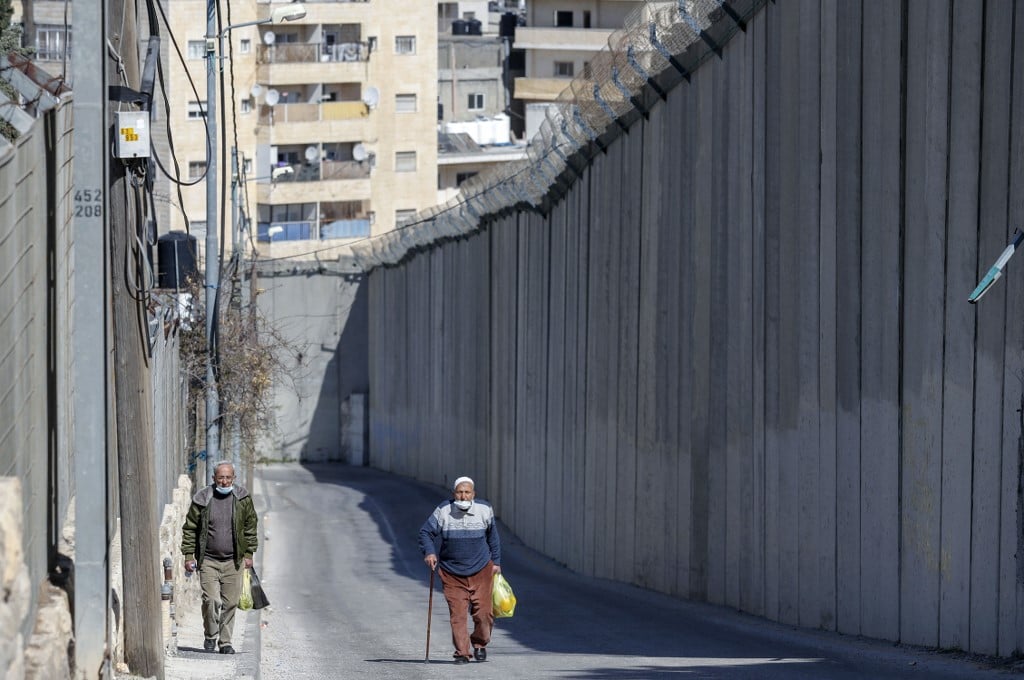
Agha sees numerous problems for a two-state solution on the Palestinian side. He described the Gaza Strip and West Bank as “truncated,” with virtually no relations between the two areas. And there are separate Palestinian populations in the region, in Gaza, the West Bank, and in Israel itself, where Arab Israelis constitute 20 percent of the population. Then there’s the worldwide diaspora. He regretted that talks about a two-state solution do not take these multiple populations into account.
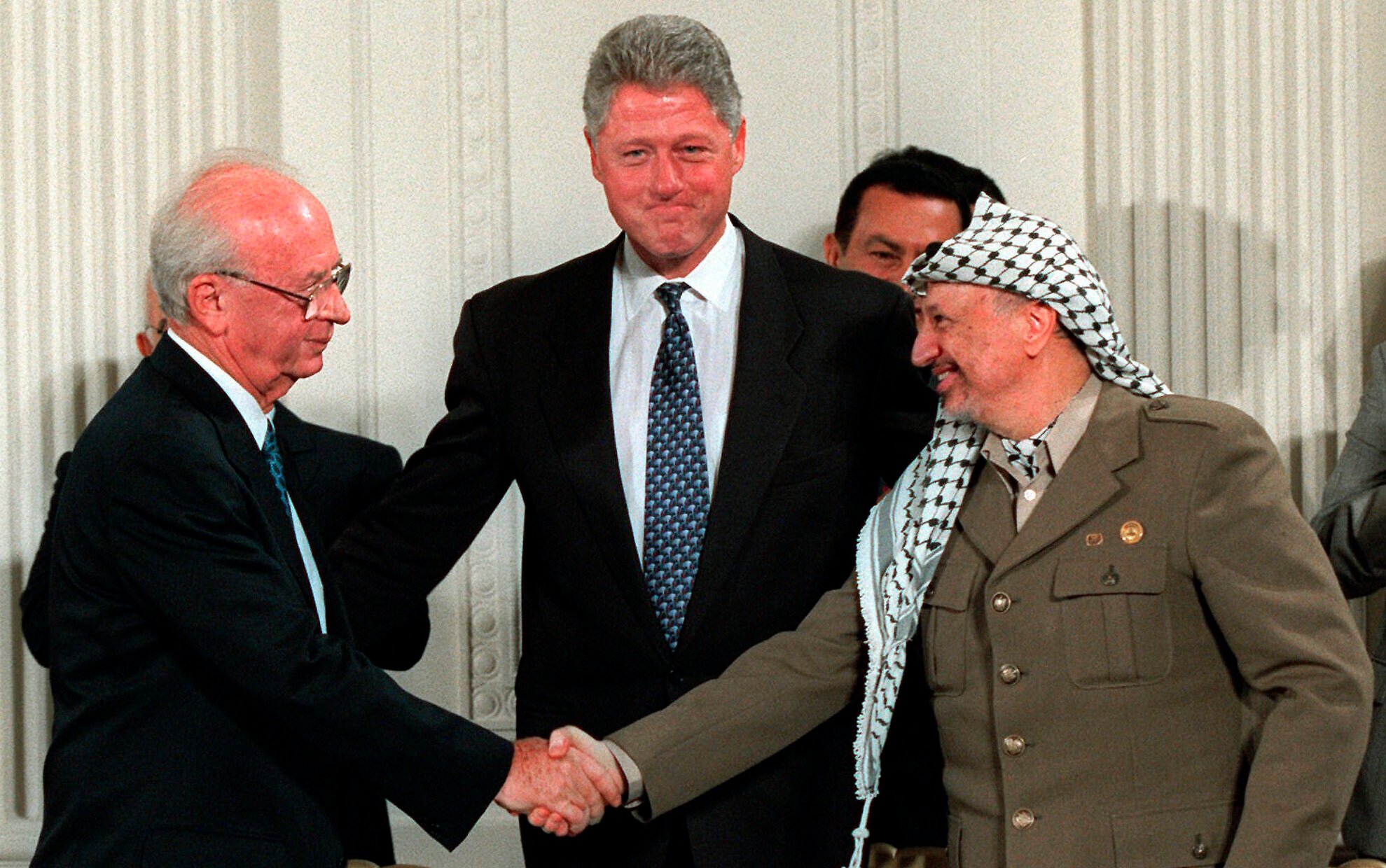
Perhaps rhetorically, he asked. “For Americans to hold onto the two-state solution a couple of decades since Camp David in 2000, to say, ‘Let’s keep the hope of a two-state solution alive’ — for how long?”
What concerns the authors is the possibility that another alternative will prevail: the status quo.
As Malley says, “The status quo is much more powerful than the two-state solution,” because the former exists while the latter does not. He lamented that under the status quo, Israel “keeps taking over more and more Palestinian land,” and predicted, “There’s no more likely outcome than a repeat of what we’ve been seeing for decades.”
The authors raised alternative possibilities. Malley brought up an Israeli-Palestinian confederation, or a partition with varying levels of fluidity. Agha suggested learning from moments in Middle Eastern history when different groups somehow coexisted — including Jews and Palestinian Arabs under British rule, when he said peace was more prevalent than you’d think.
And there’s always the chance that someday, Israelis, Palestinians and overseas diplomats will finally get it right on a two-state solution.
“We would love to be convinced that the two-state solution will work,” Malley said. “Both of us have decades of work on behalf of a two-state solution.”
“The book is not a refutation of a two-state solution,” Agha said. “We are not against a two-state solution. We just can’t see it happening.”








The Times of Israel Community.