

US Jewish leaders express alarm over new political conditions for synagogue security grants
Houses of worship that don’t cooperate with ICE or that offer DEI programming are worried new terms will make them ineligible for funding that helps cover essential safety measures
 Add ToI as a Preferred Source on Google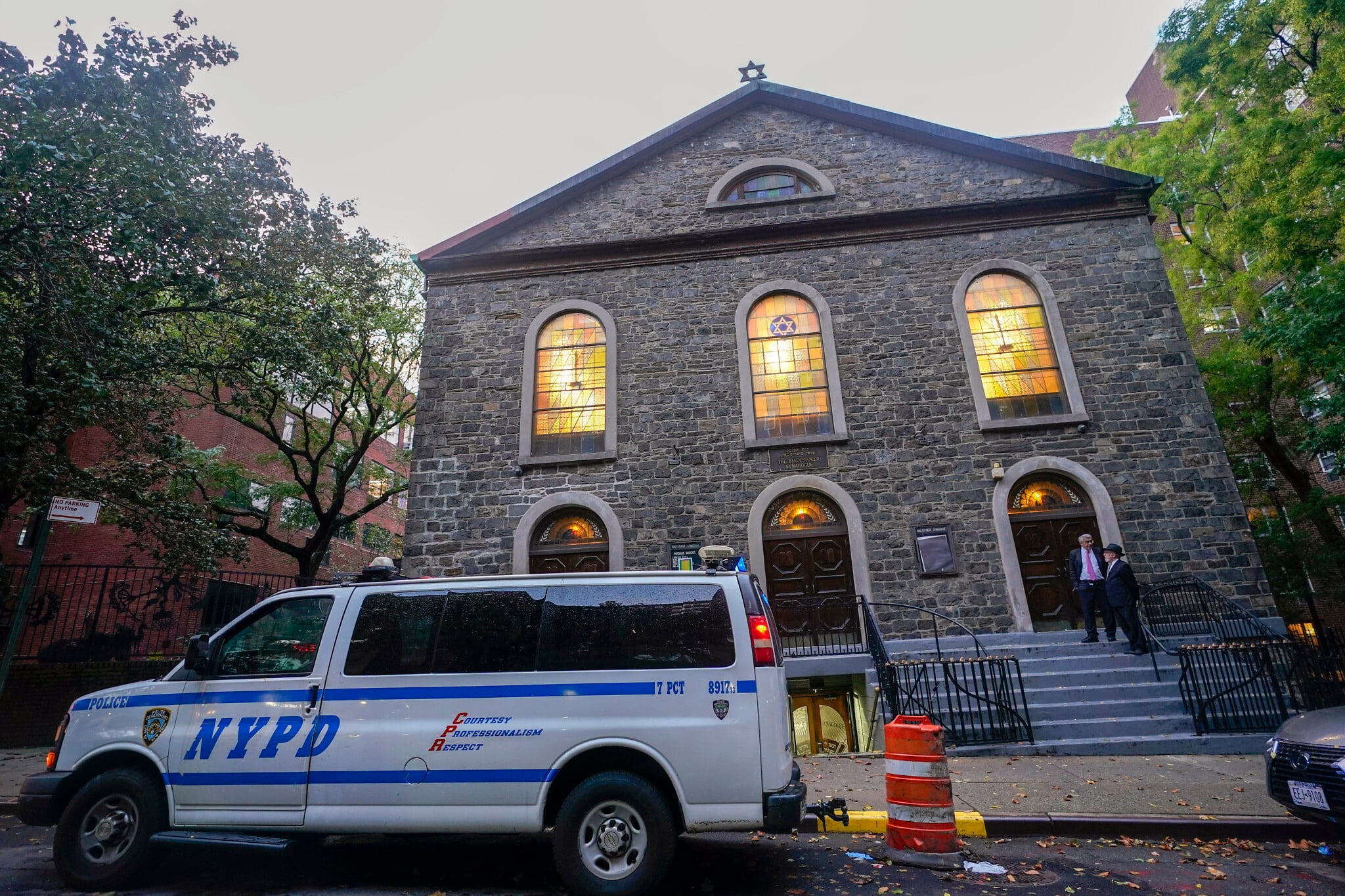
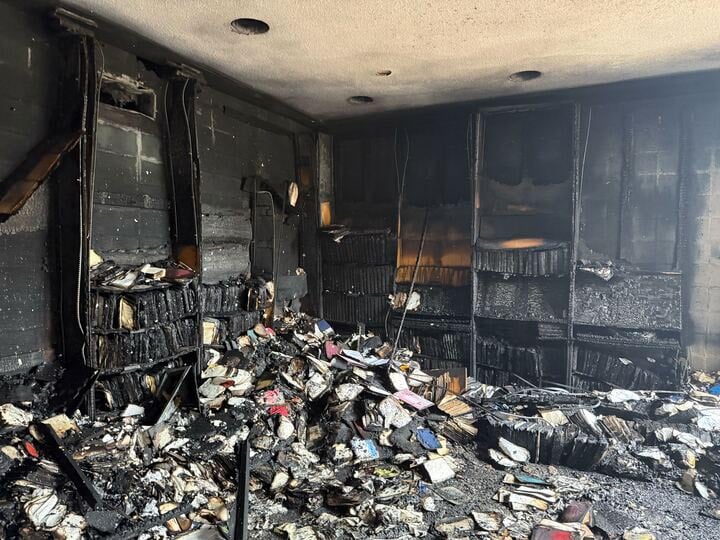
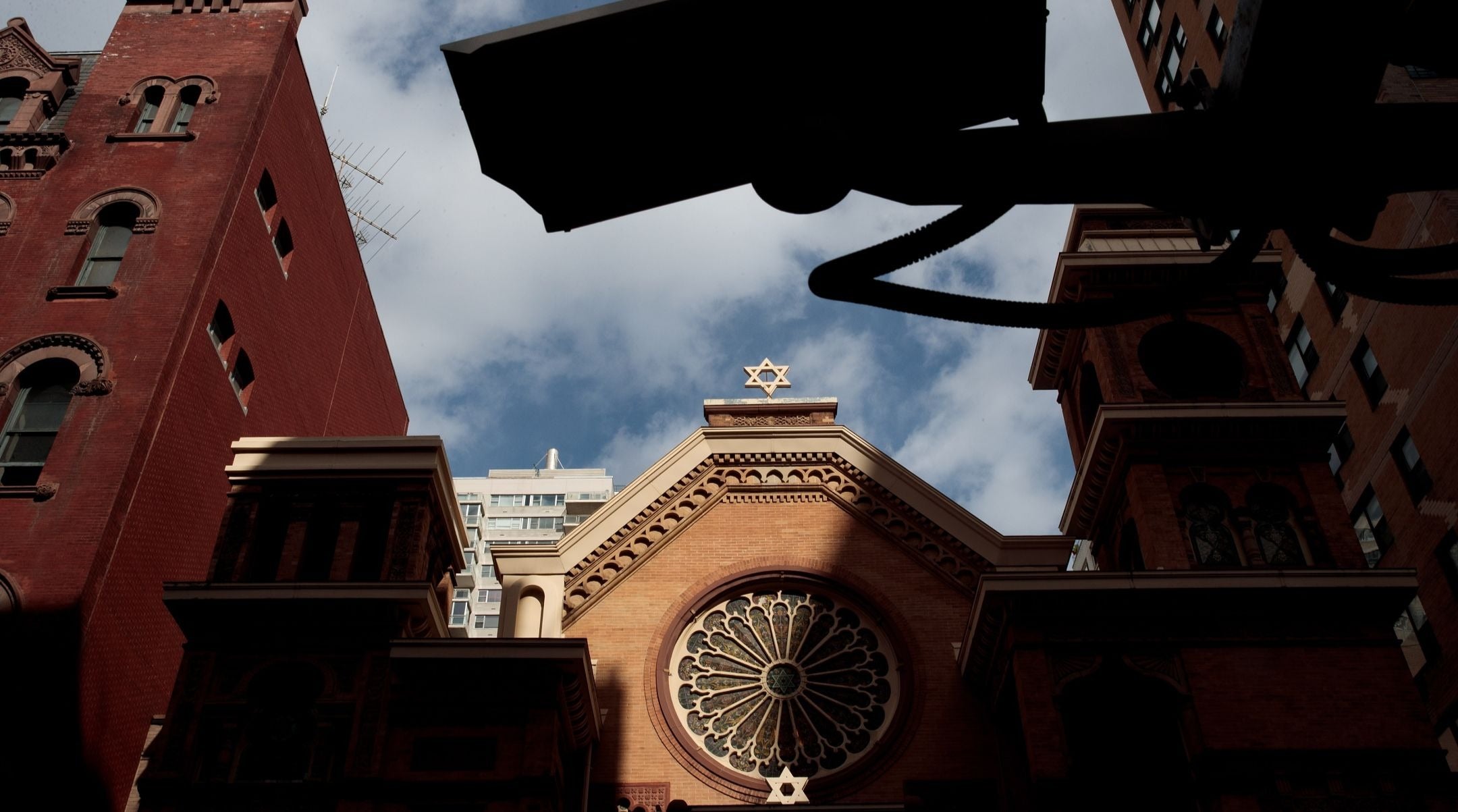
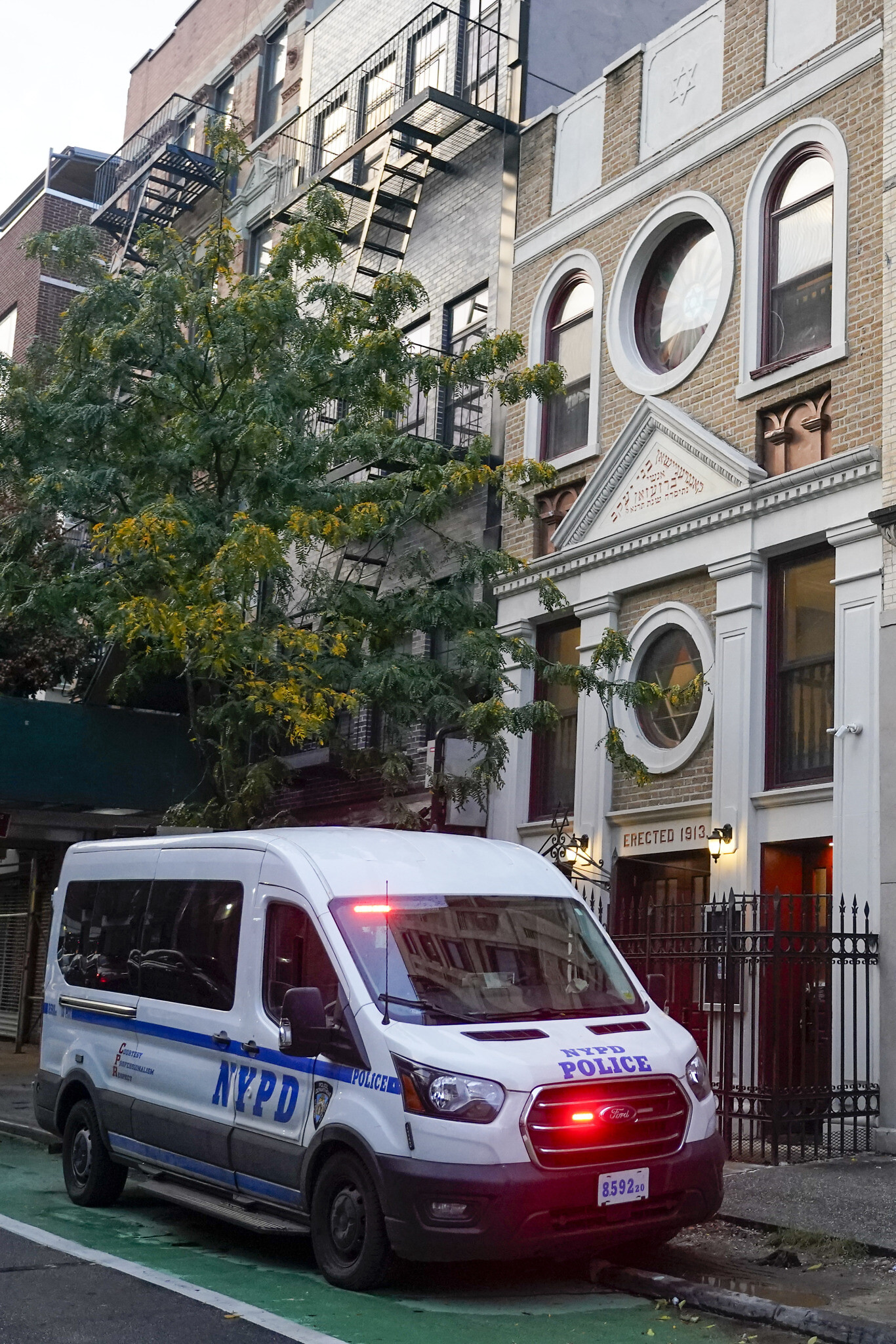
JTA — The federal government of the United States distributes hundreds of millions of dollars each year to houses of worship to protect them from violent attacks, such as the synagogue arson in Jackson, Mississippi, last month, or the car ramming at the Chabad headquarters in Brooklyn last week.
But would a synagogue that declares itself a sanctuary for refugees — and refuses to cooperate with Immigration and Customs Enforcement — be eligible for that funding under new terms implemented by the Trump administration? What about a congregation that runs afoul of the administration’s anti-DEI push by offering programs aimed at making Jews of color, Jews with disabilities, or LGBTQ Jews feel more welcome?
After more than six months of inquiries by Jewish organizations and members of Congress, the answer remains unclear: The federal government has not provided a definitive explanation of what conditions will apply to the funding. With the application deadline now passed, congregations that applied despite the uncertainty are waiting to find out whether they will receive an award.
“We are facing real threats against our communities,” Amy Spitalnick, CEO of the Jewish Council for Public Affairs, said in a statement. “Yet — as we’ve been warning for months — we’re now seeing this vital program thrown into chaos and politicized in dangerous ways — from the delayed rollout, to confusing and contradictory guidance, to new conditions that force communities to choose between their values and their security.”
The latest effort to keep the security funding untethered from ideological or political conditions came Thursday in a letter signed by a bipartisan group of members of Congress set to be sent to Kristi Noem, the US Secretary of Homeland Security, who oversees the program.
The letter was organized by Jewish Federations of North America, which for the first time is publicly calling to remove the conditions.
In the letter, lawmakers urge the Department of Homeland Security to keep the Nonprofit Security Grant Program focused on its core purpose and free of unrelated policy requirements.
“In this time of rising antisemitic terror attacks and violence against diverse faith-based institutions, we believe it is crucial that NSGP remains a critical resource for all who seek to worship in safety and free from partisan politicization,” the letter says.
According to Eric Fingerhut, JFNA’s president and CEO, some Jewish institutions decided not to apply for the funding this year, though there is no estimate of how many.
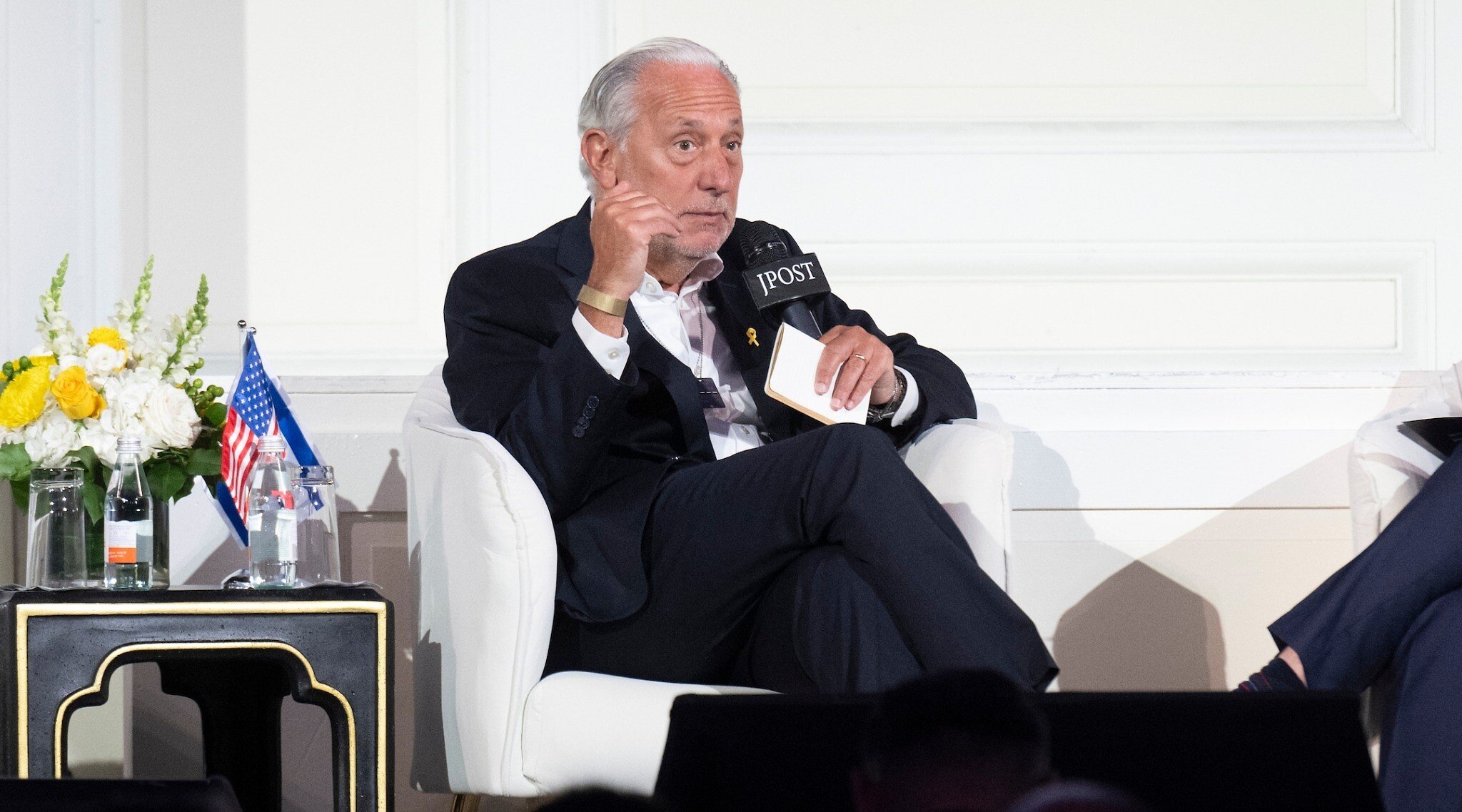
“We continue to encourage every Jewish institution with heightened security needs to apply for these funds,” said in a statement. “We have also heard from our community that the current terms and conditions have had the unintended effect of deterring some organizations from applying, which is why we believe they should be updated appropriately.”
The letter follows a more forceful appeal sent last month by members of the Congressional Jewish Caucus — which is composed entirely of Democrats — organized by the Jewish Council for Public Affairs. That letter raised similar concerns about political and ideological conditions being attached to the grants.
The DHS has not responded to the Congressional Jewish Caucus letter and has not answered requests for comment from the Jewish Telegraphic Agency since August.
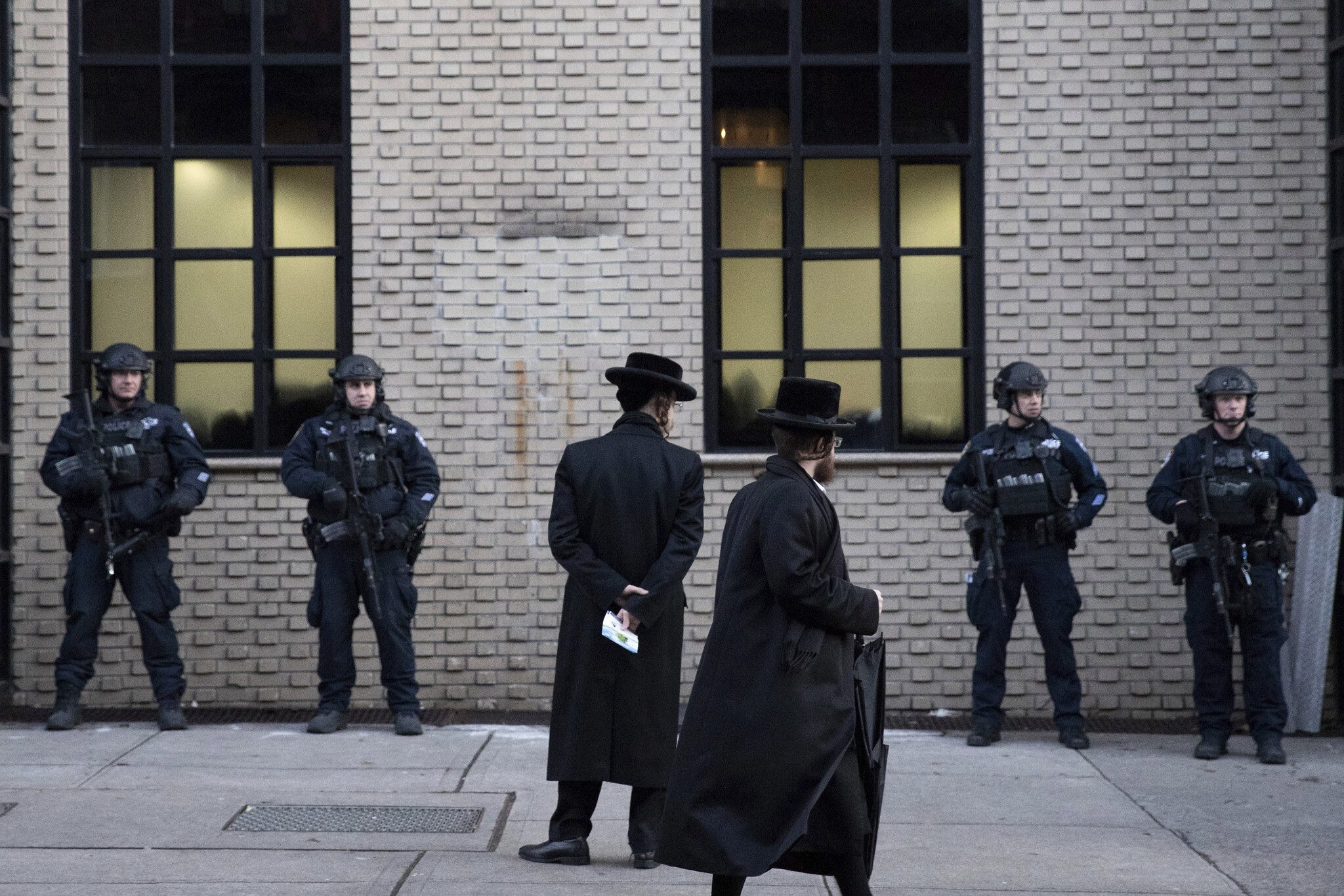
Created more than 20 years ago, the program provides grants to nonprofits deemed at high risk of terrorism or extremist violence, helping them pay for “target hardening” and other physical security upgrades. Eligible expenses typically include cameras, access controls, alarms, locks and protective barriers. Congress allocated $274.5 million in each of the last two years and raised funding to $300 million for 2026. In 2024, lawmakers also approved a one-time $400 million infusion to address a surge in threats against houses of worship and nonprofit organizations following the Hamas-led October 7, 2023, onslaught on Israel.
Demand has far outpaced available funding. In 2024, roughly 7,600 applicants sought nearly $1 billion in grants, and only 43% were approved. Jewish institutions have historically comprised a significant share of the recipients.
When the federal nonprofit security grants were first proposed in 2004, they triggered a sharp debate inside the Jewish community: the Union for Reform Judaism, the Anti-Defamation League and the American Jewish Committee opposed the idea on church-state grounds, warning that direct federal support for houses of worship risked crossing a constitutional line.
That argument was echoed by prominent Jewish lawmakers during Senate consideration of the “High-Risk Non-Profit Security Enhancement Act.” Sen. Carl Levin backed an amendment to bar aid for security improvements to houses of worship, and Sen. Frank Lautenberg argued that even with safeguards, federal funding for religious sites “crossed a line,” citing a letter from Reform and Reconstructionist leaders that said such aid “seriously weakens the wall separating church and state.”
Over time, however, particularly as threats against Jewish institutions intensified, opposition within the Jewish community largely subsided. For many, the urgent need to protect lives outweighed earlier worries. The program was increasingly described by Jewish leaders and lawmakers as a rare bipartisan success: a lifesaving initiative that strengthened security at synagogues and other institutions without leading to government interference in religious affairs.
That consensus began to fray last year under the Trump administration, which introduced new grant terms that Jewish groups say extend beyond security into matters of values and policy.
The revised rules require grant recipients to make broad certifications related to immigration enforcement and diversity practices, prompting concerns that synagogues could risk losing funding for declaring themselves sanctuaries, declining to cooperate with immigration authorities, or offering inclusion-focused programming.
In August, an open letter signed by faith-based groups criticized the revised grant conditions and urged organizations to reconsider participation in the program as long as the conditions are in place.
“We are unified in refusing to capitulate to conditions that would require us to sacrifice the safety and dignity of our community members, neighbors and partners in order to receive funding,” the letter said.
Signatories included progressive Jewish advocacy groups such as Bend the Arc: Jewish Action, Jews for Racial & Economic Justice, and Jewish Voice for Peace, as well as congregations such as Kolot Chayeinu in Brooklyn, Kehilla Community Synagogue in Oakland, and Temple Beth El in Stamford, Connecticut.
Groups like JFNA and JCPA that have long championed the program took a different tack. They advised Jewish institutions and congregations to apply for funding while they worked behind the scenes to push for changes, noting that if the conditions were still in place when grants were offered, applicants could then decline the money.
In November, the DHS told JCPA that the immigration cooperation requirements do not apply to nonprofit security grants, though the official funding notice has not been revised to reflect the change and the applications nevertheless required applicants to disclose whether their work or mission involves supporting immigrants. Language barring what the administration defines as “illegal DEIA” activities remains in effect.
The uncertainty is underscored by a government FAQ that asks whether accepting nonprofit security grant funding could allow the federal government to impose restrictions “in any other area of policy that may contradict the religious and/or other beliefs” of a recipient. Rather than offering a clear answer, the guidance advises applicants to consult legal counsel — a response advocates have flagged as concerning.
A related dispute is also unfolding in federal court. In October, a judge in Rhode Island ruled in Illinois et al. v. FEMA that the Trump administration could not require states to cooperate with federal immigration enforcement as a condition of receiving certain homeland security grants, ordering those requirements stripped from grant agreements.
But a subsequent DHS memo notes that the ruling applies only to the 21 states and jurisdictions that sued, and that the administration will reinstate the conditions if it prevails on appeal.







The Times of Israel Community.