

US Senate foils effort to nix Israel arms sales, but record 85% of Democrats support the move
Sanders’ resolutions to stop bulldozer, bomb deliveries gain unprecedented Democratic support, demonstrating major shift in party’s approach toward Israel over wars in Gaza, Lebanon
 Add ToI as a Preferred Source on Google
The US Senate voted down a pair of resolutions to prevent sales of weapons and bulldozers to Israel on Wednesday, but an unprecedentedly overwhelming majority of Democrats joined the minority, demonstrating a substantive shift in the party’s approach toward Israel.
Forty out of 47 Senate Democrats voted in favor of one of the resolutions to block a $295 million sale of bulldozers, which the initiative’s author, Senator Bernie Sanders, claimed would be used to demolish homes in the West Bank, Gaza and Lebanon. Fifty-nine senators — mostly Republicans — voted against blocking the sale.
Thirty-six Democrats backed another resolution aimed at blocking a $152 million sale of 1,000-pound bombs to the IDF, which Sanders argued would be used in Gaza and Lebanon. Sixty-three senators voted against blocking the sale.
“The United States must use the leverage we have — tens of billions in arms and military aid — to demand that Israel ends these atrocities,” Sanders said, urging support for the resolutions.
Israel says it does not intentionally target civilians, and that its strikes are intended to neutralize terror threats and military infrastructure.
“It’s clear that Democrats are beginning to listen to the average American who is sick and tired of spending billions of dollars to support Netanyahu’s horrific wars when people in this country can’t afford housing or health care,” Sanders said after the vote.

A decades-long tradition of strong bipartisan support for Israel in the US Congress means resolutions to stop weapons sales are unlikely to pass, but backers hope raising the issue will encourage Israel’s government and US administrations to do more to protect civilians.
Sanders forced votes on the resolutions, saying the sales violate criteria for foreign assistance in the Foreign Assistance Act and the Arms Export Control Act.
Supporters of the sales say Israel is an important ally to whom the United States should sell military equipment.
Similar resolutions forced by Sanders in 2024 and 2025 were also rejected, but the number of Democrats voting with the Vermont Independent, who caucuses with Democrats, has more than doubled in less than two years amid Israeli military operations in Gaza, Iran and Lebanon, as well as a stepped-up campaign by party activists who have increasingly used criticism of Israel as a litmus test for granting candidates their support. In 2024, 19 Democrats voted for at least one of the “Block the Bombs” resolutions on the table at the time. Last year, 24 senators endorsed the move.
Seven Democrats and all the Republicans voted against advancing the resolution of disapproval of the bulldozer sale, except for Republican Senator Cynthia Lummis of Wyoming, who did not vote.
Eleven Democrats joined every Republican to block the measure related to the bombs by 63 to 36. Republican Senator Thom Tillis of North Carolina did not vote.

Democratic Arizona Senator Mark Kelly voted in support of the two resolutions after opposing some of Sanders’ previous efforts. In a speech just before the vote, Kelly said that “the reckless decisions being made by Prime Minister Netanyahu and President Trump” led him to his decision, which he said he did not take lightly.
The new backers included several Jewish moderates who describe themselves as pro-Israel as well as multiple senators who are seen as likely 2028 presidential candidates.
“I have struggled with these Joint Resolutions of Disapproval as much as any vote since I joined Congress,” said Sen. Elissa Slotkin, a moderate from Michigan, in a statement calling the issue of support for Israel “raw, painful and personal.”
“My entire life, I have been — and continue to be — a strong supporter of a Jewish and democratic State of Israel. The people of Israel, like all people throughout the region, deserve long-term security and peace,” Slotkin said. “But being pro-Israel today is not about simply supporting the political or military agenda of Prime Minister Netanyahu, just like being pro-American should not be equated with loyalty to President Trump.”
In addition to Slotkin, three other Jewish senators voted to block the sale of bombs for the first time: Adam Schiff of California, Ron Wyden of Oregon and Jon Ossoff of Georgia.
Along with Kelly, Ossoff and Slotkin, two other possible presidential candidates also newly voted against weapons sales to Israel: Cory Booker of New Jersey and Ruben Gallego of Arizona. (Both have Jewish family members.)
Republicans said the vote could hurt US efforts in the Iran war.
Senate Foreign Relations Committee Chairman Jim Risch, an Idaho Republican, said the resolutions could embolden Iran and “send the message that the US is prepared to leave our ally Israel vulnerable.”
“They will not help the United States of America,” Risch said ahead of the vote.
Also among the Democrats voting against the resolutions were Senate Minority Leader Chuck Schumer and Senator Kirsten Gillibrand. Nearly 100 protesters were arrested during a demonstration on Monday calling on the two New York senators to vote in favor of Sanders’ two measures.
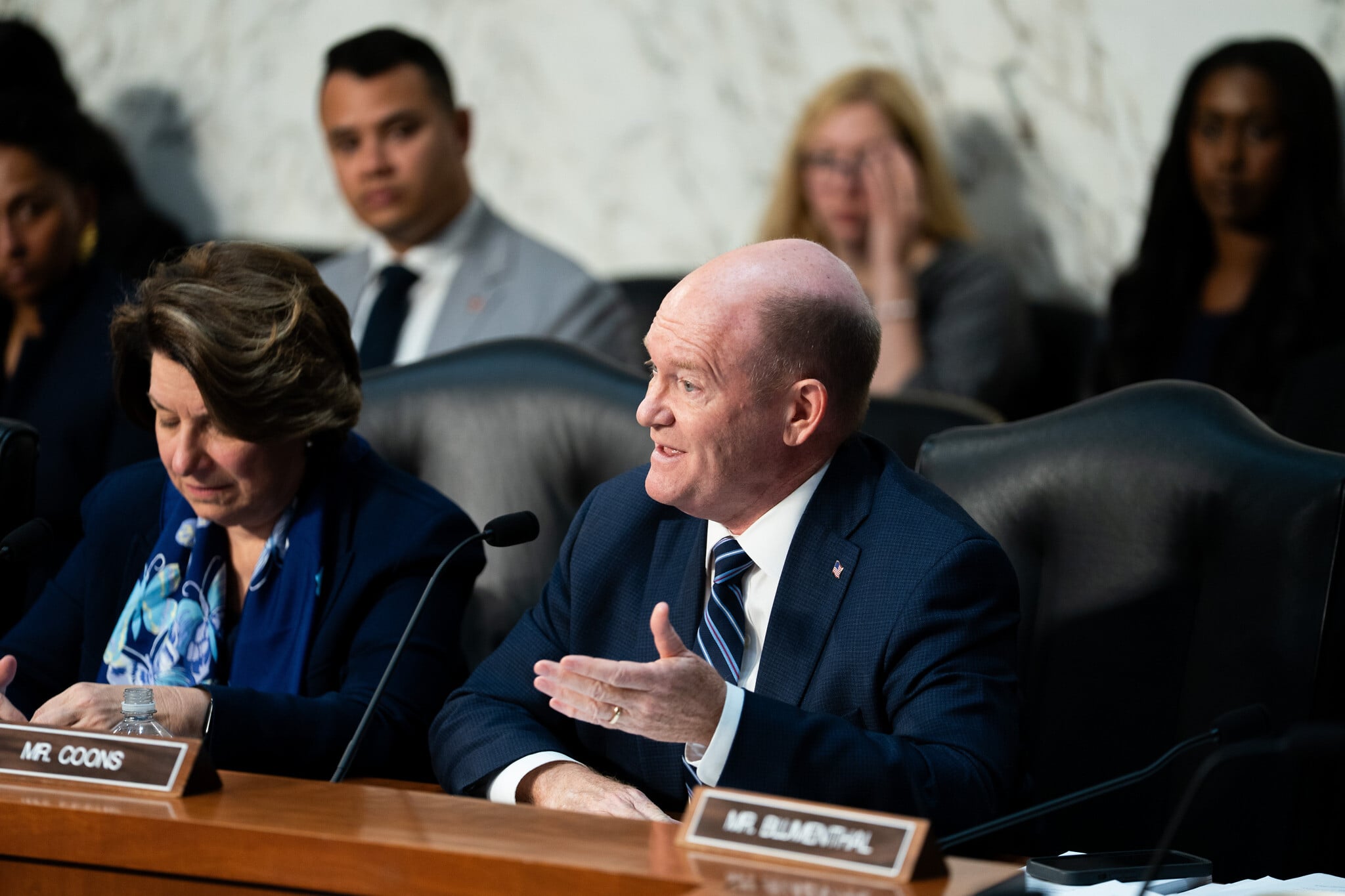
Democrats supported a resolution earlier on Wednesday to halt Trump’s war in Iran, though that was also rejected, 47-52. Democratic Senator Chris Coons, a Democrat who voted against Sanders’ Israel resolutions, said he voted to end the Iran war but did not want to abandon Israel.
“My votes should be taken neither as an endorsement of the actions of the Netanyahu government nor as an abandonment of the state of Israel, the Jewish people, or the US-Israel relationship,” Coons said in a statement after the vote.
The Trump administration bypassed the normal congressional review of military sales early in the US-Israeli war on Iran, saying there was an emergency that made it necessary to immediately transfer the weapons.
Israel fought a war in Gaza that was triggered by the Hamas-led invasion and massacres in southern Israel on October 7, 2023. A ceasefire was reached in January, leaving Gaza bisected into Israeli- and Hamas-held territories. Skirmishes have continued along the dividing line, and Israel has carried out strikes as both sides accuse each other of violations.
Israel and the US launched their campaign against Iran on February 28 in a bid to destabilize the regime and destroy its nuclear and ballistic missile capacities. Iran has responded with missile and drone strikes across the region, and its proxies in Iraq and Lebanon have also carried out attacks, with Israel launching massive airstrikes in Lebanon in response to the Hezbollah terror group’s rocket barrages. Israel has also launched a ground operation to seize key territory in southern Lebanon, saying Hezbollah uses the area to launch attacks on the country.










The Times of Israel Community.