

Bennett, Kahlon show frustration on first day of coalition talks
Likud representatives hold series of meetings with potential partners, with indications that the process will be slow
 Add ToI as a Preferred Source on Google
Stuart Winer is a breaking news editor at The Times of Israel.
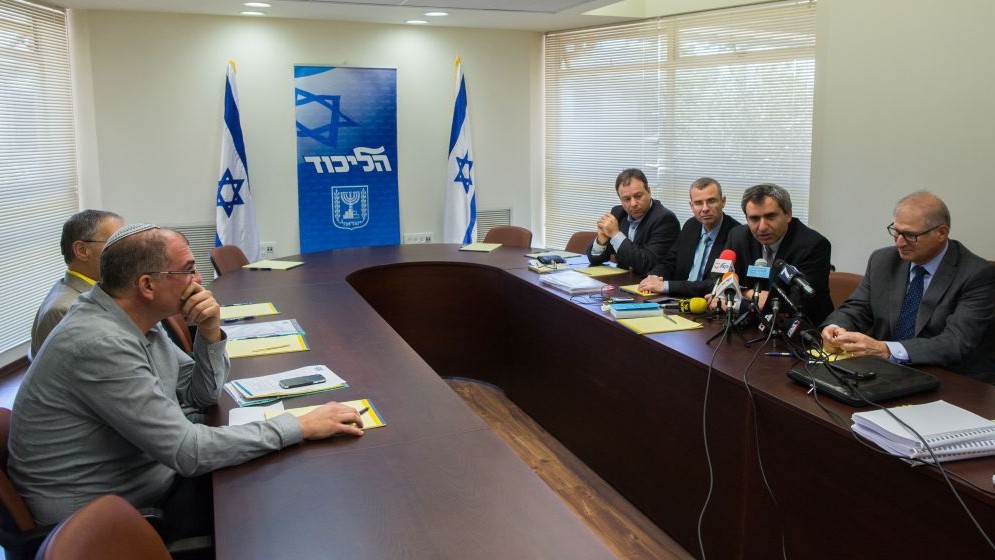
The first day of coalition talks ended Thursday evening without any of the parties shaking hands on a deal, but cautious optimism from most. The exceptions were the Jewish Home party, which expressed frustration at not being given more attention from Prime Minister Benjamin Netanyahu, and the Kulanu party, which canceled its session.
By evening, Likud representatives had met with their counterparts from Jewish Home, Yisrael Beytenu, United Torah Judaism, and Shas. Netanyahu also met personally with the leader of the Jewish Home party Naftali Bennett, but the two men parted without reaching any agreement amid claims from Bennett that his party was being treated poorly in the talks and might be headed for the opposition.
Netanyahu was formally charged by President Reuven Rivlin on Wednesday with the task of forming a government, after his Likud party won 30 seats in the March 17 elections and 67 MKs recommended him as the next prime minister; he has four weeks to complete the task, with a possible two-week extension if needed.
According to the Hebrew media website Ynet, sources in the Jewish Home party, which won eight seats, said they are concerned Netanyahu will hold out on bringing them into a coalition for as long as he can — a move the prime minister appeared to make when forming the previous government in 2013 — while trying to reach a majority in the parliament without them.
Bennett cited rumors that the Likud head plans to approach the Zionist Union and its 24 seats in the hope of forming a unity government. Zionist Union leader Isaac Herzog has ruled out the idea.
Bennett’s statements, made in a post to his Facebook page, reflected friction between the two right-wing parties over Bennett’s demand for the defense minister’s job and other senior positions in the next coalition — demands Likud is disinclined to meet.
By contrast, MK Ze’ev Elkin from the Likud described a meeting with representatives of Foreign Minister Avigdor Liberman’s Yisrael Beytenu party as being conducted in a “friendly atmosphere.
“These are two parties that know how to work together,” Elkin said. “There are a few topics that came up. Some of them we see in the same way and some of them require checking and looking into, including legal aspects.”
Yisrael Beytenu, which won just six seats in the election, has touted a death penalty for terrorists as legislation it wants to push through, but Elkin would not comment on whether the idea came up during the talks.
Earlier in the day, the Likud also held consultations with ultra-Orthodox parties Shas and United Torah Judaism, which won seven and six seats respectively.
Likud lawyer David Shimron, who is on the party’s negotiating team, said Shas and Jewish Home will likely have to fight it out between themselves for control of the county’s religious services.
“There will almost certainly be conflicting demands on the religion portfolio; we are thinking about a few solutions,” Shimron said.
Elkin asserted that the Likud’s triumph in the elections, in which it secured 30 seats to become the largest party by six places, give it an advantage in the negotiations.
“I think the [coalition] partners understand that 30 mandates is a clear statement, and it is natural that it should be expressed also in the formation of the government and the ability of the Likud to have influence. They have presented us with a lot of demands, but that is always the way it is at the start of negotiations.”
However, Moshe Kahlon, who brought his newly formed Kulanu party to 10 seats in the Knesset, snubbed Likud negotiators by canceling a scheduled meeting earlier in the day.
Kahlon said he backed out of the meeting to protest the Likud handing out key positions before official coalition talks officially began, which would make it more difficult to enact economic reforms, Israel Radio reported. The Likud party called Kahlon’s move strange and uncalled-for.






The Times of Israel Community.