

Close to home, in Berlin and Amona
An Israeli woman is missing and Israeli papers take stock after a terror attack in Germany, while Netanyahu’s attempt at empathy gives little solace to soon-to-be West Bank evacuees
 Add ToI as a Preferred Source on Google
Ilan Ben Zion is an AFP reporter and a former news editor at The Times of Israel.
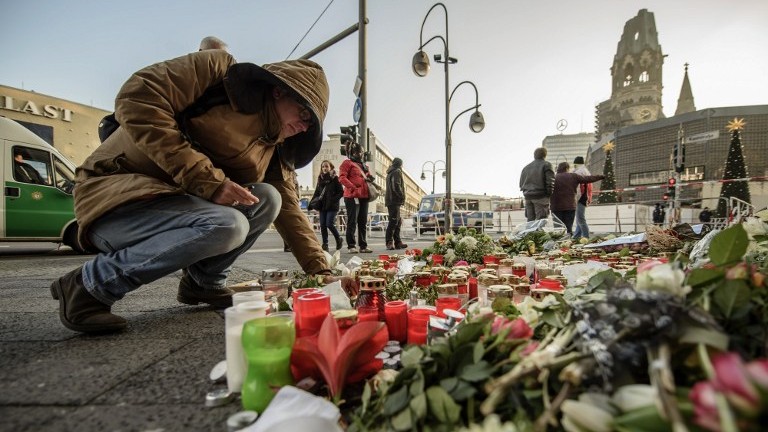
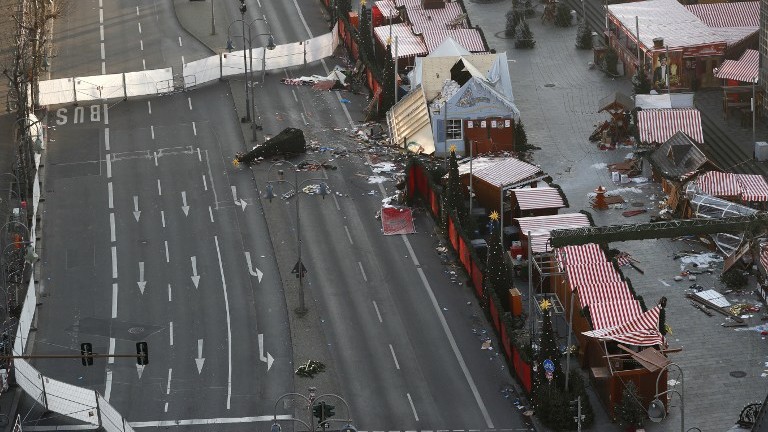
The aftermath of the Berlin terrorist attack strikes close to home for the Hebrew press on Wednesday. The dust has settled and an Israeli man is among the injured and his wife is among the missing. The search for the woman, and for the perpetrator of the attack that left at least 12 dead, shares the headlines with the illegal outpost of Amona. A deal struck earlier this week to stave off violent protests during its evacuation has fallen through, raising the possibility of another standoff before Sunday’s court ordered deadline.
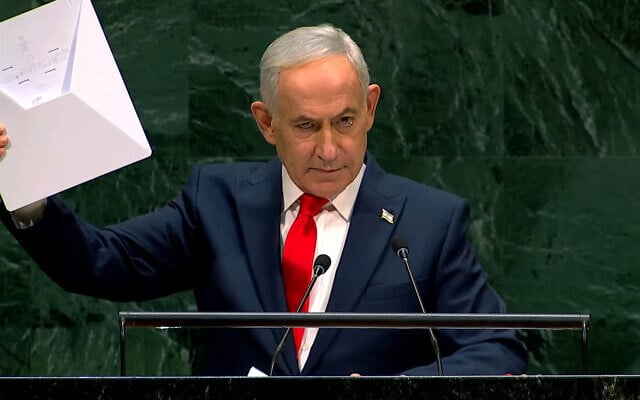
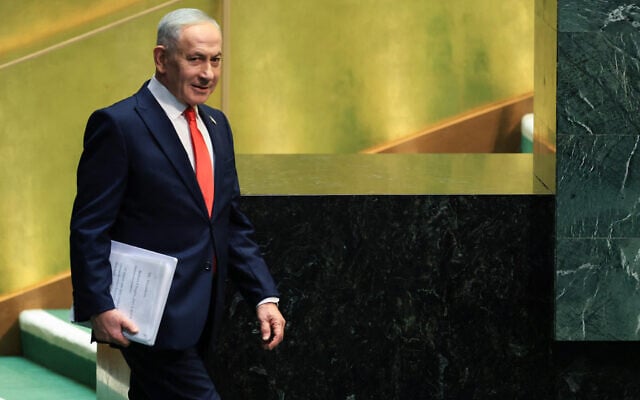
Prime Minister Benjamin Netanyahu’s remarks to the 40 families of Amona set to be evicted from their homes is not only Yedioth Ahronoth’s main story, it’s the entire front page. The prime minister’s attempt at expressing empathy falls flat on its face, and the paper highlights the absurdity of his remarks in a headline that reads: “I understand what it is to lose a home. After the ’99 elections [in which Netanyahu lost to Labor Party challenger Ehud Barak] they threw me out of the official residence. We were forced to move into the Sheraton Plaza.”
Netanyahu made the remarks Saturday night during marathon efforts to strike a deal to get Amona’s residents to leave peacefully. “They were shocked to hear the prime minister respond to them in this way,” the paper reports. The full quote from Netanyahu is even worse than the headline’s truncated version. “I understand what it is to lose a home. After the ’99 elections, with zero warning, they just threw me and my family out of the house on Balfour [Street]. Just like that, with all our things, just threw us into the street. We were forced to go to the Sheraton Plaza, that’s a terrible feeling.” “Nonetheless, Mr. Prime Minister,” the residents reportedly replied, “this is a little different.”
Yedioth Ahronoth says it got no response from the Prime Minister’s Office by the time of publication.
Haaretz, meanwhile, plays up the fact that the government asked the High Court of Justice on Tuesday to delay the imminent evacuation of Amona by 45 days to allow the families to pack up, as agreed upon earlier this week. The state admits, though, that it cannot carry out the deal because of Palestinian objections over the plot of land on which it promised to build new homes for the residents of the outpost. Although the residents of Amona have yet to respond to the government’s statement, the newspaper says it could trigger opposition by the residents to the evacuation. “The state admits that the Amona evacuation compromise collapsed,” the paper sums up in its headline.
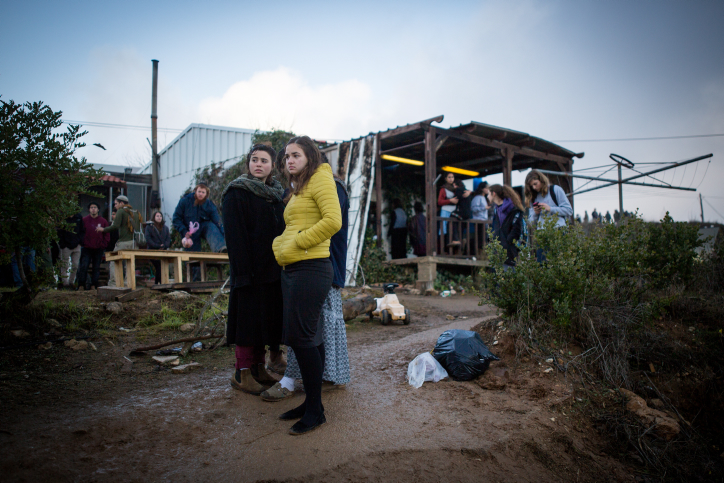
In yet another bid to downplay the thorny issue that is Amona, Israel Hayom sticks it on Page 9, hoping no readers will notice the minuscule headline on its front page. Amona is completely eclipsed by Berlin, Defense Minister Avigdor Liberman’s assertion that he would restore mandatory military service for men to three years, and an explosion near an embattled businessman’s house in northern Tel Aviv.
Berlin, that mecca for Israelis seeking more affordable and comfortable lives, gets the spotlight in Israel Hayom after the terrorist attack. The paper runs a tiny op-ed by Michal Blum, an Israeli freelance reporter living in the German capital who formerly worked for the free daily. Blum writes that the “vibrant city downshifted” after the attack in which a truck plowed into a Christmas market. The streets are emptier than they would normally be before the holidays, and “while it seems that Berliners aren’t prone to hysteria and keep their sangfroid, the terror attacks certainly succeeded in shaking them a little from their daily routines,” she writes.
The hundred-word picture she paints of the rupture of German daily life after the attack — more police on patrol, a halt in train service for a moment of silence — mirrors the ordinary for Israelis. Is the paper’s intention to show Israelis how Germans got a taste of the Israeli reality, or to tell Israelis that life in Germany is no different in that respect from Israel — perhaps to discourage brain drain to Europe?
Yedioth Ahronoth does something similar, interviewing a couple of Israelis who live in the neighborhood who say that the neighborhood where the attack occurred is “a totally Israeli area,” where they “hear Hebrew all the time.”
“We feel safe here but there’s no doubt that it’s not like Israel; there people are more open-eyed and security is better prepared to deal with these things,” Uri and Eshchar say.







The Times of Israel Community.