

France’s PM supports headscarf ban at universities
‘It should be done,’ says Manuel Valls, while conceding it would be ‘difficult’ to implement; education minister opposes effort
 Add ToI as a Preferred Source on Google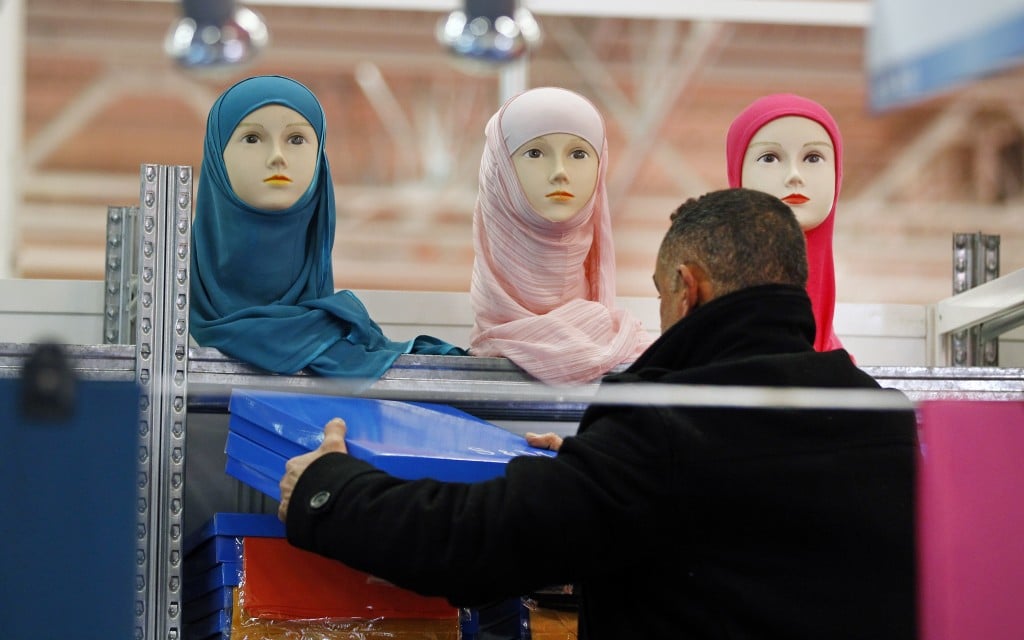
France’s prime minister said he would favor a ban on Muslim headscarves in universities, prompting criticism from within his own government.
In an interview with the daily Liberation, Prime Minister Manuel Valls said France should “protect” French Muslims from extremist ideology. He said the headscarf, when worn for political reasons, oppresses women and is not “an object of fashion or consumption like any other.”
Citing secular traditions, France banned the face-covering Muslim veil and forbids headscarves and other religious symbols in schools and public buildings. Asked whether to outlaw headscarves in universities, Valls was quoted as saying “it should be done, but there are constitutional rules that make this ban difficult.”
Education Minister Najat Vallaud-Belkacem and the junior minister for higher education, Thierry Mandon, said they are opposed to a ban.
France’s women’s rights minister sparked a storm last month when she compared women who wear headscarves to “Negroes who supported slavery.”

Her comments were a response to the growth of fashion tailored for the Muslim market, as a wave of big fashion chains including Dolce & Gabbana have launched lines of hajib headscarves and “burqini” all-body swimming costumes.
Earlier this month, Valls said extreme forms of Islam were winning the propaganda war for hearts and minds, warning the veil was being used as a political symbol for the “enslavement of women.”
Speaking at a roundtable on Islamism in Paris on April 5, the premier warned that Salafists were “winning the ideological and cultural battle” in France, home of Europe’s biggest Muslim population. And he pledged to “massively” increase France’s security and defense budgets in the coming years, as the country grapples with a growing jihadist threat after two deadly attacks last year.
Valls said the headscarf was being used by some as a challenge to France’s secular society.
“The veil does not represent a fashion fad, no, it’s not a color one wears, no: it is enslavement of women,” he said, warning of the “ideological message that can spread behind religious symbols.”
“We have to make a distinction between wearing the veil as a scarf for older women, and it as a political gesture confronting French society.”








The Times of Israel Community.