

High Court to go live on television
New bill by Likud, Meretz MKs leads judges to approve broadcasts of ‘important’ debates
 Add ToI as a Preferred Source on Google
Yifa Yaakov is a breaking news editor at The Times of Israel.
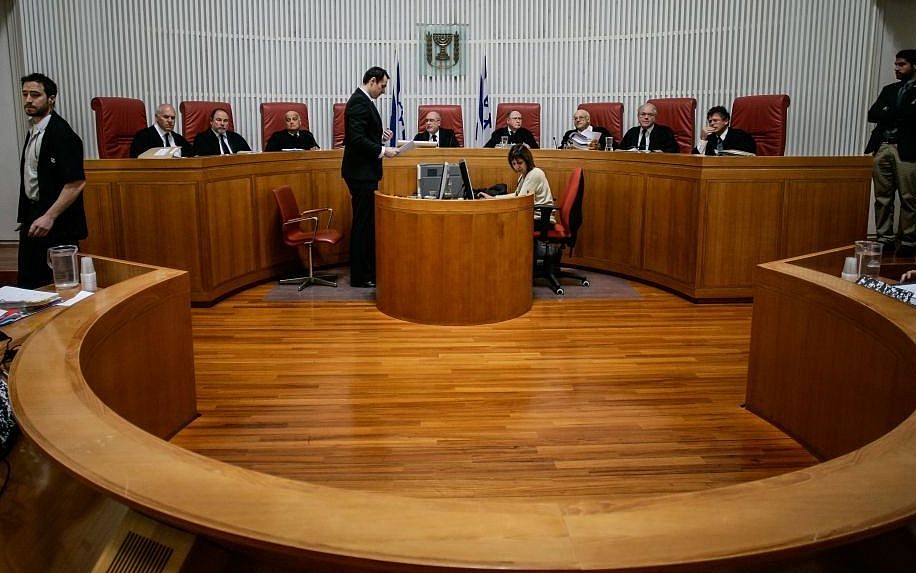
Cases being debated in the High Court of Justice will soon be accessible to anyone with a television, if a bill proposed by MKs Yariv Levin (Likud) and Zahava Gal-on (Meretz) passes in the Knesset.
The bill stipulates that court sessions of interest to the public be recorded and broadcast on television to increase the transparency of the legal system to the public and to guarantee the public’s right to information.
According to Israel’s basic law on the judiciary, which was cited by the two MKs, all courts “shall sit in public unless otherwise provided by Law or unless the court otherwise directs under Law.”
Since it was proposed a month ago, the bill has been debated extensively by Justice Minister Tzipi Livni and Supreme Court President Asher Grunis.
On Thursday, Yedioth Ahronoth reported that Livni and Grunis had decided to begin a pilot to pioneer live broadcasts of court sessions on “important constitutional matters,” such as the Draft Law recently passed by the Knesset.
Sessions relating to private matters will not be broadcast.
The newspaper quoted a senior source in the judiciary as saying judges were aware that the transition toward greater transparency was inevitable.
“Judges understand that technological progress and transparency are at their doorstep,” he said. “They are under the impression that the bill is sure to pass in the Knesset, and it may not be [executed] on their terms — so they prefer to be in control of the process,” the source added.
“That is why they have agreed to a pilot format for broadcasts, rather than a requirement by law — the judges themselves can choose which sessions will be broadcast,” he said.
Livni, meanwhile, stressed the importance of transparency to the public in legal proceedings.
“Freedom of information and transparency are an inseparable part of democracy and of building the public’s confidence in the justice system,” the justice minister was quoted as saying.
Until now, court sessions could only be reported on indirectly, by journalists providing an account of the proceedings without being able to show footage or recordings from the court. The fear that the recording process would interfere with the discussions has so far prevented live broadcasts from taking place. However, in an increasingly wired world, both the government and the judiciary have evidently ruled that going live is inevitable.









The Times of Israel Community.