

In last-ditch bid, government offers new compromise for Amona relocation
Under revised deal, state will provide immediate temporary housing on an adjacent plot for 24 families instead of 12; outpost residents to vote on agreement Sunday morning
 Add ToI as a Preferred Source on Google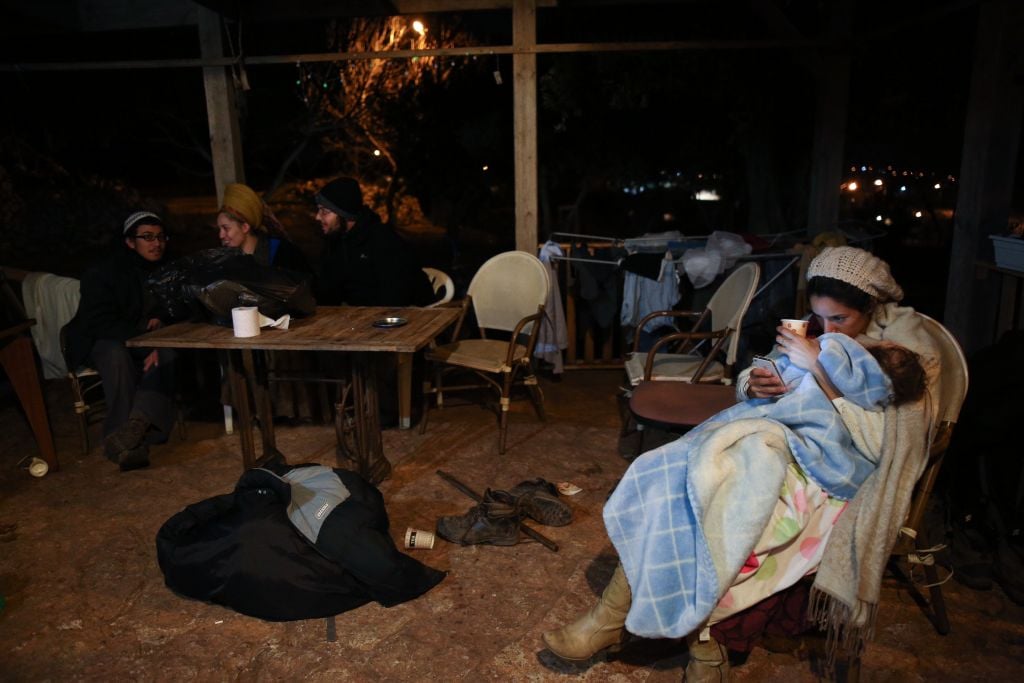
In a last-ditch effort to prevent a forced evacuation of the West Bank outpost of Amona, the government on Saturday night presented residents with a revised agreement that would see twice as many families stay on the hilltop, as compared to a previous proposal rejected by the settlers last week.
Under the agreement, presented by Prime Minister Benjamin Netanyahu, Education Minister Naftali Bennett and Yossi Dagan, head of the Shomron Regional Council, 24 families would receive mobile homes on a plot meters from the outpost — as opposed to the 12 in last week’s offer — while the remaining families would be given temporary residences in the nearby settlement of Ofra.
The deal came as at least 1,000 people gathered in Amona in a show of support for the illegal outpost as the court-ordered December 25 deadline for its evacuation loomed.
As with the earlier deal, the government promised to work towards a more permanent solution with the possibility of creating a settlement in the area, in exchange for a pledge by the residents that they would leave their homes peacefully, in compliance with the court order.
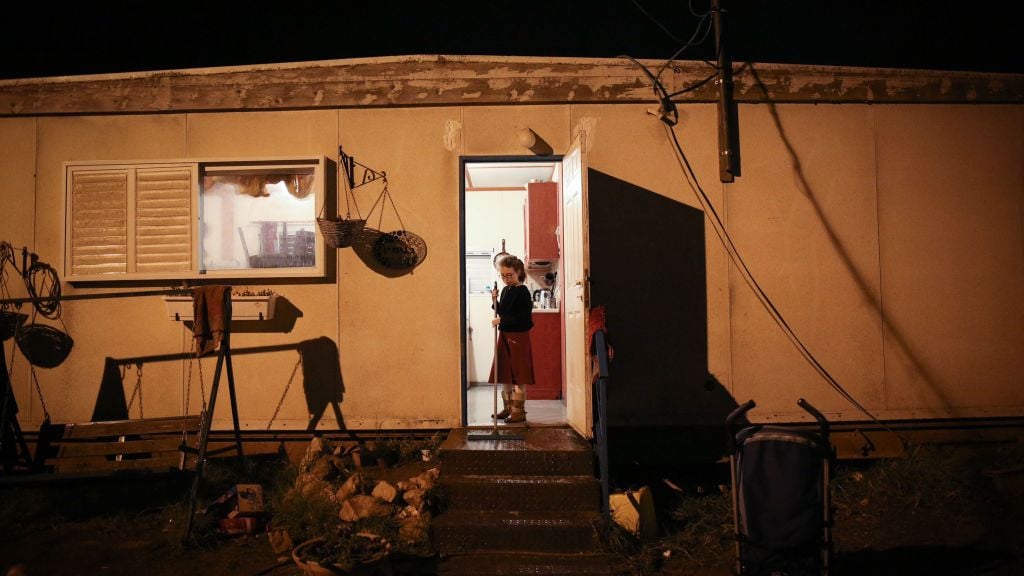
Residents were to begin debating the proposal at 8:00 a.m. Sunday morning and were set to cast a vote on whether to accept the plan at 10:00 a.m, a spokesman for the settlement said. They reportedly have until noon to provide the government with their response.
If accepted, the government would again request a one-month postponement for the evacuation from the High Court of Justice. The court has denied the request before, but with the residents agreeing to the terms of the new proposal, “all the lawyers think the court will accept it,” Likud MK Yehudah Glick told The Times of Israel.
Although the final date for the evacuation was set just seven days from Sunday, the High Court it is obligated to rule on an extension as long as it is presented before the December 25 deadline, according to a spokesperson for the court.
Netanyahu and Bennett did not meet directly with the Amona residents to present the deal. Instead, Netanyahu’s aide, Yoav Rabinovitch, acted as a go-between with the settlers, Glick said.
“And then at about 12:30-1:00 [Saturday night], there was a meeting between Netanyahu, Bennett and Dagan, where they put together the whole thing in writing,” he said.
Following marathon talks last Tuesday, residents voted 59-20 against a similar deal that enabled just 12 of the some 40 families living in Amona to receive housing on an adjacent plot. Residents said they rejected that deal because “the government didn’t really commit to anything” and would only agree to a plan that ensured every family could move to a home immediately.
On Sunday morning, Avichai Boaron, the head of the campaign for the Amona residents, said the current deal was “much better” than the one previously presented
But “this deal also has risks and we will have to ask ourselves if we are willing to take that risk in order to move forward,” he told Army Radio.

Glick was optimistic about the prospects of the deal being accepted by the Amona residents, but the Likud lawmaker had also been upbeat about the previous deal, which the outpost voted down by a wide majority.
The original agreement outlined a five-week timeline for residents to move to the alternate plots but also included a clause saying that the state will provide temporary accommodation in the nearby Ofra settlement in the event that “there is a delay in the implementation.”
On their part, the residents would have to sign a declaration, which Jewish Home party sources said was legally binding, that they would leave their homes peacefully, avoiding a repeat of the violence that followed the destruction of several permanent buildings in the outpost in 2006.
“We the people of Amona accept — and we will let the court know — that this plan is acceptable for us and that we will leave the area of the settlement peacefully and without violence and we will not oppose the fulfillment of the court order, on the date the political leadership will decide,” the document that had been rejected by the residents last week read.










The Times of Israel Community.