

In the scrum for president, echoes of ‘House of Cards’
Cynicism and murkiness characterize the hotly contested race to succeed Shimon Peres
 Add ToI as a Preferred Source on Google
Haviv Rettig Gur is The Times of Israel's senior analyst.
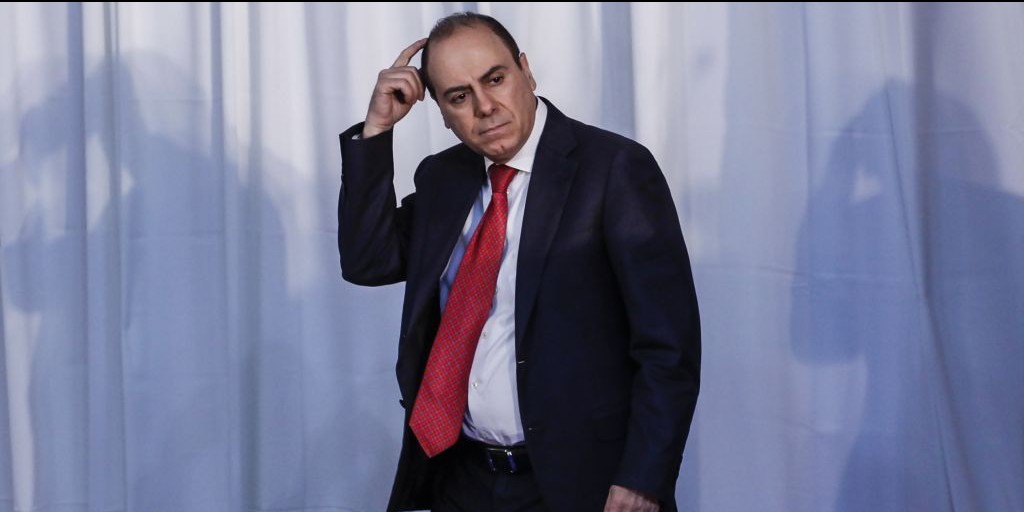
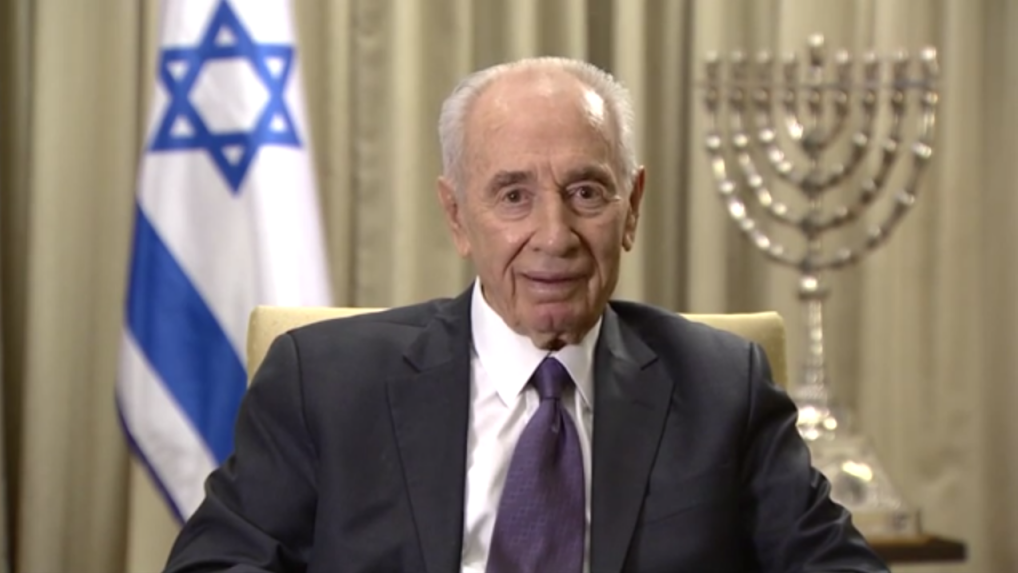
The race to replace President Shimon Peres when he steps down in July is unusually contentious for a post with little influence and no real power.
“It’s not about the President’s Residence,” a Likud member of the government told The Times of Israel this week. “It’s about the Prime Minister’s Office.”
There are many candidates and would-be candidates in the running. Some, such as former Supreme Court justice Dalia Dorner or Nobel laureate chemist Dan Shechtman, see their candidacy as bearing a broader social message — women’s place in Israeli public life in the case of the former and the importance of education for Israel’s future in the latter.
But barring an unexpected volte-face in how Israel’s political class conducts its business, these long-shot candidates stand no real chance of getting elected.
The president, after all, is not elected by Israel’s public, or by the intelligentsia who might support scientists and justices in the post, but by a secret ballot in the Knesset.
As might be expected, Knesset members have a very different view of their interests than the public.
Until this week, the leading contender in the presidential race was Energy and Water Minister Silvan Shalom (Likud). He has the unique qualification in the eyes of many MKs of simply being a senior member of the government. That is, if he’s removed from the government through election to the presidency, he frees up a spot on the ruling party’s Knesset list and another spot at the cabinet table.
In a political system where one’s position on a party list is the main determining factor in one’s political influence and, potentially, cabinet role, politicians are always looking for ways to remove those above them from the party list.
This impulse is strong enough to place the otherwise drab Shalom, who trails other candidates in popular polls, at the front of the race — at least until this week, when Shalom faced a public accusation that he sexually assaulted a woman who worked under him 15 years ago when he served as science minister in the first Netanyahu government. If it happened, the alleged crime is already far older than the 10-year statute of limitations on such cases.
And there is little doubt the timing is related to the presidential race. Indeed, the complainant said so herself.
“I decided to drop the bomb on the issue because of Silvan’s running for the presidency. I don’t want anything from him, I have no issue with him, only it’s not fitting that he enter the President’s Residence,” the woman, whose name is not public, told the Israel Hayom daily this week. She said she didn’t want a repeat of the resignation of former president Moshe Katsav, who is now serving a prison sentence for raping a subordinate.
While he has remained largely quiet in public, Shalom has been railing about the accusation in private and in conversations with MKs in recent days, calling the complaints a “political assassination” and telling police, under threat of perjury, that he has no memory of the woman in question.
It wasn’t long before Shalom’s confidants began speaking to reporters about the hit American show “House of Cards,” in which the main character is a politician who tries to connive his way into power. Concocting conspiracy theories about the accusation has become something of a pastime among political activists this week, with some pinning the blame for the revelation on Shalom’s competitors in the presidential race, and others on senior ministers who want to neutralize Shalom as a future contender for Likud leader.
Reuven Rivlin, still a contender
Shalom’s main challenger is former Knesset speaker MK Reuven Rivlin (Likud). Rivlin is the leader in popular polls, and has been planning to run for president for much of the past decade. As speaker until last year, he was known in the Knesset for reaching across political divides and being keenly aware of public displeasure with the goings-on in parliament.
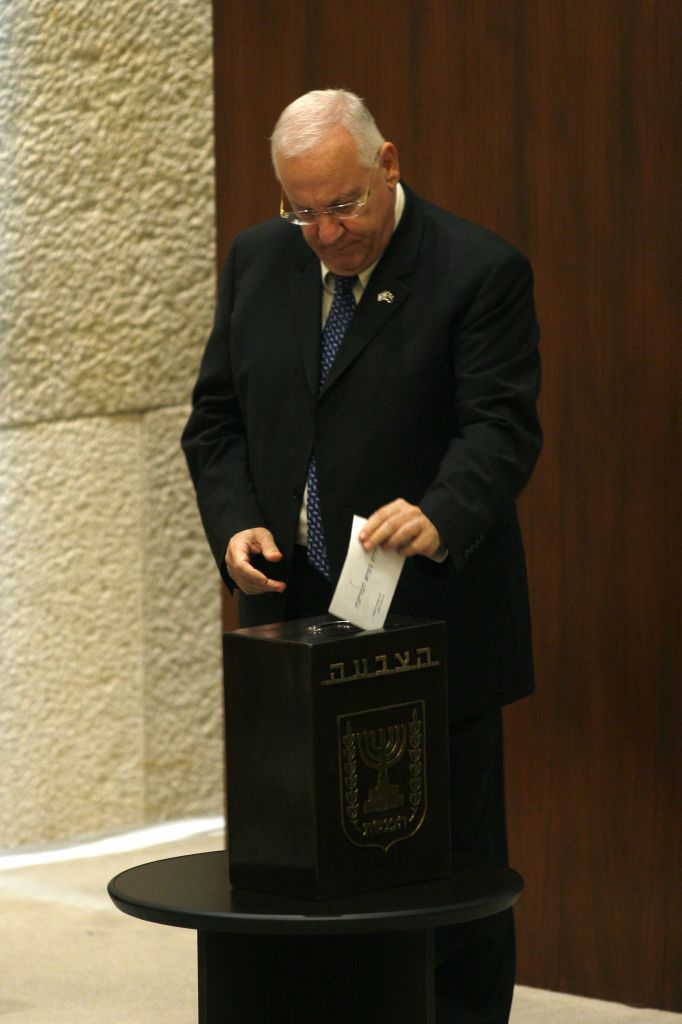
After a lobbyist was caught in 2012 bragging in a lecture that his firm could pass any legislation it wrote through the Knesset, an incensed Rivlin created strict new registration and identification rules for lobbyists working inside the parliament. He was lauded by some media outlets, but the move angered MKs who often rely on professional lobbyists to help them write bills and formulate their political agenda.
“He think journalists elect the president,” one MK said bitterly at the time. “He forgets that we do.”
Rivlin also had a very public falling out with Prime Minister Benjamin Netanyahu over the prisoner releases of the past year, a row that led to Netanyahu successfully ousting him from the speakership in favor of then-minister of public diplomacy Yuli Edelstein (Likud).
But Rivlin’s campaign is not lost. In a Knesset that saw 40 percent of its members replaced in the January 2013 elections, some of Rivlin’s past political mistakes are less widely remembered than they might have been. Meanwhile, much of the Israeli right is not fielding its own party candidate, and is likely, in a secret ballot, to favor the popular Rivlin.
Inside the Likud, too, there are those who prefer a President Rivlin to a President Shalom. Shalom has always seen himself as a potential future leader of the Likud and has run against Netanyahu for party leadership in the past. He has been overshadowed in recent years by younger politicians, including Interior Minister Gideon Sa’ar, Home Front Defense Minister Gilad Erdan, and by the dominant positions among center-right voters and activists of men like Defense Minister Moshe Ya’alon and Foreign Minister Avigdor Liberman.
For Shalom, the presidency may be his only hope for a future bid to lead the Israeli right. That, at least, is how fellow lawmakers are interpreting his candidacy.
Cabinet members at or above Shalom’s rank — most prominently, Transportation Minister Yisrael Katz and Sa’ar — are said to be campaigning for Rivlin for that very reason. They gain nothing from Shalom’s “promotion,” and may find themselves facing a new challenger, one who enjoys the prestige of the title “president,” in a future race to replace the already third-term Netanyahu.
(Update: The allegations against Shalom were not substantiated and the investigation was subsequently closed.)
Known unknowns
The presidential race has many candidates besides front-runners Shalom and Rivlin, or concerned citizens Shechtman and Dorner. The list is a who’s who of what might be called “compromise candidates” — contenders who know they can’t win a Knesset majority on their own merits, but hope for a plurality in a race that has grown increasingly chaotic in a fractured Knesset characterized by multiple competing power centers and where even the ruling party can only boast 20 seats among the parliament’s 120.
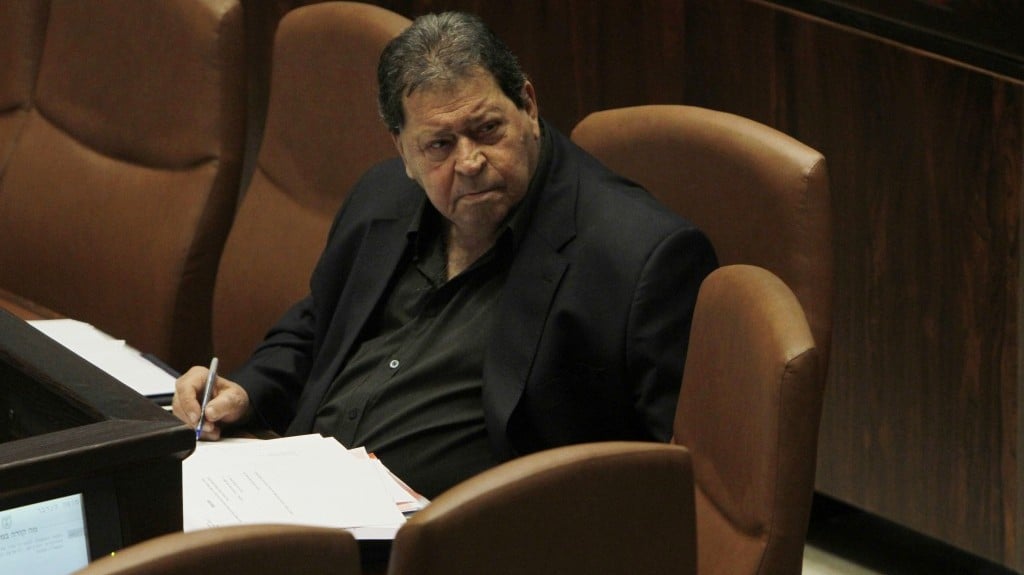
Labor’s grizzled 78-year-old former general and defense minister Binyamin “Fuad” Ben-Eliezer has already been publicly endorsed by 14 of Labor’s 15 MKs, and appears to be the leading candidate of the left. (Labor MK Shelly Yachimovich has publicly said she had yet to decide on a candidate.) He is pinning his hopes on the many Knesset factions who wish to use their votes to snub the ruling coalition. But can he draw votes from an 18-seat ultra-Orthodox bloc angered by the government’s recent efforts to draft Haredi men? Can he rally Arab representatives around the candidacy of a former IDF general?
Former Knesset speaker Dalia Itzik, who ended her political career in the centrist Kadima, is hoping to capitalize on that moderate reputation, lobbying on both sides of the aisle for votes of those disgusted by the infighting on the right but loath to elect someone too closely identified with the left.
Hatnua’s MK Meir Sheetrit, a respected veteran former Likud lawmaker and minister, is making a similar bid to capture the center.
Meanwhile, dark-horse candidates such as former Soviet refusenik and Likud minister Natan Sharansky and American-born solar energy entrepreneur Yosef Abramowitz are running, inasmuch as they are contenders at all, on their criticism of the system itself.
Sharansky has seen many activists urge him to run, but rejected the idea that he stands a chance because the process for electing the president is fundamentally political.
Similarly, Abramowitz, who is actively campaigning and has met with at least 15 MKs, is urging them to turn away from the “cynical power plays” of the race and vote for his “platform of ideas.”
Most of these candidates will fall by the wayside in the coming weeks as they fail to gain the required support of 10 MKs for their candidacy. While the final vote is secret, the signatures of support for one’s candidacy are not, making the mere presentation of one’s candidacy perhaps the most significant hurdle in the race.
With so many candidates and Knesset interests in play, the race is now little more than a complicated guessing game, one with a secret final ballot and no clarity about even the identity of the candidates who will actually be in the final running.
There are rumors, denied by Peres and unconfirmed by Netanyahu, that the prime minister is seeking a change in the way the president is elected — from the Knesset vote so debased in the eyes of many to a popular vote among all Israelis.
The change is unlikely to take place in time for the current race. The nonagenarian Peres, who comes in higher in public opinion polls as a candidate for Israel’s next president than all the candidates currently running, has refused to delay his retirement past July. The Knesset has no time to pass the necessary constitutional changes, even if support could be found for the change among lawmakers.
In the meantime, beset by sex scandal and narrow, cynical machinations, another presidential race limps toward the finish line.




The Times of Israel Community.