

Judges set to sentence Hebron soldier; police ready for protests
Prosecution requests 3-5 year prison term for Elor Azaria, convicted of manslaughter for killing disarmed, incapacitated Palestinian attacker last year
 Add ToI as a Preferred Source on Google
Judah Ari Gross is The Times of Israel's religions and Diaspora affairs correspondent.

Military judges are scheduled to hand down their sentence on Tuesday afternoon for an Israeli soldier convicted of manslaughter for the killing of a disarmed, incapacitated Palestinian assailant last year, in a case that has revealed deep divisions in Israeli society.
During sentencing hearings, the prosecution requested an “appropriate sentence” of three to five years for Sgt. Elor Azaria, 20, who was convicted last month. The soldier’s attorneys are hoping to avoid any jail time, but have said they plan to appeal his conviction.
The judges’ sentencing decision was scheduled to be delivered at noon on Tuesday at the army’s Tel Aviv headquarters, known in Hebrew as the Kirya.
Azaria’s supporters called for a demonstration outside the base at the same time, inviting people to attend through Facebook and the WhatsApp messaging application. The protest following Azaria’s guilty verdict last month turned violent at times, and the soldier’s supporters temporarily blocked traffic near the Kirya.
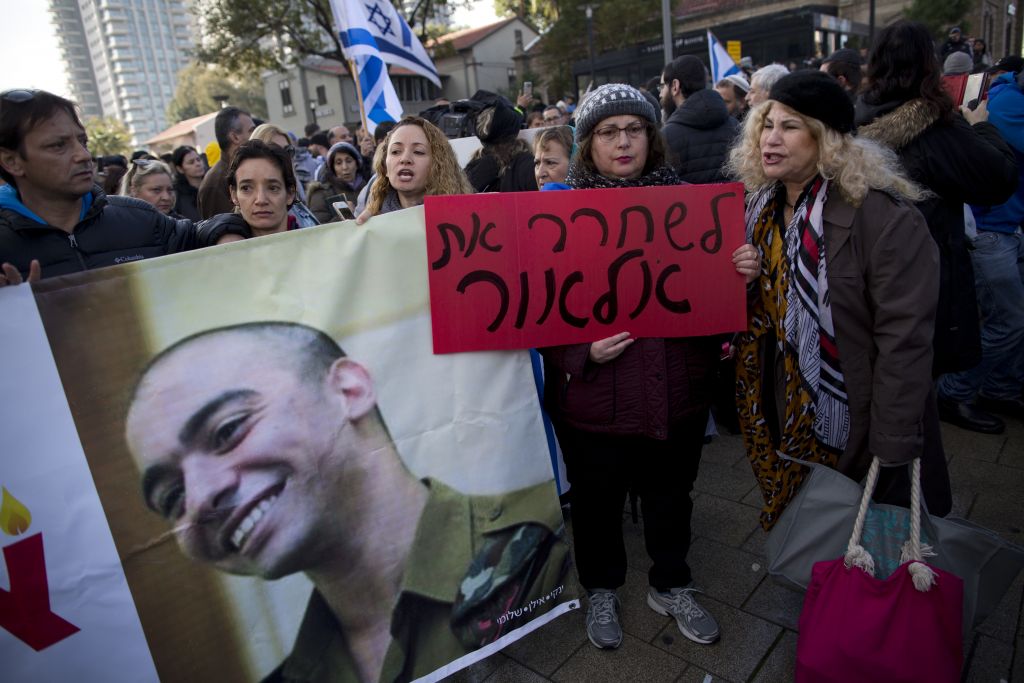
In response to the demonstration planned for Tuesday, police said they were “ready and prepared to respond to any and every scenario.”
Polls conducted after Azaria’s conviction show that the majority of Israelis say they support granting clemency to the Kfir Brigade soldier.
On the morning of March 24, 2016, Abdel Fattah al-Sharif and Ramzi Aziz al-Qasrawi attacked two IDF soldiers stationed in the West Bank city of Hebron, wounding one of them. The second opened fire at the assailants, killing al-Qasrawi and severely injuring al-Sharif.
Approximately 11 minutes later, Azaria, a combat medic who was called to the scene, gave his helmet to another soldier, cocked his gun and shot al-Sharif in the head, killing him.
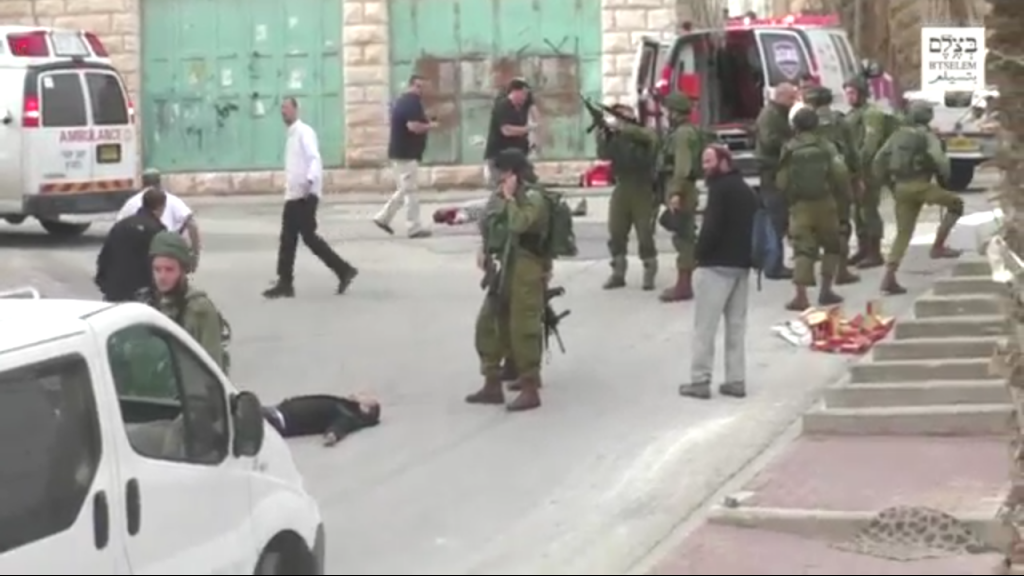
The shooting in Hebron was caught on video and spread widely online.
The soldier’s attorneys argued both that their client felt al-Sharif, despite his injuries, still presented a threat to the troops on the scene and also that the Palestinian man died from his earlier wounds, not from Azaria’s gunshot.
On January 4, nearly 10 months after the incident, a three-judge panel dismissed these arguments and convicted Azaria of manslaughter, finding no justification for his decision to shoot al-Sharif.
Reading the court’s guilty verdict, head judge Col. Maya Heller called Azaria’s testimony “evolving and evasive.”
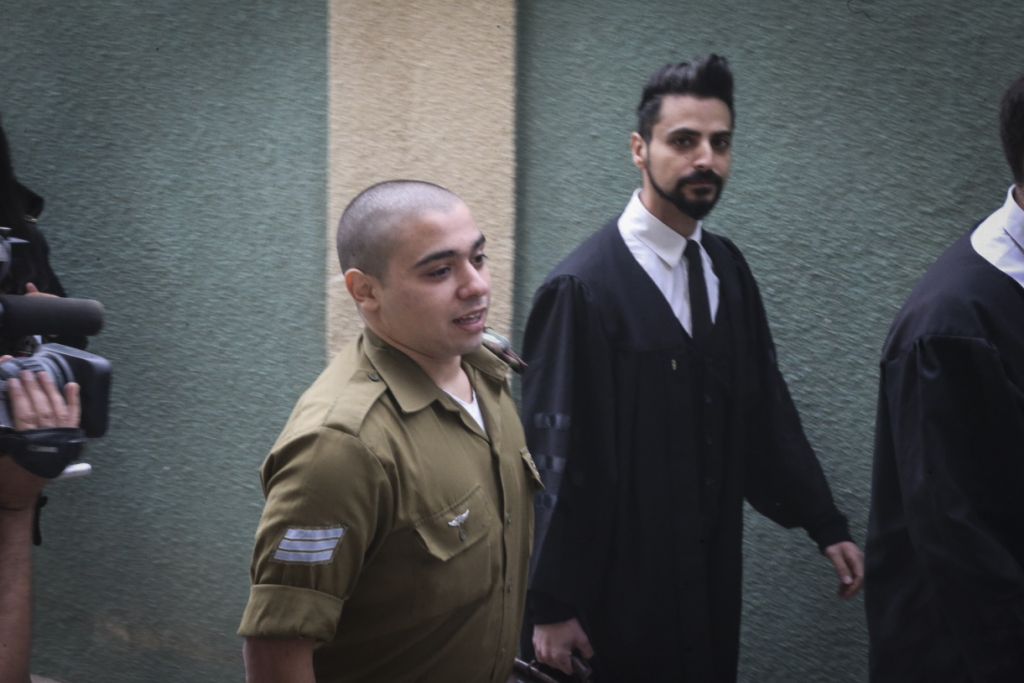
“His motive for shooting was that he felt the terrorist deserved to die,” she said, referring to a statement made by Azaria to his commander after the shooting.
At a hearing on January 31, prosecutor Nadav Weisman told the judges that “the appropriate sentence for the accused should not be less than three years and not more than five years.”
The prosecutor also asked for an unspecified suspended term and for Azaria to be demoted from sergeant to private.
Prosecutors said Azaria “acted deliberately, he used his weapon to punish, he killed a person, even if it was a terrorist.”
Last month, Azaria pleaded for the court’s mercy in its sentencing, saying his family had suffered long months of “torture” and had been crushed by the drawn-out trial.
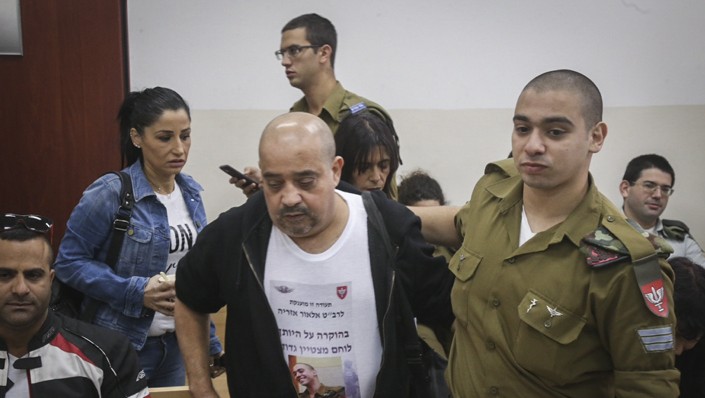
Also last month, Azaria’s father, Charlie, beseeched the judges to spare his son any additional prison time, citing his and his wife’s recent health problems.
“It has been 10 months since we stopped living. We are suffering. After everything I’ve given to the country, this is physical and psychological abuse… We are out of energy,” he added, breaking down in tears.
In the days after the shooting, the elder Azaria said, “the family collapsed, I had a stroke, and after rehabilitation I managed to stand on my feet since I set for myself to stand beside Elor.” His wife also suffered a dramatic weight loss.
Azaria’s conviction sparked a vicious debate in Israel, with many saying he was just doing his duty and that he was scapegoated by the army. The army’s top brass, however, condemned the shooting immediately, with the military spokesperson saying at the time: “This is not the IDF, these are not the values of the IDF and these are not the values of the Jewish people.”
Nearly three-quarters of Israelis — 73 percent — feel the army’s top brass convicted Azaria in the press before the trial began, according to survey statistics released by the Institute for National Security Studies last month.
The protest outside army headquarters when the court rendered Azaria’s verdict turned ugly and occasionally violent, with supporters — among them far-right supporters of the Beitar Jerusalem soccer club — pushing and shoving the police officers and border guards sent to the scene to maintain order.
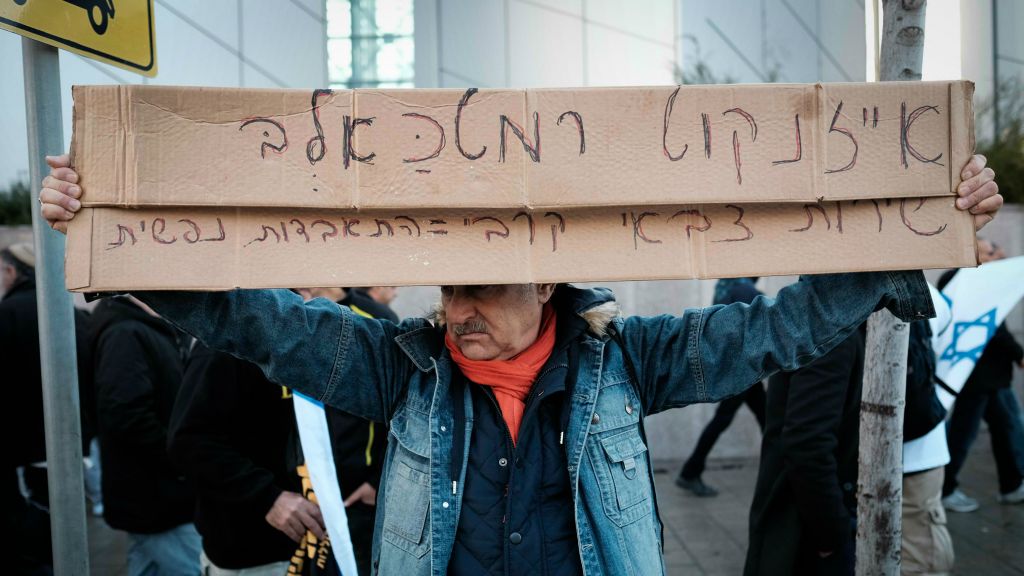
Some protesters chanted: “Gadi be careful, Rabin is looking for a friend,” referring to the IDF Chief of Staff Lt. Gen. Gadi Eisenkot and the slain former prime minister Yitzhak Rabin, who was assassinated by a right-wing extremist in 1995. Threats were also made against the military judges.
Azaria, who also has French nationality, faces up to 20 years in prison, but it is highly doubtful he would receive such a punishment.
The last IDF soldier to be found guilty of manslaughter received a sentence of eight years in prison and served six and a half of them before he was released for good behavior.
In 2003, Sgt. Taysir Heib shot and mortally wounded British activist and photographer Tom Hurndall in Gaza. Heib initially claimed that he’d shot at an armed Palestinian, but when presented with evidence to the contrary, admitted that he’d fired at Hurndall, but hadn’t meant to hit him.
The fact that Azaria’s victim had, 15 minutes before, stabbed an Israeli soldier will likely be a mitigating factor in the judges’ decision.
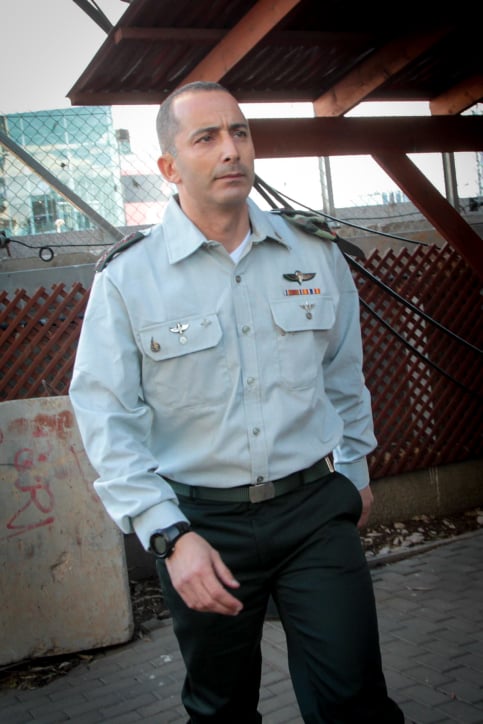
Col. Guy Hazut, who formerly commanded the unit in which Azaria was serving, said he had “done something severe and should be punished.
“But,” he added, “I do not think he should spend 20 years or even 10 years in prison.”
During the sentencing hearing late last month, Weisman, said the time Azaria had spent confined to base should not be deducted from the sentence, but that the nine days he spent in jail could.
Politicians across the board, including Prime Minister Benjamin Netanyahu, and the center-left former Labor party leader MK Shelly Yachimovich, have come out in favor of a pardon for the Kfir Brigade soldier.
By law, there are two ways Azaria may obtain a pardon. All convicts, including soldiers, can appeal to the president, Reuven Rivlin. Soldiers can also turn to the IDF chief of staff, Lt. Gen. Gadi Eisenkot, who has the legal power to issue pardons for active-duty personnel.
Rivlin has said he would only consider a pardon after Azaria’s legal appeals are exhausted.
Times of Israel staff and AFP contributed to this report.





The Times of Israel Community.