

Palestinians cool to partial settlement freeze
Top negotiator Saeb Erekat says agreeing to construction in West Bank blocs would be ‘committing two crimes’
 Add ToI as a Preferred Source on Google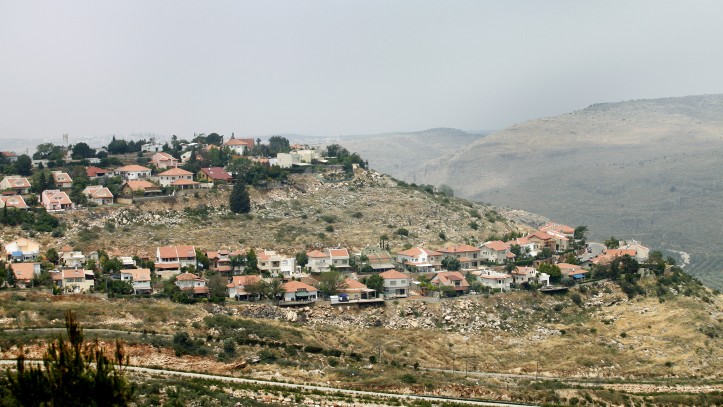
RAMALLAH, West Bank — A senior Palestinian official on Sunday rejected the idea of a partial Israeli settlement freeze as a way of restarting peace talks, a sign of tough times ahead for the Obama administration’s new attempt to bring the sides together.
US Secretary of State John Kerry met separately late Saturday with Palestinian President Mahmoud Abbas and Israeli Prime Minister Benjamin Netanyahu to talk about ending a deadlock of more than four years.
Abbas says he won’t return to negotiations without an Israeli construction freeze, arguing that Israel’s building on war-won land pre-empts the outcome of talks on a border between Israel and a future state of Palestine. Abbas last held talks with Netanyahu’s predecessor, Ehud Olmert, in late 2008, and only briefly talked with the Netanyahu administration in 2010.
Netanyahu has refused to halt construction and instead calls for an immediate return to negotiations. President Barack Obama sided with Israel’s position during a visit to the region last week, saying the Palestinians should return to talks without preconditions.
The US has not spoken publicly about possible compromises in recent days, though there has been some speculation it would seek a partial construction stop in the West Bank heartland, east of Israel’s separation barrier.
Palestinian negotiator Saeb Erekat said Sunday that the Palestinians do not seek a confrontation with the Obama administration, but appeared to suggest that nothing short of a full freeze will bring them back to negotiations.
The Palestinians want a state in the West Bank, Gaza and east Jerusalem, areas Israel captured in 1967. Since that war, Israel has built hundreds of settlements and neighborhoods — considered illegal by much of the world and now home to more than half a million Israelis — in the West Bank and east Jerusalem.
Much of the construction takes place in so-called “settlement blocs” close to Israel and in east Jerusalem. Israel’s security barrier cuts off east Jerusalem and some of the settlement blocs from the rest of the West Bank.
Asked if Abbas would accept a partial freeze, east of the barrier, Erekat told Voice of Palestine radio: “Absolutely not. It is rejected.”
“First of all, 90 percent of the building in settlements is going on in the blocs,” he said. “If we accepted that, we would be committing two crimes. The first is legalizing what is illegal, which is settlement construction, and the second is accepting the Israeli policy [of] dictation.”
Israel agreed to a 10-month slowdown in settlement construction early in Obama’s first term and Abbas agreed to talk toward the end of the period, allowing talks to resume briefly in 2010. The talks quickly broke down.
Israeli Justice Minister Tzipi Livni, who will oversee any negotiations with the Palestinians, said it remained to be seen what would bring about a new round of talks.
“We are after four years of stalemate, of distrust, and we need to see how we restart, what we will discuss,” she told Army Radio.
Erekat said the Palestinians would wait for two to three months to see if the Obama administration can come up with a way out of the deadlock. “We want to cooperate with the US administration, not clash with it,” he said.
If the deadlock persists, the Palestinians will move ahead with their quest for international recognition, he said. “We have to focus on the steadfastness of our people, and we have 63 international agencies we can join,” he said.
In November, the UN General Assembly overwhelmingly upgraded the Palestinian’s status at the UN, naming it a non-member observer state, despite objections by the US and Israel. The recognition paved the way for Palestinians to seek membership in UN agencies and other international organizations.
Earlier Sunday, Israel dismantled a tent camp Palestinians set up during Obama’s recent visit to protest Israeli plans to build a large West Bank settlement near Jerusalem.
Before dawn Sunday, about 200 Israeli police officers removed some 40 demonstrators from the tent camp, said police spokesman Micky Rosenfeld. Three protesters were arrested, but no injuries were reported, Rosenfeld said.
The encampment is part of a new Palestinian tactic to protest against Israeli settlement expansion.
Also Sunday, the Israeli military said security forces arrested five Palestinians suspected of throwing stones at an Israeli car in the West Bank two weeks ago. An Israeli toddler was seriously hurt in the incident. The military said the suspects, aged 16 and 17, confessed their involvement during questioning.






The Times of Israel Community.