

UN chief: Walls won’t solve Europe’s migrant crisis
Ahead of critical EU-Turkey talks on curbing flow of refugees, Ankara says it will not ‘bargain’ over asylum seekers
 Add ToI as a Preferred Source on Google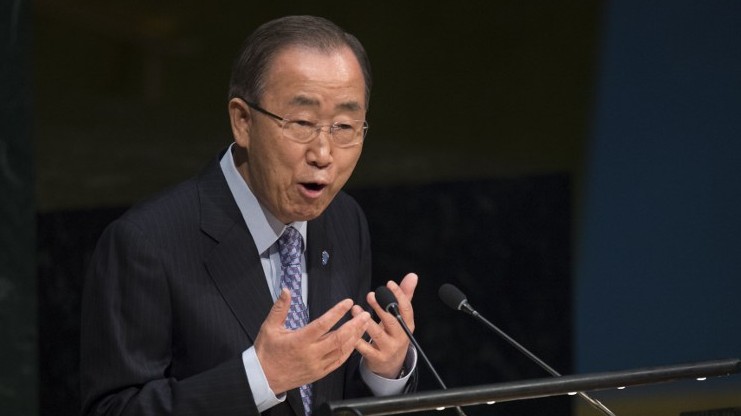
UN chief Ban Ki-moon said Friday building barriers won’t solve the migrant crisis in Europe.
The United Nations secretary-general told German daily Bild in an interview that “building walls, discriminating against people or sending them back is no answer to the problem.”
Ban praised German Chancellor Angela Merkel’s “human political leadership” in dealing with the migrant crisis and urged other politicians to follow her example.
Turkish premier Ahmet Davutoglu warned EU leaders ahead of crunch talks Friday that Ankara’s offer to curb the refugee flow to Europe was strictly a humanitarian rather than a “bargaining” issue.
“For Turkey, the refugee issue is not an issue of bargaining but an issue of values, humanitarian values as well as European values,” Davutoglu said as he arrived for a summit in Brussels with the bloc’s 28 national leaders.
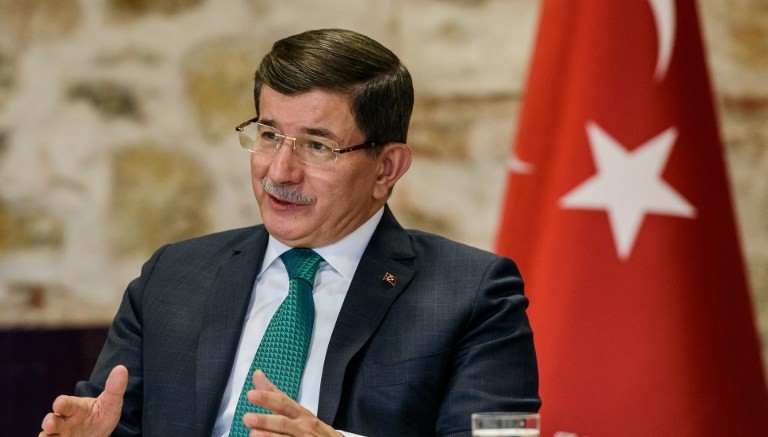
“EU and Turkey we have the same goal, the same objective to help Syrian refugees especially and also to have a new future in our continent in a bright manner,” the premier said ahead of an initial meeting with EU Council President Donald Tusk.
European Union leaders agreed late Thursday on what was described as a common position but gave no new detail about the proposals, including a key provision that Turkey provide human rights guarantees for the migrants it takes back from Greece.
Europe is counting on the agreement to curb an unprecedented wave of migrants, 1.2 million of whom have arrived since the start of 2015, fueled by the war in Syria, but Turkey has made clear it will exact a heavy price for its consent.
Despite concerns in many EU states about Ankara’s rights record, it has demanded an acceleration of its long-stalled bid for EU membership, billions of euros in extra aid and visa-free travel.
Critics have also raised concerns that the deal could violate international law that forbids the mass deportation of refugees.
The migrant crisis has left Europe increasingly divided, with fears that its Schengen passport-free zone could collapse as states reintroduce border controls and concerns over the rise of populist parties on anti-immigration sentiment.
Some European leaders voiced concerns that the deal — under which the EU would take in one Syrian refugee from Turkish soil in exchange for every Syrian taken back by Turkey from Greece — would be illegal.
An EU-Turkey draft statement obtained by AFP refers to “Turkey’s commitment that migrants returned to Turkey will be protected in accordance with international standards.”
The aim of the “one-for-one” deal is to encourage Syrians to apply for asylum in the EU while they are still on Turkish soil, instead of taking dangerous smugglers’ boats across the Aegean Sea.
Lithuanian President Dalia Grybauskaite said Thursday the plan was “very complicated, will be very difficult to implement and is on the edge of international law”.
Belgian Prime Minister Charles Michel voiced concerns over Turkey’s rights record and its conflict with Kurdish separatists, adding: “I can’t accept negotiations which sometimes look like they are a form of blackmail.”
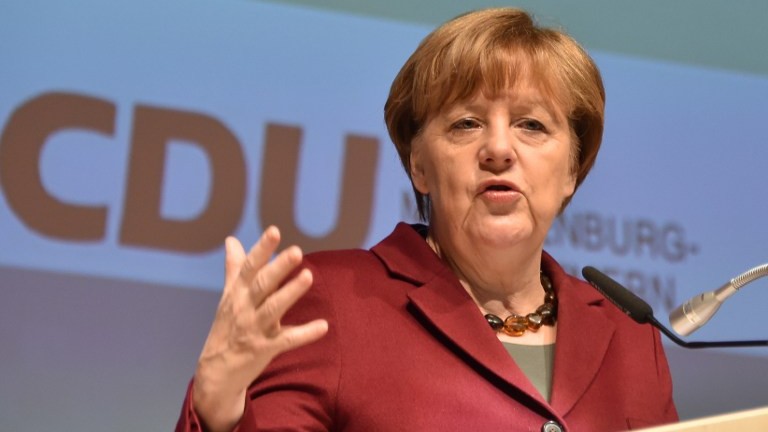
German Chancellor Angela Merkel said the deal was a “good opportunity to stop the business of human traffickers.”
Merkel however insisted on “preconditions” and clear plans to deal with the logistics of processing thousands of asylum seekers on the Greek islands and sending them back to Turkey.
A senior EU official described the proposal Tusk would present to Davutoglu as a “common position” that took into consideration “everyone’s red lines” for the negotiations.
Late on Thursday, Tusk presented changes to the deal to address some of the concerns — including the involvement of the UN refugee agency (UNHCR) in any returns and that women and children should form the bulk of those taken under the scheme — steering it towards a consensus.
As he boarded a plane in Ankara for Brussels on Thursday, Davutoglu said the proposed deal was “clear and honest” but added: “Turkey will never become an open prison for migrants.”
Besides Tusk, Davutoglu was meeting European Commission chief Jean-Claude Juncker and Dutch Prime Minister Mark Rutte, whose country holds the six-month EU rotating presidency, before EU leaders meet again for final consultations expected at 1200 GMT, EU officials said.
One major hurdle that appeared to have been overcome was opposition from Cyprus, rooted in long-standing tensions with Turkey over Ankara’s refusal to recognise its government on the divided island.
Cypriot President Nicos Anastasiades indicated he could be ready to “compromise” on his objections to the EU opening new “chapters” in Turkey’s accession process, after earlier threatening to block the entire deal.
The deal also envisages major aid for Greece, where tens of thousands of refugees are trapped in dire conditions after Balkan countries shut their borders to stop them heading north to richer Germany and Scandinavia.







The Times of Israel Community.