

White House: There is no Iran deal
Administration official calls Netanyahu’s criticism ‘premature,’ says any interim deal will preserve sanctions architecture
 Add ToI as a Preferred Source on Google
Rebecca Shimoni Stoil is the Times of Israel's Washington correspondent.
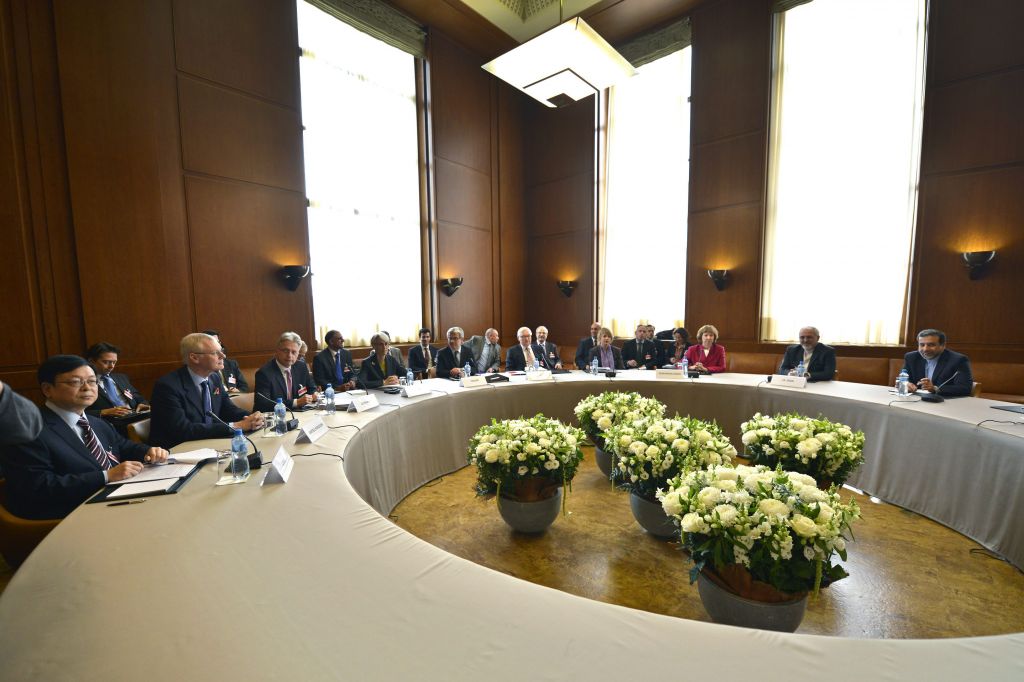
WASHINGTON – In the face of Prime Minister Benjamin Netanyahu’s stinging criticism of a reported interim agreement with Iran, the White House denied Friday that any deal with Iran existed yet, and described Netanyahu’s critique as “premature.”
Speaking with reporters aboard Air Force One on Friday, White House Deputy Press Secretary Josh Earnest said that “one thing that’s important for everybody to understand is that there is no deal.” He said that Secretary of State John Kerry’s sudden trip to the P5+1 negotiations that are underway in Geneva was “to see if he can narrow the differences between the P5+1 and the Iranians,” surmising that in light of that, “any critique of the deal is premature.”
Earnest reiterated that both the United States and Israel “are in complete agreement about the need to prevent Iran from obtaining a nuclear weapon” and did not acknowledge any differences between the two states over how best to achieve that goal.
With the administration facing off against senators who want to begin work on even tougher sanctions against Tehran, Earnest reiterated that “the only reason that Iran has come to the negotiating table to explore the possibility of demonstrating to the international community that their nuclear program is exclusively for peaceful means is because there is a very tough sanctions regime that’s in place.”
The White House official declined to discuss which sanctions may be relaxed should a deal emerge from the Geneva talks, but he warned that “the relief that would be provided would be completely reversible.” In the same vein, he emphasized that any relaxation of sanctions would be within the framework of “protecting the broader architecture of the sanctions program.”
Although he also did not delineate what steps Tehran would have to take in order to achieve a relaxation of sanctions, he did say that the United States hoped to see “transparent inspections, intrusive inspections that would guarantee some transparency into the program so that the Iranian regime could guarantee to the international community that their nuclear program exists for exclusively peaceful purposes.” He was not, however, clear as to whether this was a precondition for sanctions relief, or a demand that would enter the framework for a final negotiated solution.
Earnest said that he did not believe that Obama, who was focused on domestic issues on a trip to Louisiana, had spoken to Kerry on Friday either about Iran or about Kerry’s meetings with key players in the Israeli-Palestinian peace talks.
Some in Washington, however, did not believe that no deal was underway.
Sen. Ted Cruz (R-TX) warned that “if the reports are correct, this is a terrible deal, and it is dangerous for America.”
Cruz said in a statement that “it appears that this ‘deal’ does not require Iran to dismantle even a single centrifuge or turn over even a single pound of enriched uranium.” He warned that the lines of the deal that he had seen reported would entail lifting sanctions “in exchange for an amorphous promise to pause their immediate efforts to acquire nuclear weapons,” and claimed that such an arrangement “is almost surely unverifiable” and that sanctions relief “will only encourage Iran to surreptitiously continue to develop nuclear weapons.”
Cruz said that the American negotiators should have insisted on “good-faith measures” before any direct meetings with the Iranians, and listed among them “the acknowledgment of Israel’s right to exist as a Jewish state.”






The Times of Israel Community.