

America’s top women’s rights lawyer given intimate portrait in ‘Seeing Allred’
Creators of new Netflix documentary discuss working with Gloria Allred, the 76-year-old Jewish advocate who’s made a career defending women in the court of law and public opinion
 Add ToI as a Preferred Source on Google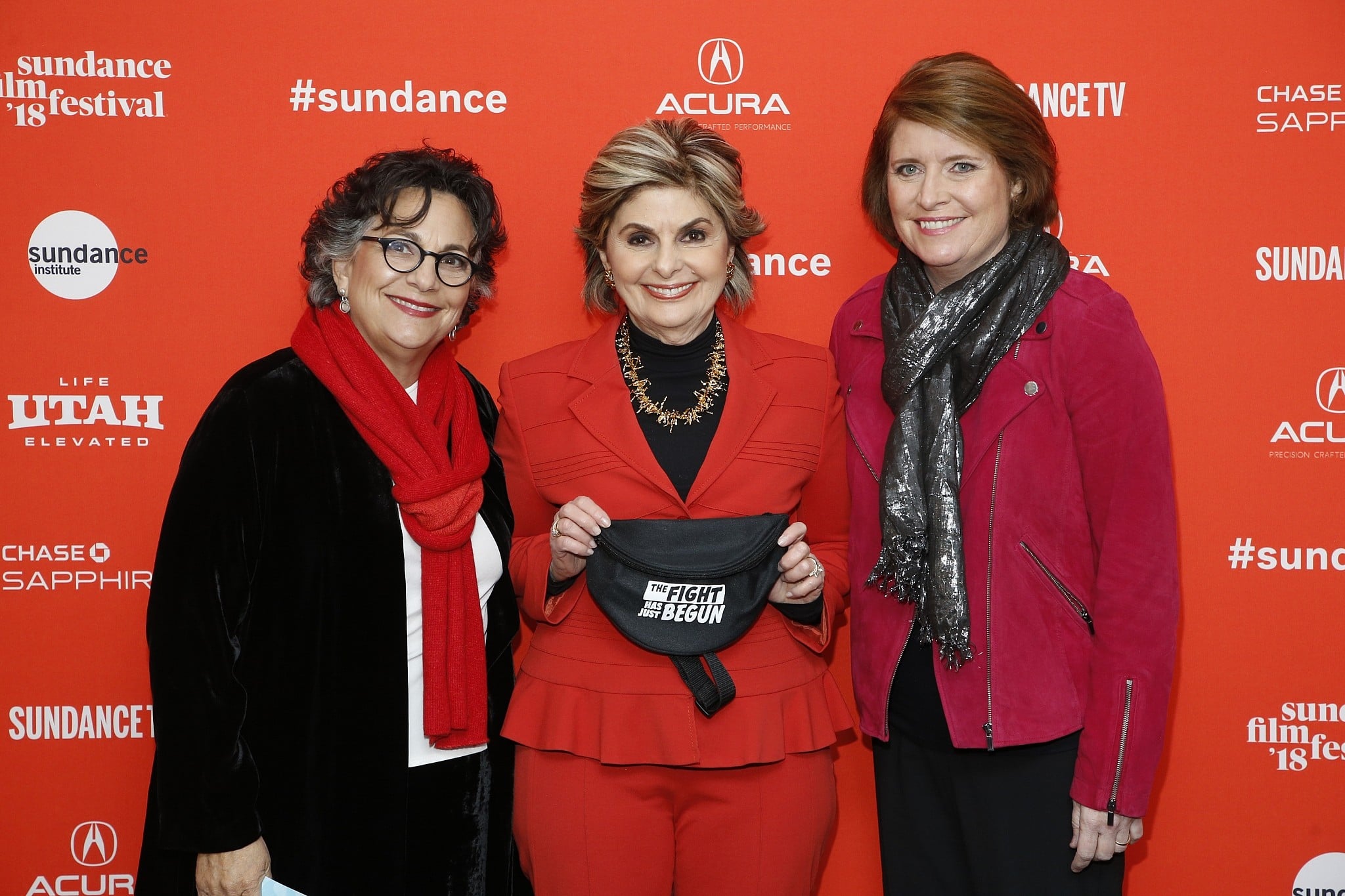
With the amount of time Gloria Allred has spent in front of the cameras in the last four decades, most people — both fans and critics — think they have a pretty good read on the famous Jewish women’s rights attorney.
But in the new Netflix documentary, “Seeing Allred,” viewers get a more intimate look inside the life of the 76-year-old Allred, who’s become infamous in the US for taking on clients alleging the misconduct of powerful men from Bill Cosby to Donald Trump.
Described as the “master of the press conference,” Allred regularly appears in front of the media — often in a red power suit and chunky jewelry — to gather public opinion in support of her clients. This has made her a beloved warrior to the women she defends, and a self-aggrandizer who just won’t go away to her critics.
The documentary, said Jewish female directing duo Sophie Sartain and Roberta Grossman, was an opportunity to let Allred argue her own story in the court of mainstream opinion.
Sartain and Grossman spoke with The Times of Israel about convincing Allred to sign onto the project, and what they believe continues to drive her after so many years on the front lines.
In a process not unlike the Jewish conversion custom of rebuffing a potentially interested party numerous times, Allred turned the filmmakers down repeatedly before agreeing to go ahead with the project.
According to Grossman, “She said no, and she said no, for really a couple of years.” So the filmmakers went away and made another film, “Above and Beyond,” about a group of World War II pilots who volunteered in Israel’s War of Independence.
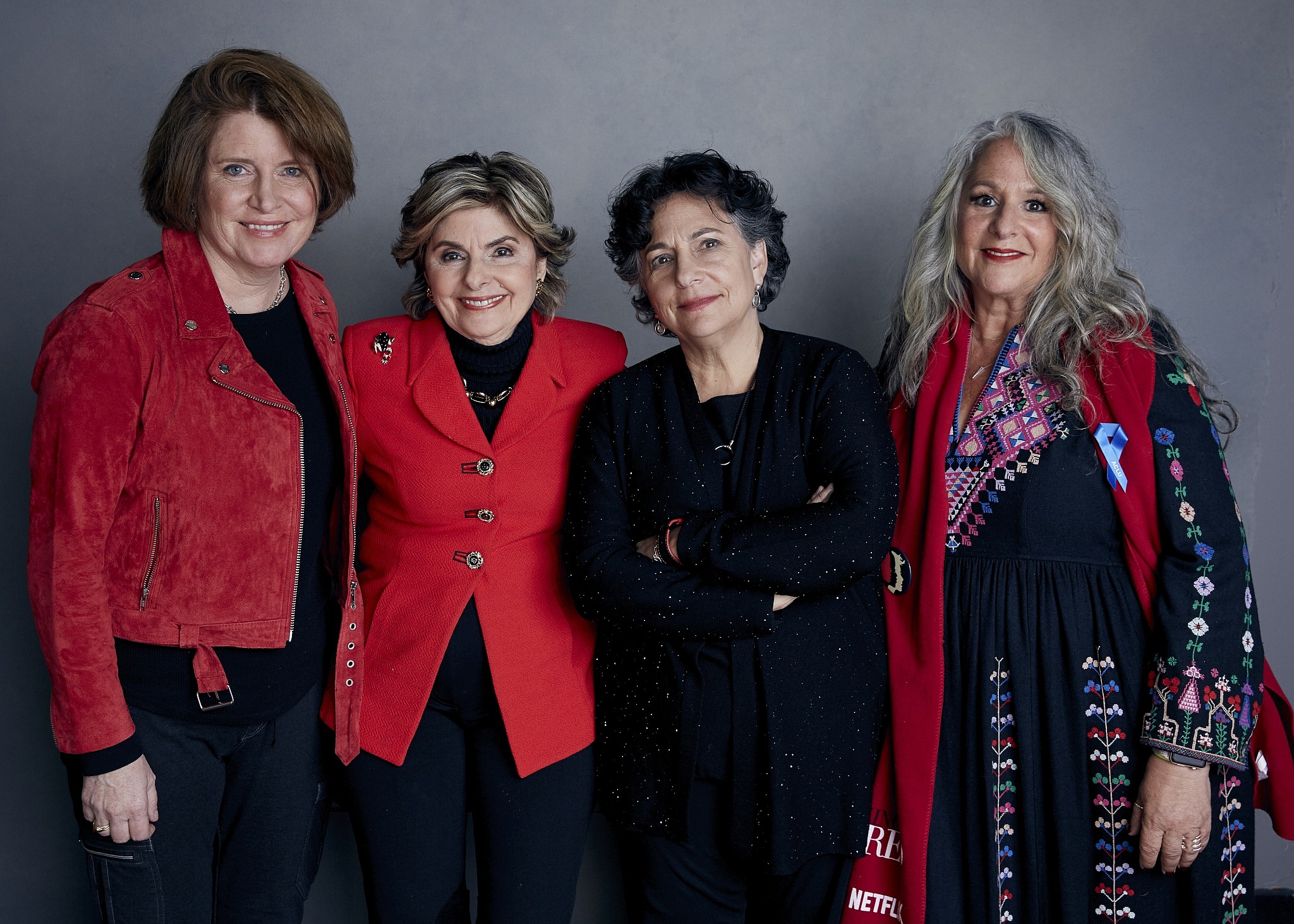
When they were done making that film, “We came back and went through the process again of trying to convince her that we were trustworthy, that we weren’t interested in tearing her apart — in fact, quite the opposite,” Grossman said, noting that bringing on TV producer Marta Kauffman (co-creator of “Friends”) to executive produce the film helped sway their subject.
Allred is portrayed in the film as stronger and busier than ever as the public zeitgeist finally catches up to her in the post-Weinstein era.
“[Allred] was so much ahead of her time on so many issues, and for her to have the vision and the instinct 20 years before other people came to the same realization — it’s taken a while for the rest of us to catch up to her,” said Sartain.
In a time before #MeToo
Born and raised in a Jewish neighborhood in Philadelphia, Allred went to the University of Pennsylvania where she met and married her first husband. Allred had her only child, Lisa, at age 20, and shortly after, divorced her husband who suffered from bipolar disorder. Allred then moved to Los Angeles where she worked as a teacher.
In the film, Allred hesitantly describes being raped on a vacation to Mexico after she moved to LA. She subsequently had an abortion which, in a time before the passing of Roe v. Wade, led to a botched procedure resulting in a hemorrhage.
Allred detailed this event in her 2006 memoir, “Fight Back and Win: My Thirty-year Fight Against Injustice–and How You Can Win Your Own Battles.”
Allred eventually met and married businessman William Allred and went to law school, graduating in 1975. She would later divorce her husband in 1987 after he was convicted of fraud.
Upon graduation, Allred founded “Allred, Maroko & Goldberg” in 1976 with Michael Maroko and Nathan Goldberg. The trio committed themselves to creating a firm grounded in social justice.
According to Sartain, “There is something about the firm itself that is very Jewish. All three founding partners are Jewish. [Marako and Goldberg] are both children of [Holocaust] survivors, and there is that spirit in the firm of pursuing justice, which is very Jewish.”
In fact, it was this same spirit that initially attracted the filmmakers to their subject — much of the filmmaking duo’s past work revolves around groundbreaking Jewish subjects, such as their previous documentary on Hannah Senesh, the poet and paratrooper who was trained to rescue Jews during the Holocaust.
Allred began her career fighting to obtain equal pay and the right to child support for women — causes which the filmmakers said were rooted in Allred’s Jewish values.
“[Allred] speaks about [her Jewish values in regards to] the importance of the pursuit of justice…, to try to heal the world and that’s what she is all about even though she has never been… particularly involved with the Jewish community,” said Grossman.
As a young lawyer, Allred started appearing on talk shows, defending the rights of women to the response of boos from the men in the crowd.
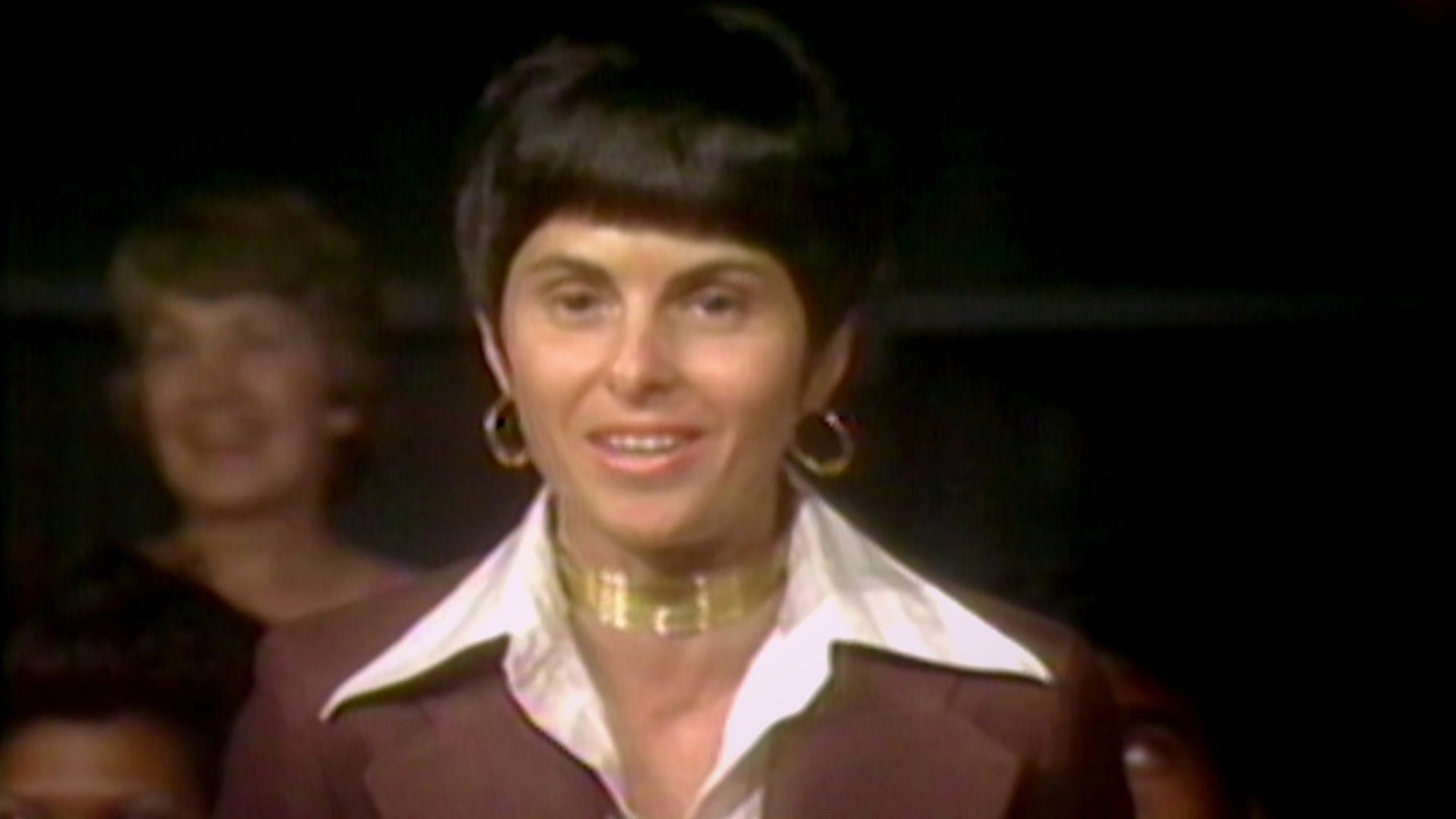
Beyond her public appearances, in her 42 years practicing law, Allred has proven herself to be a fearless advocate for women’s equality.
In 1981, Allred publicly handed a chastity belt to anti-abortion California State Sen. John Schmitz. He responded by calling her a “slick butch lawyeress.” She sued for libel and won $20,000 and an apology. She’s also taken on the Catholic Church for cases of sexual misconduct and the Boy Scouts of America for refusing to accept a female applicant.
But Allred obtained real notoriety for representing the family of Nicole Brown Simpson in the highly visible O.J. Simpson trial which began in 1994.
As portrayed in the film, Allred currently represents former “Apprentice” contestant Summer Zervos, who accused Donald Trump of sexual misconduct.
One of the most striking threads in the film is Allred’s representation of women accusing actor Bill Cosby of sexual assault.
Press conference after press conference, viewers watch Allred bring the women forward, allowing them to tell their story in front of waiting cameras. (Today, Allred represents 33 women accusing Cosby of sexual assault. His criminal retrial will continue on April 2.)
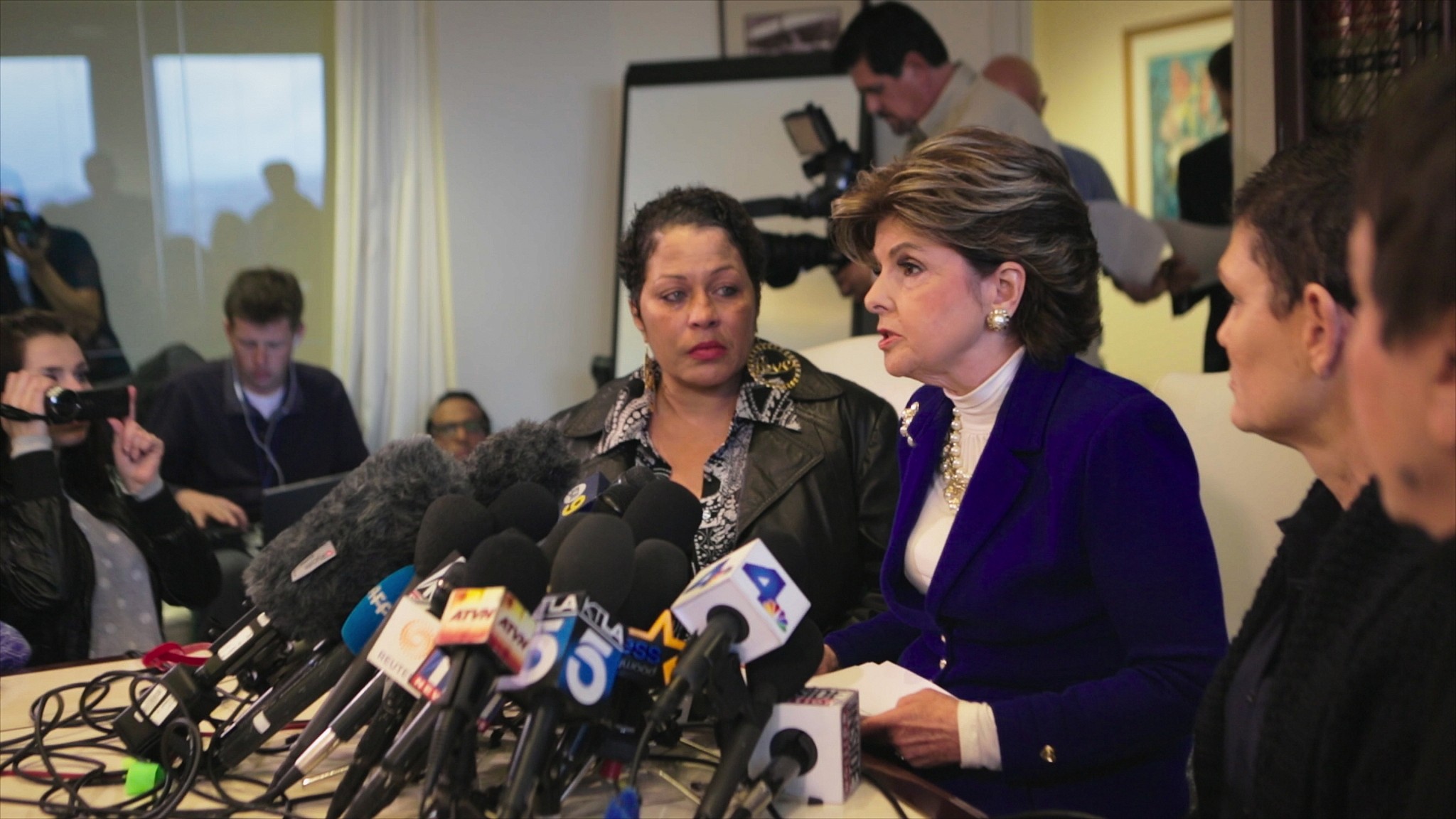
According to Sartain, while in 2014 the filmmakers couldn’t have predicted the forthcoming #MeToo movement, looking back at the footage, she said, “the seeds were there.”
When women started coming out against Cosby, Sartain said, “It was very courageous of them because at the time public opinion had not been swayed in their favor.”
“Now looking back in hindsight you can see how it fed into this momentum that started to grow and then ultimately erupted into a movement this past fall,” she said.
Instigated by revelations of Hollywood mogul Harvey Weinstein’s decades of sexual misconduct, #MeToo broke out towards the very end of their filming process.
Interestingly, it was Allred’s daughter, fellow attorney Lisa Bloom, also appearing in the film, who represented and advised Weinstein when the charges broke out.
On her daughter’s controversial move, Allred released a statement saying, “Had I been asked by Mr. Weinstein to represent him, I would have declined, because I do not represent individuals accused of sex harassment.”
Why so parodied?
Just as today’s public discourse on women reframed Bill Cosby from a lovable dad on television to an accused rapist, so too has the this moment in time — aided by the release of this film — moved Allred away from her public image as an attention-hungry opportunist to groundbreaking women’s rights advocate, said the filmmakers.
On why Allred has been so negatively portrayed over the years, Sartain said, “[Allred] is powerful and doesn’t apologize for being powerful, and I think that that can rub some people the wrong way in terms of what their expectations are for how women should behave.”
“People have often questioned her, asking, ‘What does she really want?’ ‘What is she really doing?’ because it’s so unusual how outspoken and powerful she is, and she doesn’t apologize for that, and it leads to all of these questions. But she really is who she is,” Sartain said.
It would be hard for the viewer not to be impressed by the septuagenarian who the filmmakers show as ceaselessly on the go, wheeling her briefcase from airport to airport across the country.
Sartain said she was surprised by how much of a “do it yourself” kind of person Allred is. “I figured we’d be traveling with her and she’d have an entourage — or at least a few people supporting her — but she does it all on her own.”

Now, it seems, more than ever is there an opportunity for Allred to bring the public with her in fighting for women’s rights, a cause she was leading long before it was a hashtag. And as the film makes clear, Allred plans to be in front, where she’s always been.
In the documentary, Allred is asked if she has any fears.
“If I had to name one,” she says, “it would be not living long enough to do everything I want to do.”









The Times of Israel Community.