

Kuwait arrests driver of bomber in IS mosque attack
Owner of house where attacker stayed also held; national oil company raises security at all facilities to maximum levels
 Add ToI as a Preferred Source on Google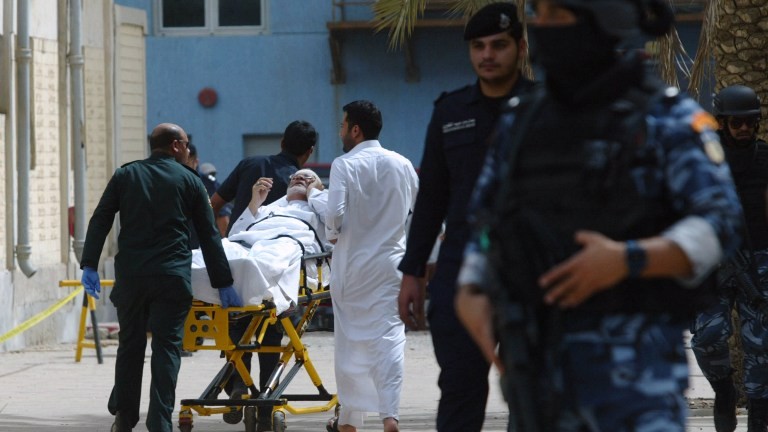
Kuwait City, Kuwait (AFP) — Kuwaiti police have arrested the driver who transported a suicide bomber to a Shiite mosque where he blew himself up, killing 26 and injuring 227 in an attack claimed by the Islamic State group, official media reported.
Authorities have also detained the owner of the house where the bomber was staying, a Kuwaiti national who subscribes to “fundamentalist and deviant ideology,” the KUNA news agency said, citing a statement from the Interior Ministry.
The driver, named as Abdulrahman Sabah Eidan Saud, was described as an “illegal resident” born in 1989, who took the bomber to the Al-Imam Al-Sadeq mosque in Kuwait City on Friday, it said.
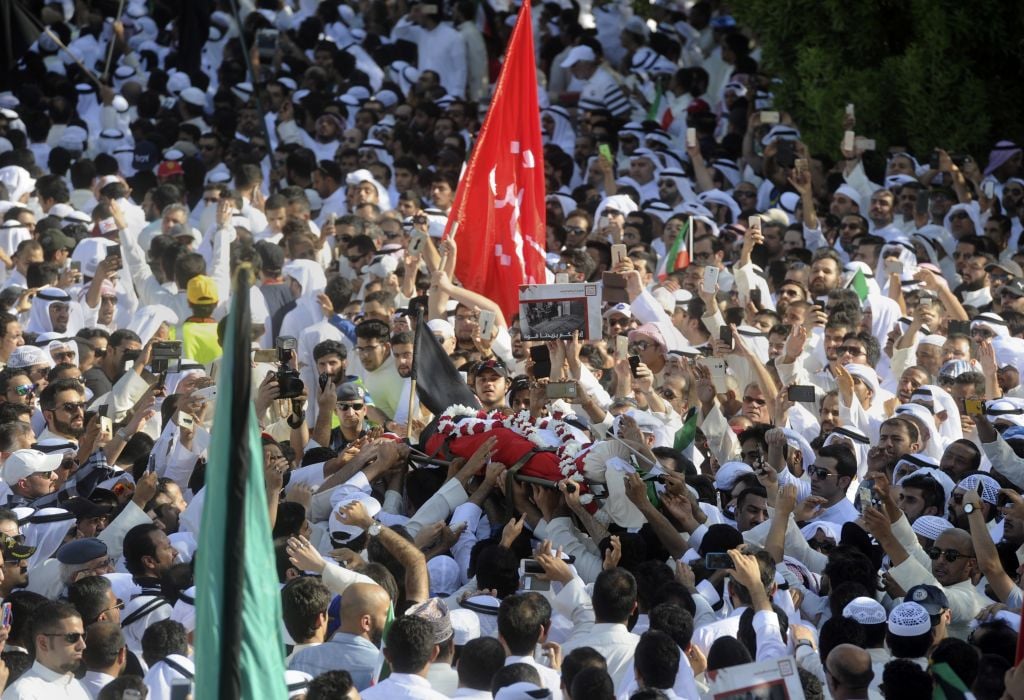
The arrest came after thousands of Kuwaitis braved scorching summer heat on Saturday to attend the funerals of 18 out of 26 victims of the bombing, claimed by the Islamic State group.
The bodies of the remaining eight victims were flown to Iraq’s Shiite holy city of Najaf for burial, State Minister for Cabinet Affairs Sheikh Mohammad Abdullah Al-Sabah said.
Draped in Kuwaiti flags, the bodies were borne by mourners chanting religious slogans.
Mourners turned out in large numbers despite the Ramadan daylight fast and as temperatures hit 45 degrees Celsius (113 Fahrenheit).
“This crowd is the proof that the objectives of the criminal act have failed,” parliament speaker Marzouk al-Ghanem told reporters.
The mourners, who included women clad in black Islamic dress, carried Kuwaiti flags and black and green banners bearing religious slogans.
The health ministry said that 40 wounded are still in hospital following the attack, one of the country’s worst bombings and its first ever on a mosque.
The interior ministry said authorities will “continue efforts to uncover the conspirators in this criminal act and to reveal all of the information and circumstances behind it.”
Two of the dead were Iranian, the Shiite-dominated Islamic republic’s foreign ministry said.
In Iraq, relatives wept as the eight coffins arrived and were taken inside the airport terminal at Najaf, an AFP journalist said.
“We want to deliver a message to Daesh (an Arabic acronym for IS) that we are united brothers among the Sunnis and Shiites, and they cannot divide us,” Abdulfatah al-Mutawwia, a Kuwaiti who lost his brother in the bombing, said in Iraq.
Friday’s attack targeted Al-Imam Al-Sadeq mosque in Kuwait City during Friday noon prayers.
Mosque official Abdulnabi Mansur said the victims flown to Iraq were seven Kuwaitis and a Saudi, and that they would be buried in the Wadi al-Salam cemetery surrounding the shrine of Imam Ali in Najaf.
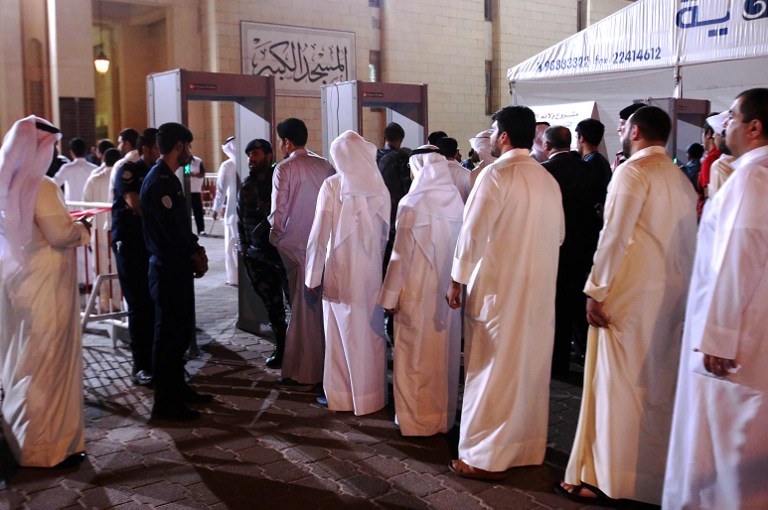
In Kuwait, condolences were being accepted for three days from Saturday at the Grand Mosque, the largest place of worship for Sunni Muslims, in a show of solidarity.
Kuwait’s emir, the government, parliament and political groups and clerics have all said the attack aimed to stir up sectarian strife in the emirate.
The radical Sunni group Islamic State considers Shiites to be heretics.
Shiites comprise a third of Kuwait’s 1.3 million native population. Sunni religious and political groups were quick to condemn the attack.
The emir, Sheikh Sabah al-Ahmad al-Sabah, who visited the site immediately after the bombing, said the “criminal attack is a desperate and evil attempt targeting Kuwait’s national unity.”
Countries and organizations including the United Nations and the United States deplored the bombing.
Eight Islamist, liberal and Shiite political groups condemned the attack in a joint statement and called on the government to confront extremists.
The government had briefed MPs about measures it has taken since the bombing, Sheikh Mohammad told reporters.
An interior ministry statement said, without elaborating, that an unspecified number of suspects were held for questioning in connection with the attack.
The cabinet announced after an emergency meeting on Friday that all security agencies and police had been put on alert to confront what it called “black terror.”
Justice and Islamic Affairs Minister Yacoub al-Sane said additional security measures will be taken around mosques and places of worship.
National oil conglomerate Kuwait Petroleum Corp. (KPC) said on Saturday it had raised security at oil facilities to maximum level.
Oil is Kuwait’s main source of income, accounting for around 90 percent of public revenues.
The OPEC member says it sits on around 10 percent of global reserves and pumps around 2.8 million barrels of oil per day.




The Times of Israel Community.