

 From the Liveblog of
Tuesday, August 5, 2025
From the Liveblog of
Tuesday, August 5, 2025
Red Cross: Videos of emaciated hostages are ‘appalling’ but no way to access the hostages without guarantees from Hamas, Israel
 Add ToI as a Preferred Source on Google
Nava Freiberg is The Times of Israel's deputy diplomatic correspondent.
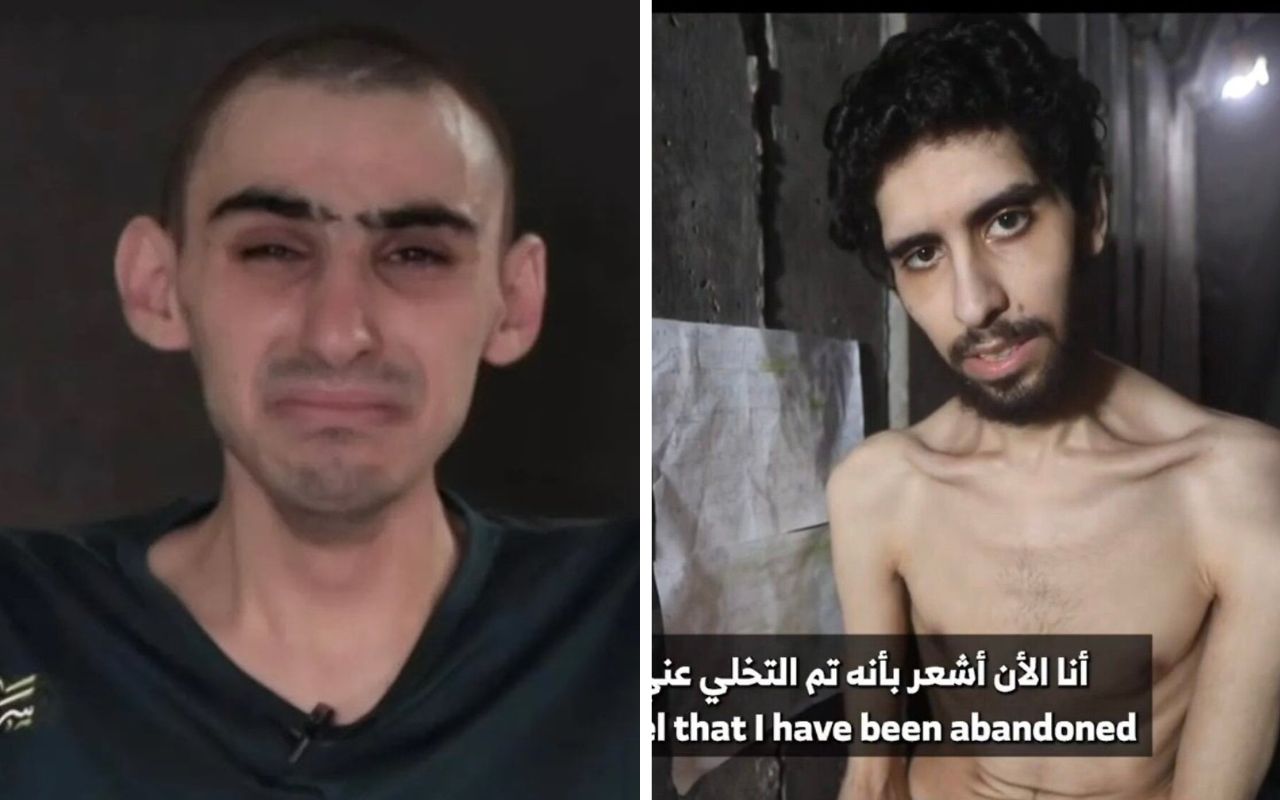
The sight of hostages Evyatar David and Rom Braslavski appearing severely emaciated in videos released by Hamas and Palestinian Islamic Jihad in recent days was “appalling,” says International Committee of the Red Cross spokesman Gilad Grossman, who adds, however, that accessing hostages remains out of reach for the agency.
“Since we do not have access to the hostages, we did not have first-hand knowledge of their situation — seeing the videos was appalling,” Grossman tells The Times of Israel in a phone interview.
Following the release of the footage, Prime Minister Benjamin Netanyahu and President Isaac Herzog spoke directly with ICRC officials, urging them to do whatever is necessary to reach and treat the hostages. The ICRC has been repeatedly criticized by Israel for failing to assist any hostages throughout the war, except during handovers under hostage-release deals.
Despite these appeals, Grossman says that “To actually reach the hostages, we need to be granted access and there needs to be a process that ensures the hostages’ safety and our staff’s safety…In Gaza, most of the area is an active combat zone. We need to be able to move around safely, and that is not possible without all the necessary coordination and guarantees.”
Earlier this week, after the ICRC reiterated its call for access in response to the videos, Hamas publicly signaled willingness, for the first time, to allow humanitarian access to hostages—but only under conditions that require Israel’s approval, including halting all military activity during visits and opening additional humanitarian aid convoys.
“We remain in regular contact with Hamas and the Israeli authorities. If Israel and Hamas come to an agreement, we’re ready to operate,” Grossman says.
While Hamas and aid agencies blame Israel for the lack of food distribution in Gaza, Israel denies allegations of and responsibility for widespread starvation, and accuses Hamas of actively diverting supplies and disrupting humanitarian efforts.
Grossman declined to assess Hamas’s claim that there is insufficient food to feed the hostages or claims of starvation, but notes that “The situation in Gaza is catastrophic.”
“Even our staff are affected. Food is harder to get, the nutritional quality is lower, the portions are smaller. The little food that is available is very expensive… we feel the shortage,” he adds.
“We know Gazans are hungry and we know there is malnutrition. We see it in our field hospital, we see it in our other programs, and we hear about it from our colleagues,” he says.






The Times of Israel Community.