

OECD: Israel ‘slow but steady’ on Arab, ultra-Orthodox employment
The government is determined to raise productivity levels with a slew of programs to bring ‘peripheral populations’ into the workforce
 Add ToI as a Preferred Source on Google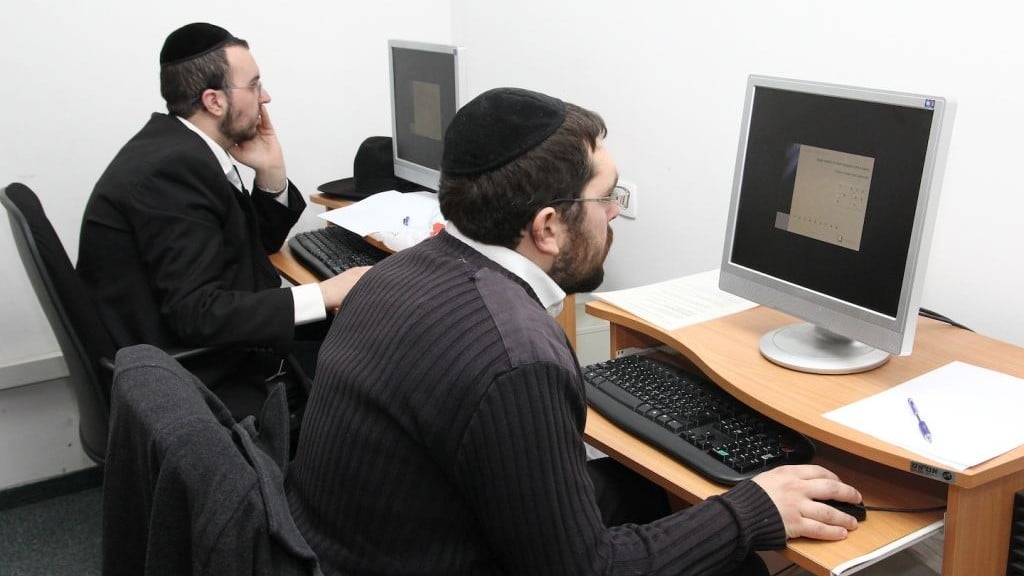
Israelis as a whole are less productive than workers in other countries – a situation that can be attributed, says the Organization for Economic Cooperation and Development (OECD) to the lower participation levels of ultra-Orthodox and Arab Israelis in the workforce. But things are getting better, if a bit slowly, the OECD said in a new, titled “Going for Growth” – and if they are, it is because of new programs that the government in Israel has been implementing to integrate peripheral populations, one person at a time.
According to the report, Israel’s income gap with leading OECD economies “continues to narrow gradually, mainly reflecting a rising employment rate among Ultra-Orthodox and Arab-Israeli population. Productivity convergence with the most advanced countries, however, remains slow.” In recent years, the report said, “some progress has been achieved in integrating the vulnerable groups into the labour market. School infrastructure and class-sizes in the Arab sector have continued to improve, but progress remains slow.”
In a recent presentation in Nazareth, Chief Scientist Avi Hasson addressed this issue, saying that the diverse needs of the “out” groups – the ultra-Orthodox, Arabs, and residents of outlying towns and cities far from the center of the country – meant that there could be no “one size fits all” solution. Instead, the government needed to tailor programs specifically to populations, guiding them towards training in skills that are relevant to the jobs available now in Israel’s tech-savvy economy, while respecting their cultural, religious, and communal sensibilities.
Among those programs is one first announced by the Ministry of Economy in October to train and integrate Arab, Druze and Circassian academics into Israel’s high-tech sector. The Ministry announced this week that two organizations, Tsofen and ITworks, won a tender to run courses for these groups, and over the next three years, they will receive a total of NIS 10 million to administer the program.
Among the tasks the tender winners will undertake is a thorough job survey to determine exactly where the jobs are in northern and central Israel that these college graduates would be appropriate for, and to ensure that they have the skills, both technical and cultural, to fill those jobs.
According to the Ministry, hundreds of Arab, Druze, and Circassian Israelis graduate from college, having completed studies in relevant high-tech industries. However, despite their repeated attempts, these graduates are often unable to find work in the profession for which they studied. As part of the tender, the two training organizations will have to figure out where the problems are, and develop a plan to solve them so clients enrolled in their program will be able to get a job.
Meanwhile, the Jerusalem Kivun Center, a one-stop employment center opened under the auspices of the Ministry of Economy and the Jerusalem Municipality in March 2014, recently announced its 500th job placement. The center, operated by the Kemach Foundation in cooperation with Manpower Israel and Pilat, is part of a government initiative to increase employment among ultra-Orthodox men from 45% in 2012 to 63% in 2020.
The Kivun Center in Jerusalem employs 11 full-time staff members and offers services in vocational assessment, training, educational and professional guidance, and job placement, with an annual budget of NIS 16 million. Kivun is one of nine such employment centers around the country aimed at ultra-Orthodox workers. Four more are set to open this year. Since it opened last March, over 600 people have participated at the Jerusalem center in workshops such as an introduction to the world of work, resume-writing, and many others.
Over 400 people have received individual vocational assessment and guidance. At a recent employment fair for men, 345 participants signed up for workshops and courses in computer skills, English, cooking, sales, real estate, entrepreneurship and business management. Companies that took part in the fair included Teva, Eldan and Berman Bakery. According to Yehiel Amoyal, Director of the program, the Jerusalem Kivun Center “is unique in that it offers the entire gamut of employment services under one roof, giving tailored guidance and tools to participants, while being sensitive to their lifestyle.”
Meanwhile, the Ministry of Economy’s Investment Center on Wednesday released its annual report, summing up its investment activity for 2014. According to the report, the Ministry authorized 85 funding requests with a total investment of NIS 2 billion, that will directly lead to an additional 2,837 positions and an expected growth in Israeli exports of NIS 2.05 billion. Additional grants of NIS 321 million for industrial projects and production plants in the periphery are set to create approximately 5,000 new jobs. For high-tech workers in the periphery, a special employment track was authorized to find jobs for 200 people in the cyber-security and IT industries.
According to Nahum Itzkovitz, Director of the Investment Center at the Ministry of Economy, “these investments were all carried out in the State of Israel’s peripheral areas to enable the expansion of their economic activity. The investments also affect job openings at plant suppliers and service providers, in addition to the direct positions created. In 2014, a particular emphasis was placed on investments that show innovation for increasing productivity and positions paying relatively high salaries.”








The Times of Israel Community.