

Opposition MK accuses state of funneling money to anti-Arab attackers
Police say no evidence to back Stav Shaffir’s allegation about right-wing groups funding price-tag actions; settler group denies claims
 Add ToI as a Preferred Source on Google
Marissa Newman is The Times of Israel political correspondent.
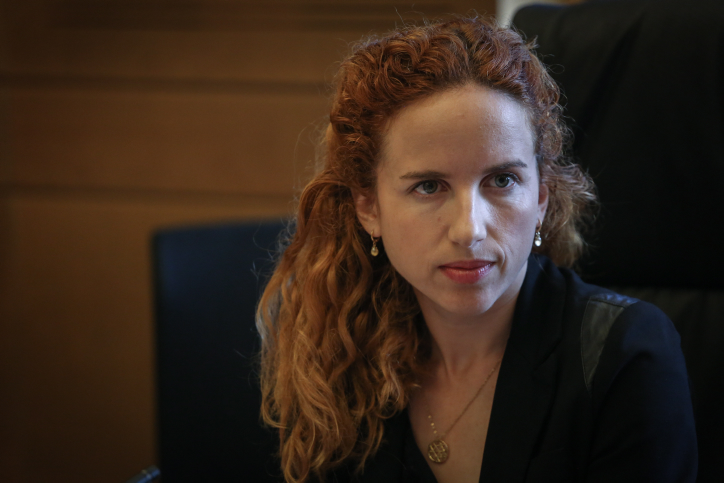
MK Stav Shaffir (Zionist Union) on Monday alleged that state-funded right-wing NGOs created the concept of anti-Arab and anti-IDF “price tag” hate crime attacks.
Security officials said there was no evidence to support the allegations. One settler organization, the Shomron Residents Committee, said in response that it “acts in accordance with the law.”
In a Knesset Transparency Committee meeting titled “Who funds price tag attacks?” Shaffir accused the government of indirectly supporting terror by funneling state funds to the Samaria Regional Council and the Binyamin Regional Council, which, in turn, support the Shomron Residents Committee and the Binyamin Residents Committee nonprofits.
The two state-funded right-wing organizations, which have received NIS 6.5 million ($1.7 million) and NIS 3.5 million ($900,000) respectively from the state, “invented” the idea of the anti-Arab violence, she contended. The state “is watering the fields from which these ‘bad apples’ grow,” she said, and the “money is hidden.”
A statement from Shaffir’s spokesperson similarly accused the organizations of “developing the policy of ‘price tags,'” echoing a 2012 report in the Hebrew daily Yedioth Ahronoth that was subject to a libel lawsuit by one of the groups, later withdrawn.
“Those that developed the ‘price tag’ mechanism are the settler committees in the West Bank which enjoy generous public funding, starting with the Shomron Residents’ Committee,” a statement from her office said.
But Israel Police and Defense Ministry representatives at the meeting said the two groups — which have in the past endorsed violent protests against IDF demolitions of illegal outposts in the West Bank — may be responsible for inciting Jewish youths but do not offer any financial assistance to the perpetrators.
Police representative Aharon Binyamin said police were taking hate crime attacks very seriously, with an internal directive given to term the attacks “nationalistic” rather than the euphemism “price tag.” However, he maintained repeatedly under Shaffir’s questioning that there was no evidence linking the groups to the Jewish assailants who have carried out attacks since 2008.
“We deal with facts and evidence…I will say it for the third and fourth time, we cannot pinpoint a source that is sponsoring terror,” he said. Binyamin said the attacks, mostly acts of arson and vandalism by Jewish extremists, “don’t require resources,” and said the allegations are “very serious” but would seem to relate more to incitement than financial support.
Representatives of the Shomron Residents Committee and the Binyamin Residents Committee did not appear at the committee meeting, in what Shaffir said was “a borderline admission of guilt” that “spits in the face of the Knesset.”
In response, the Shomron Residents Committee said it “operates in accordance with the law, and if the Knesset member has suspicions, let her go to the police and file a complaint.”
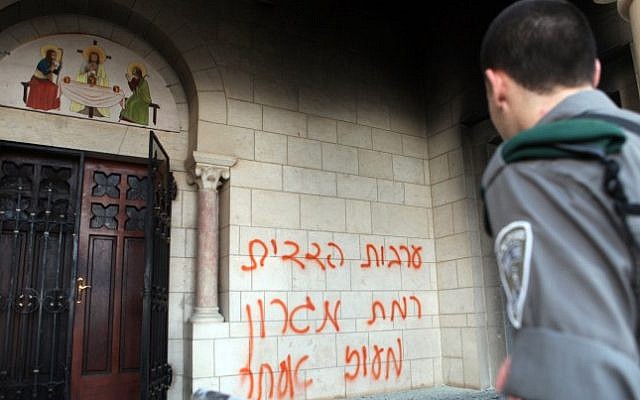
The organization said it chose to skip the “circus initiated by left-wingers.”
“When MK Shaffir carries out a full investigation against Ezra Nawi and the other ‘human rights’ organizations in the news these days, we will deliberate against whether to come to this meeting or any other,” it said, referring to the left-wing activist who is accused of turning in Palestinians to the authorities for selling land to Jews, thus reportedly sending them, in some cases, to their deaths.
‘Dangerous funding must be stopped’
Outlining her allegations, Shaffir said: “On the one hand, the government ministers condemn [price tag attacks] — and then those same ministers transfer money to the organizations that founded the infrastructure for Jewish terrorism and harm soldiers. IDF soldiers are harmed as a result of the actions of the Shomron and Binyamin Residents Committees — and the government is still funding them?”
“This dangerous funding must be stopped immediately,” she said.
Shaffir was referring to a series of remarks attributed to the leaders of these groups, which have urged protesters to obstruct demolitions of illegal outposts, even to the point of violent clashes with the IDF.
According to a report by the Molad NGO, the head of the Binyamin Residents’ Committee has in the past said he would give protesters helmets and clubs to prevent the evacuation of the Migron outpost. It said the Shomron Residents Committee published an article online in 2008, and later erased it, called: “Solidarity. Yes, some call it price tag.” In the document it said “What has this got to do with hurting Arabs?” and provided a reply: ‘We believe that the boundaries of the struggle are broad.” The Molad report concluded that the price tag policy “was developed by nonprofits funded directly by branches of the state in the West Bank.”
This view, also espoused by Shaffir and denied by the groups, was the subject of a 2012 Yedioth Ahronoth report, which prompted a libel lawsuit by the Shomron Residents’ Committee and which was later dropped. The organization, headed by veteran settler leader and Gush Emunim founder Benny Katzover, also made headlines in February 2015 for a video likening left-wing NGOs to Nazi collaborators.
The Israel Police representative at Monday’s meeting said the price tag attacks are “sporadic,” and “if you take these crimes and analyze them, you cannot pinpoint a person or organization that sponsors” them.
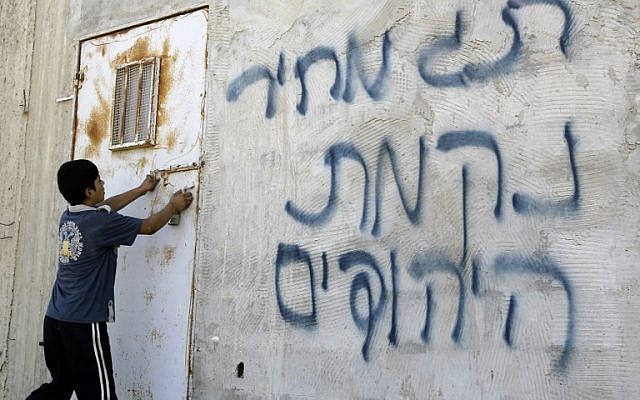
During the session, Shaffir also asked representatives of the Interior Ministry, Education Ministry, and Justice Ministry about state funding for illegal outposts. “We know that terror activities emerge out of illegal outposts, and we know the illegal outposts” get funding from the state, she said.
In response, the Interior Ministry said it does not follow the money trail once funds are released to the regional councils, which then distribute their funding at their discretion. The Education Ministry said it does not sponsor institutions situated in illegal outposts for elementary or high schools, but there are several post-high school yeshivas — which are associated with other institutions, such as the Merkaz Harav yeshiva — that do receive funding. The ministry stressed that it does not support schools that incite against the State of Israel, such as the Od Yosef Chai yeshiva in the West Bank settlement of Yitzhar, but said it does not evaluate the content of studies for post-high school curricula.
During the meeting, the representatives from the Justice Ministry and state prosecutor’s office criticized Shaffir for expanding the discussion to funding for illegal outposts rather than just funding for “price tag” attacks, saying they were only asked to prepare the information for the latter.
A Defense Ministry official at the meeting made a similar point. “The moment there is information on funding of violent acts.. then the IDF acts,” said Yotam Har-Tzion. But “you need to distinguish between violence and illegal activities,” he said. The funding for illegal outposts “need to be dealt with,” he continued, but the two issues are not the same.



The Times of Israel Community.