

Stopping the Shabbat shopping
The court order for Tel Aviv to close its business establishments on Saturday seems like the only real news
 Add ToI as a Preferred Source on Google
Aaron Kalman is a former writer and breaking news editor for the Times of Israel
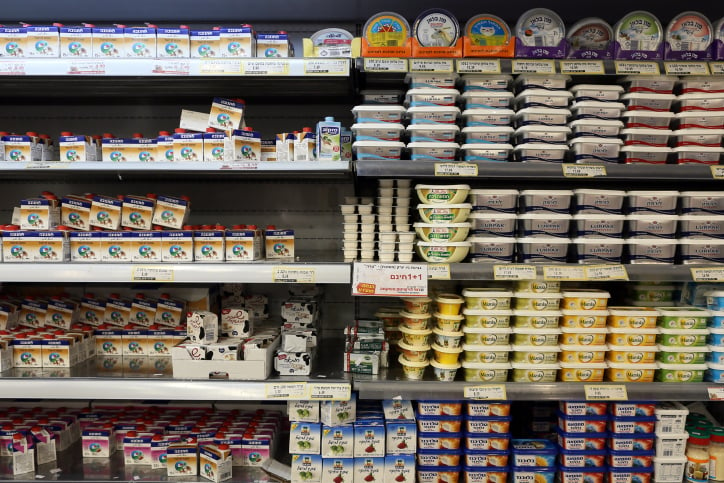
The Supreme Court’s verdict ordering the Tel Aviv Municipality to enforce its own law and close businesses operating on Shabbat leads all of Wednesday’s Hebrew papers, leaving scarce space for anything else on the front pages.
Israel Hayom features the responses of the small business owners who petitioned the court and expressed joy at its decision, along with the reaction of Tel Aviv Mayor Ron Huldai who promises the city “will continue to be free.”
The court’s verdict, given unanimously by three judges, ruled that the municipality had to either enforce its regulations and shut down businesses on Shabbat or change the rules so that they could open. Supporting a situation in which “a symbolic fine allowed the law to be trampled openly,” the judges wrote, “couldn’t continue.” Stressing that the decision wasn’t a religious one, the judges said the current status quo harmed both the rule of law and the small shop owners, and therefore change was needed.
Legal expert and columnist Aviad Hacohen writes in the paper that the verdict provides a chance to even the playing field between the large co-ops who can afford to pay a weekly fine and the smaller business owners who on the one hand cannot pay the fine and on the other wish to take a day off with their families.
“The court,” Hacohen writes, isn’t the arena where battles over the proper mode of Shabbat observance needs to take place. But, he continues, “the court must, as it did yesterday, safeguard the rule of law.”
In another debate over the identity of Israel, Yedioth Ahronoth reports on a bill, drafted by parties on the right, which would make Israel “a more Jewish than democratic state,” by determining that the country was a Jewish one with a democratic system of government.
Israel has no constitution and is instead governed by “Basic Laws” which have more weight than the other laws. The new bill being promoted by legislators from the Jewish Home and Likud parties, the tabloid reports, aims to change the definition of Israel from “Jewish and democratic” to Jewish, while anchoring its system of government as a democratic one.
“Over the years,” explains coalition chairman Yariv Levin (Likud), the court has “turned the country into a democratic one with little Jewish content.” The law, he adds, will make it clear that Israel is “a Jewish state, the state of the Jewish people,” and this will force the Supreme Court to prefer Jewish citizens over others in certain fields, something it has refrained from doing so far.
Maariv places the spotlight on Danny Danon’s selection as the president of the Likud’s central committee after the hawkish deputy defense minister won the party’s inner elections — in which no serious opponent ran against him and only 23 percent of eligible voters cast their ballot.
Danon, the paper reports, was already eyeing more influential rules in the future, and views his mostly symbolic new title as a steppingstone rather than a goal. “The Likud is a movement [that’s] been neglected for years,” he told the tabloid, apparently hinting at Prime Minister Benjamin Netanyahu’s lack of involvement with the party’s activists. “It’s time to give it back its soul.”
Of the four leading Hebrew papers, Haaretz is the only one to headline the events in Syria on its front page, leading with a quote by a cousin of President Bashar Assad, who claims the extremists fighting in Syria don’t only want to win the country, but rather “the entire region.”
The cousin, who’s been vocal about his opposition to the actions of Assad in the ongoing civil war, calls upon the US and other countries to refrain from arming the rebels fighting the regime. Arming the rebels, who are led by jihadist groups, “could lead to a second Afghanistan,” the daily quotes him as saying in closed talks in New York.
Israel’s apology to Turkey and the attempts to mend the rifts between the countries make an appearance on Yedioth’s front page before being pushed into the inner pages of the daily, which reports diplomats in Jerusalem are appalled by the behavior of their counterparts in Ankara.
“Grotesque,” “dangerous” and “humiliating” are some of the words used by unnamed sources quoted in the tabloid, as they describe the actions of Turkey ever since Israel apologized for the 2010 killing of nine citizens aboard the Mavi Marmara. “It looks like we’ll eat a lot more gravel from the Turks,” one of the diplomats told the paper.
As the summer approaches, Maariv reports of an insect invasion, as officials warn the Asian tiger mosquito and fire ant have spread around the country more than usual this year.
“No one does anything to stop” the two invasive pests, which have a painful sting, a number of exterminators quoted by the paper charge, while the Agriculture Ministry says such creatures are under the jurisdiction of local authorities.







The Times of Israel Community.