

Main Tel Aviv pro-hostage deal protest Saturday canceled due to Lebanon, Iran concerns
Jerusalem demonstration, smaller protests will mark year since Oct. 7; defense official said to tell families deal unlikely before end of intense fighting against Hezbollah
 Add ToI as a Preferred Source on Google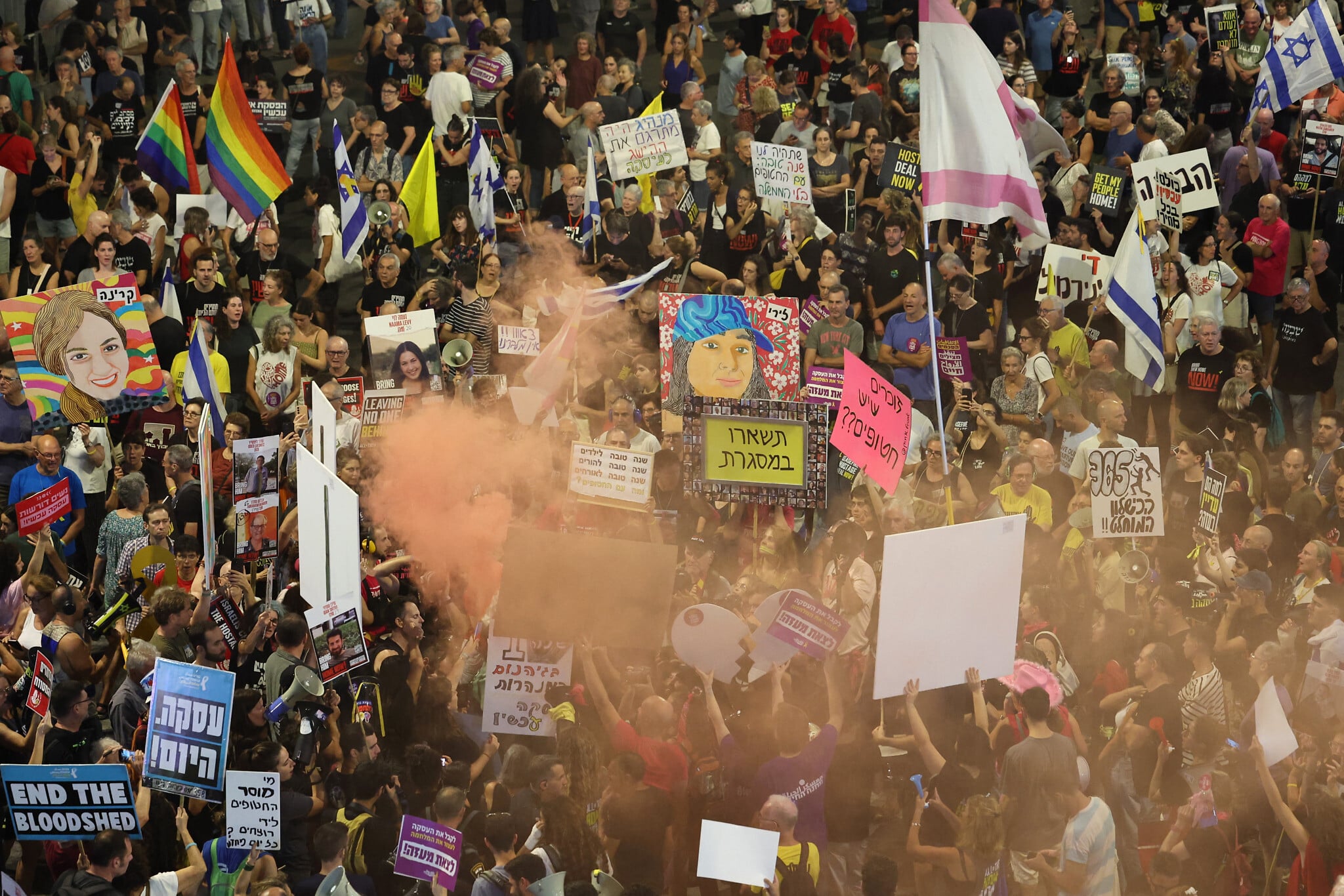
The central weekly pro-hostage deal rally in Tel Aviv will not be held on Saturday amid security concerns due to the escalation in Lebanon and fears over rocket or missile strikes.
The Israel Defense Forces Home Front Command has restricted public gatherings in Tel Aviv to a maximum of 1,000 participants.
Nevertheless, the organizers of the separate weekly anti-government demonstration said they would continue to post a “protest guard,” outside IDF headquarters — but would limit participation to comply with the Home Front orders.
“This evening we will stand shoulder to shoulder with the families of the hostages and shout: The government does not have a mandate to abandon the hostages — bring them back,” they said in a statement.
A large protest in Jerusalem, where there are currently no restrictions, will go ahead starting with a march from Zion Square at 20:15, followed by a rally at Paris Square starting at 20:45.
The Hostage Families Forum initially announced that the Jerusalem protest was also cancelled, but on Saturday said it would go ahead.
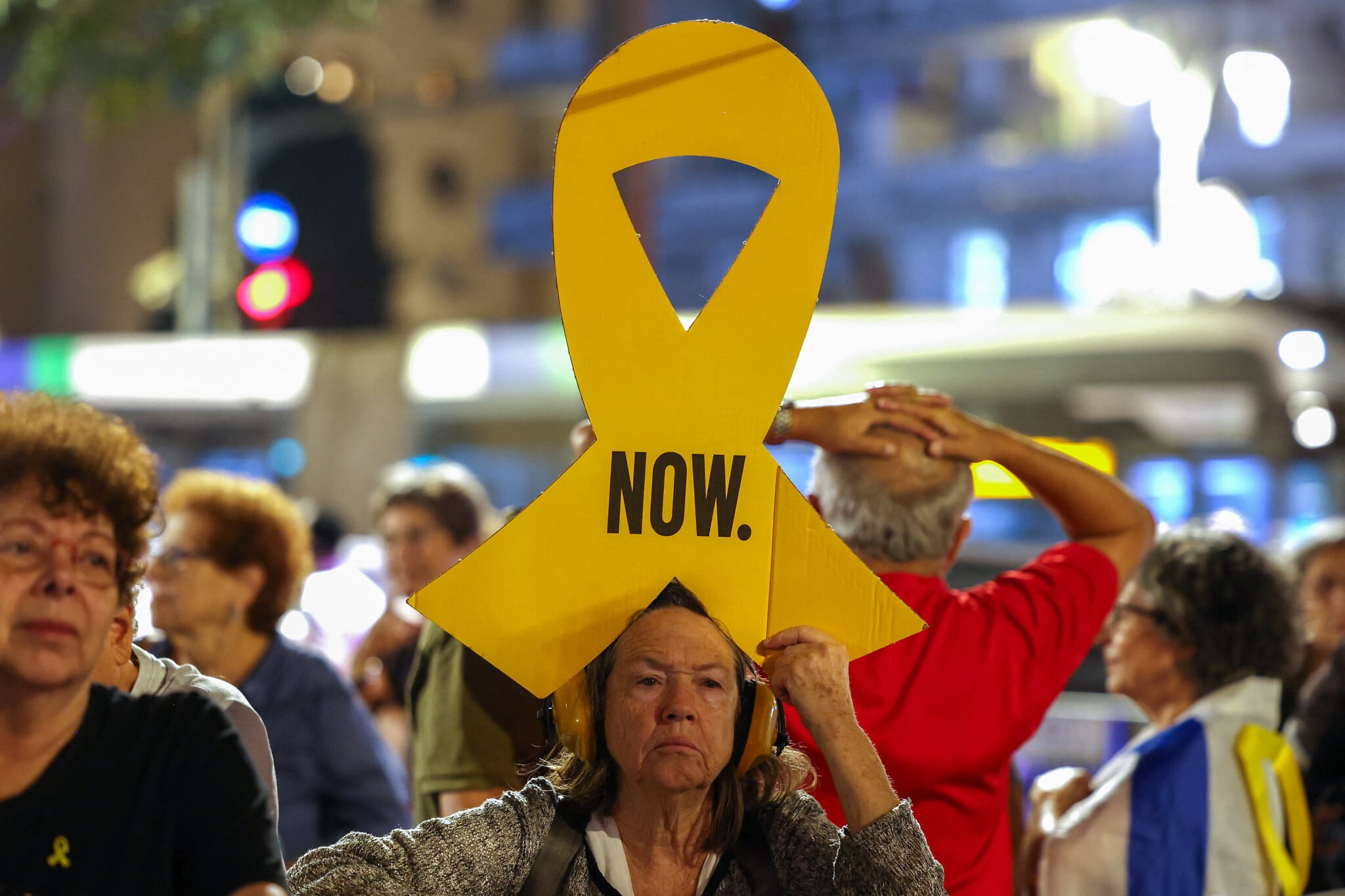
The forum also said it would still hold its regular, smaller protests in junctions across the country, under the banner “A Year in October,” referring to the anniversary of the October 7 onslaught on Monday.
On Friday, the Forum released a video highlighting the 35 slain hostages whose bodies are still in Gaza.
“A year in October, and there are still those who have no grave,” says the video’s narrator. “It’s impossible to part with them while they’re not here.”
Channel 12 said Friday that the government ministers have largely put the hostage issue on the back burner, as Israel has stepped up its attacks on Hezbollah in Lebanon over the past two weeks in a bid to stem the Iran-backed terror group’s incessant rocket attacks on the north.
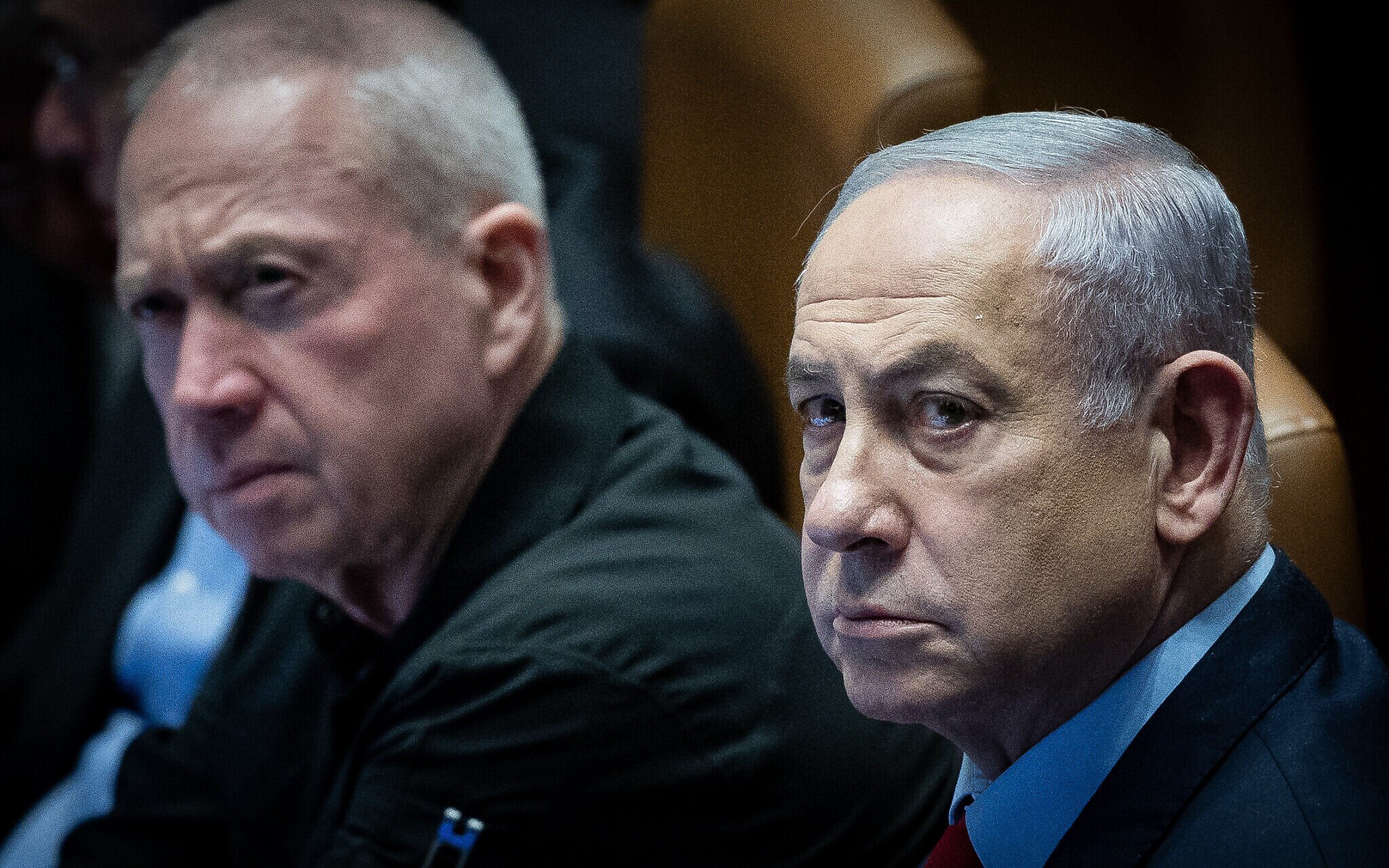
According to the network, Defense Minister Yoav Gallant has canceled two meetings with hostage families in that time, while Prime Minister Benjamin Netanyahu has not taken their calls for over two weeks.
The network reported Friday that a senior security official recently told the hostage families that the defense establishment thinks a hostage deal is unlikely in the coming two or three weeks, the expected duration of the IDF’s intensive fighting against Hezbollah in Lebanon.
There have been no meaningful talks in recent months.
At the end of that period, Israel will aim to reach a diplomatic agreement with Hezbollah that would let Israel secure a hostage deal with Hamas in Gaza, the official reportedly said.
However, The New York Times reported Friday that Hamas has shown unwillingness to engage in negotiations over the past several weeks.
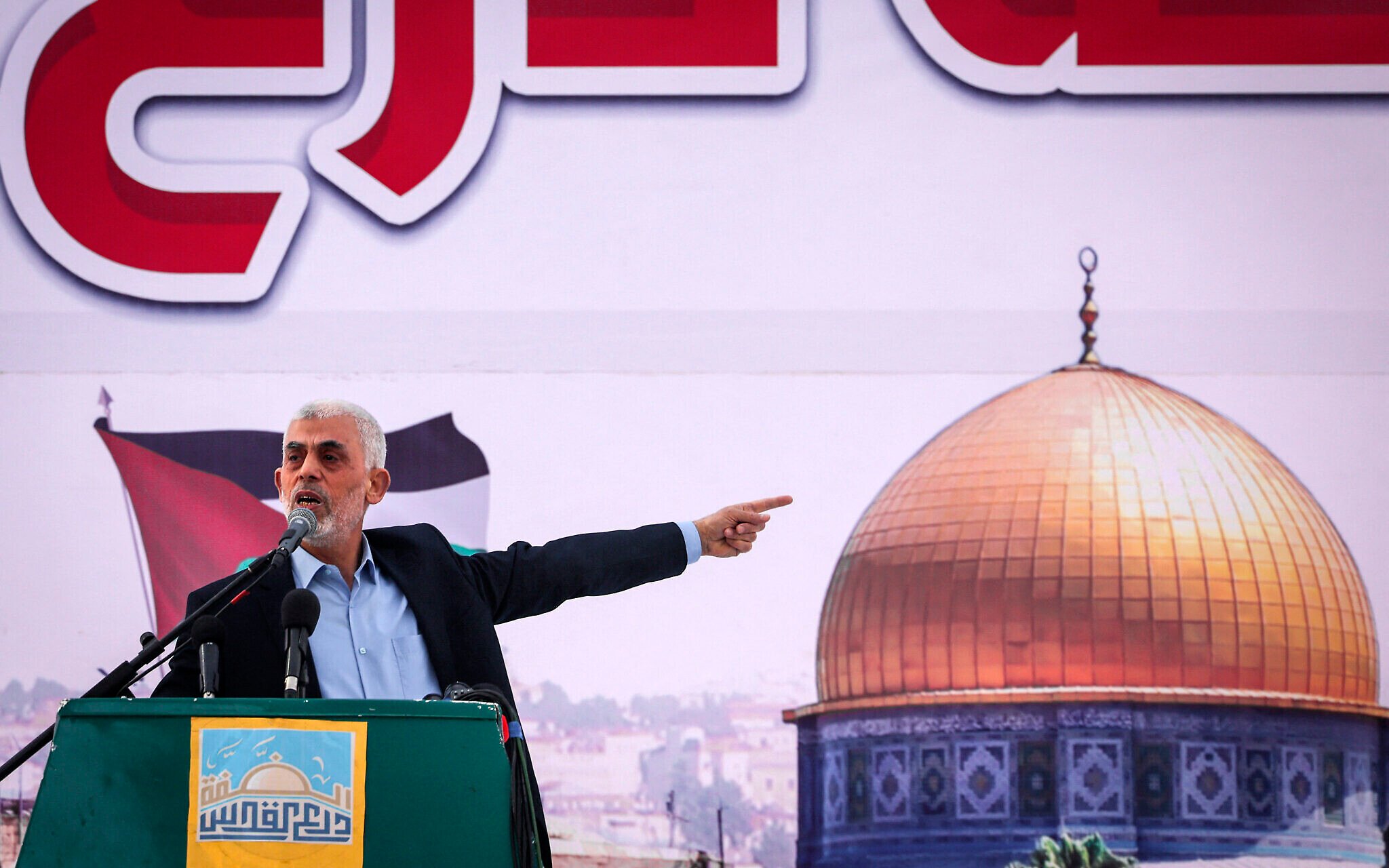
According to the report, Hamas chief Yahya Sinwar is increasingly convinced he will not survive the war in Gaza, and thinks an escalation with Iran and Hezbollah could force Israel to scale back operations in Gaza — potentially precluding his need to release hostages to secure a ceasefire in the embattled Strip.
On Monday, Israel began ground operations against Hezbollah, after a week of airstrikes that decimated the terror group’s top command. A day later, a ballistic missile barrage from Iran drove millions of Israelis to seek shelter from the Islamic Republic’s second-ever direct attack on Israel, which has pledged a significant response.
Hezbollah began attacking Israeli border communities on October 8, a day after the war in Gaza was sparked when thousands of Hamas-led terrorists stormed southern Israel to kill nearly 1,200 people and take 251 hostages.
It is believed that 97 of the 251 hostages abducted by Hamas on October 7 remain in Gaza, including the bodies of at least 33 confirmed dead by the IDF.
Hamas released 105 civilians during a weeklong truce in late November, and four hostages were released before that. Eight hostages have been rescued by troops alive, and the bodies of 37 hostages have also been recovered, including three mistakenly killed by the military as they tried to escape their captors.
Hamas is also holding two Israeli civilians who entered the Strip in 2014 and 2015, as well as the bodies of two IDF soldiers who were killed in 2014.






The Times of Israel Community.