

The ray of hope for Israelis lost in the world
For more than two decades Hilik Magnus has been the man Israelis turn to in order to retrieve their children, whether lost on faraway trails or in a purple haze
 Add ToI as a Preferred Source on Google
Mitch Ginsburg is the former Times of Israel military correspondent.
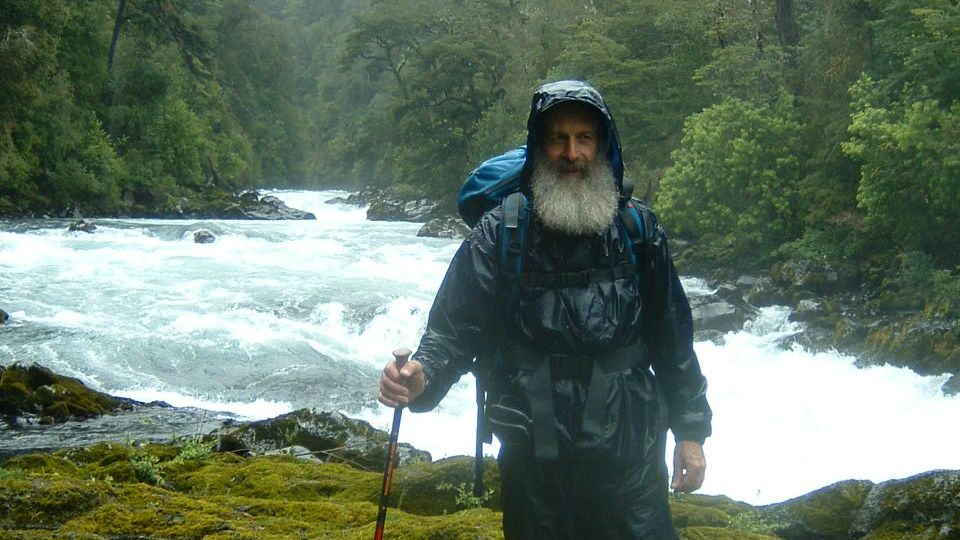
Several days after the sudden snowstorm that killed 40 people near Nepal’s Thorong La Pass earlier this month, the gnome-like Hilik Magnus, rescuer of the stranded, lost, stoned, wounded, and dead travelers of Israel, was worked up.
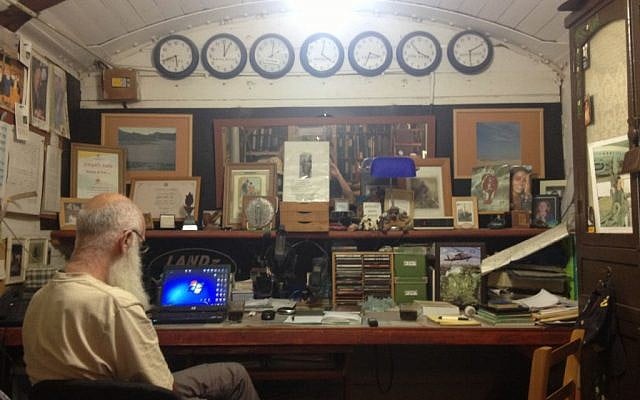
Well into his 60s, in faded trekking pants and worn hiking boots, Magnus left his purring laptop — “it runs on kerosene” — and walked across his trailer office located in a community called Dekel near the border with Egypt and Gaza, where a wicker basket filled with rolled topographical maps shares space with a wall of clocks marking the time in Sydney, Hong Kong, Bangkok, Mumbai, London, New York, and Santiago.
He ran a finger across the spines of three shelves of traveling and trekking guides until he found a 1992 publication in Hebrew. “Look at this,” he said, placing a finger, from which the nail had long since been torn away, on a page of boxed text.
He read aloud: “Children, beware of the Thorong La Pass. Many years ago, the miller, on his deathbed, summoned his three sons. To the first, he gave the mill and the cat; to the second, the house near the stream and his boots; the beloved youngest son realized there was nothing left for him. ‘All I can give you is a piece of good advice, which is equal to all of my treasures.’ Dying, the miller turned to his son, ‘No matter what the Israelis tell you in Thailand, do not ever try to cross the pass in March in Gali shoes.'”
The passage, which he read in its entirety, goes on to warn that the pass is difficult at all times of the year and that it can expose unprepared trekkers to life-threatening conditions. “Not knowing is lethal,” Magnus repeated, three times. “It’s the No. 1 cause of disasters. Your job is to know.”
Magnus adores the Israeli youth that flock to the traveling circuit after the army. He said the younger generation is “fantastic” and “inspiring” and infinitely smarter than his own peers were back in the day. But the parental grief — the frantic calls, the despair, the sobbing, the shrieking for a helicopter in the middle of the night — is his life mission to abolish. And the events of recent weeks, in which two Israelis died rafting on the Apurimac River in Peru, four more in the Himalayan high country, and two more on a bus ride in Nepal, have made the need all the more acute.
Magnus, born in Sweden to a German Jewish father and a Holocaust-survivor mother from Poland, said he cannot recall his first rescue mission. It may have happened in the army, where he served in the Nahal Brigade’s airborne battalion, and later as an intelligence officer; or maybe when he was the regional Israel Nature and Parks Authority director in the Sinai Peninsula, an area that he still thinks of as a paradise lost and one he doesn’t dare return to as a mere traveler.
“Each time someone was in trouble, because of some of the skills I had acquired, I would come and help,” he said.
In 1994, he founded a company that offered travelers, and their parents, a safety net: If you are stranded or lost, or too drugged-up to make your way home, Hilik Magnus will bring you back to safety.
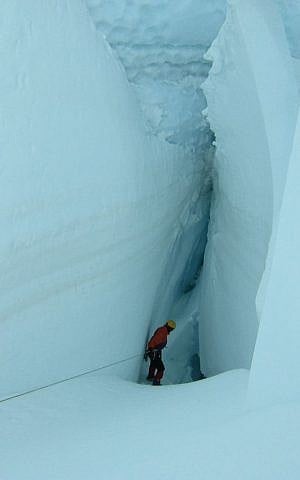
Since then, Magnus International Search and Rescue, a contractor that today provides services for all of the major insurance companies in Israel save Harel, has conducted hundreds of rescue missions. He and his guides have found trekkers high in the Cordillera Blanca range in Peru and amid the marijuana fields of India. In one famous case, in 2009, he found the body of Omri Lahad in an unmarked grave in Brazil, one month after he’d been bitten by a snake.
“There’s a big difference between searching and finding,” he explained. “Searching is very nice. You take a backpack, some food, a pole, some wine and you go on a wonderful trek. For that I have volunteers up the wazoo. To find is very different. It’s stressful. It’s defined by the result.”
Magnus said while rescue work is perceived as heroic, in actuality the process is largely cerebral. He described it as narrowing down a potential search area incrementally, on the basis of compiled information and the understanding of the situation, until a relevant area of investigation has been established.
Over the course of the past week, he has helped bring home a young woman from India, who suffered a mild drug-induced psychosis; and coordinated the rescue of a young man, also on the Annapurna Circuit, who, several days before the disaster, set up a tent just off the beaten trail.
The trekker was well equipped to spend the night in the high country, but he slipped on the steep, rain-swept grass and tumbled onto a rock ledge. Unable to climb back up to his tent or to descend from the ledge, he luckily had phone reception and was able to send a message to his parents, who called Magnus, begging him to rescue their son. In the steady rain, a crew of mountaineers working for Magnus arrived early in the morning and rappelled down to the hiker, who was cold, wet, and frazzled but unharmed.
Three days later, on October 7, disaster struck. A string of trekkers set out before sunrise for the Thorong La pass, the highest point on the circuit. All reached the saddle. Those who stayed at the tea house there survived. Many of those who continued on did not, including four Israelis – Cpt. Tamar Ariel, Nadav Shoham, Agam Luria, and Michal Cherkasky.
At 8:37 a.m. on Wednesday, the morning after the storm, Magnus received a call from an Israeli trekker who had made it down to Muktinath, the first proper shelter beneath the pass, where there was limited phone reception. “Fifteen minutes later, I had all of the names,” he said, holding up a hardcover green notebook in which he had penciled in a list of all of the Israeli trekkers on the pass that day. There was a rectangular box around the names of the first three dead and a question mark next to Cherkasky.
He connected the dots with the help of the first caller, who gave him other numbers, and a local journalist, whom he has known for years and who photographed for him both the Nepali army list and the helicopter pilot’s flight list of names. Everything else that followed, including days of media coverage, was just “a big theater play,” he said.
Still, he organized a crew and set out for the airport. Roughly half of the 25 Israelis who left the tea house in the afternoon held an insurance policy from Magnus. At Ben-Gurion International, however, he decided not to go, calling the alleged rescue efforts during the following few days a “PR stunt” because those in need of rescuing had long since been found.
At home, in the desert near the Israel-Gaza-Egypt border, he received calls from parents. A judge, Shlomo Shoham, asked pleadingly if he knew anything about the fate of his brother’s son. Anat Ariel, whom he described as an incredible woman, asked about her daughter, Tamar, an F-16 navigator. Magnus knew, he said, that both Nadav Shoham and Tamar Ariel were dead. He had spoken to multiple witnesses who had seen them lifeless in the snow. One of the trekkers had even taken Ariel’s passport from her pouch as verification. But he could not deliver the news.
“I spoke to the mother and I nearly cried,” he said. “It was an awful conversation.”
The judge’s plaintive tone reverberated in his mind days later. Several times he repeated the question, “What about my brother’s son? Have you heard from him?”
“He is dead but I cannot say it,” Magnus said. “For two days, I cannot say it.”
Magnus is haunted by the voices of the parents. A 2009 “Uvda” documentary program, exploring the disappearance of Lahad, revealed that Magnus lost a one-and-a-half year-old son many years ago to medical malpractice. He refused to talk about it on camera and I preferred not to torment him with questions about it. But the alleviation of grief, he readily admitted, is at the heart of his chosen profession.
Speaking of the travelers who opt not to rent a satellite-based GPS tracking device he offers, which can send out emergency messages anywhere on the globe, even off the grid, he said, “What sort of right do you have to do something like that to people? This life is not just yours. It’s your mom’s, dad’s, grandmother’s, brother’s, sister’s, friend’s, aunt’s; you are not in a vacuum. What sort of luxury is this? How do people dare not take it?”
Ninety-nine percent of his work, he insisted, is “mirth and happiness.” The one percent, though, the people he wasn’t able to find, the bits of solace he wasn’t able to deliver — “that doesn’t leave you,” he said. “You are constantly grinding it in reverse. “










The Times of Israel Community.