

Trouble in the north
Four rockets fired from Lebanon into Israel; Peres says ‘world can’t come to terms with genocide’ in Syria
- See more Times of Israel on Google - add us as a Preferred Source
Aaron Kalman is a former writer and breaking news editor for the Times of Israel
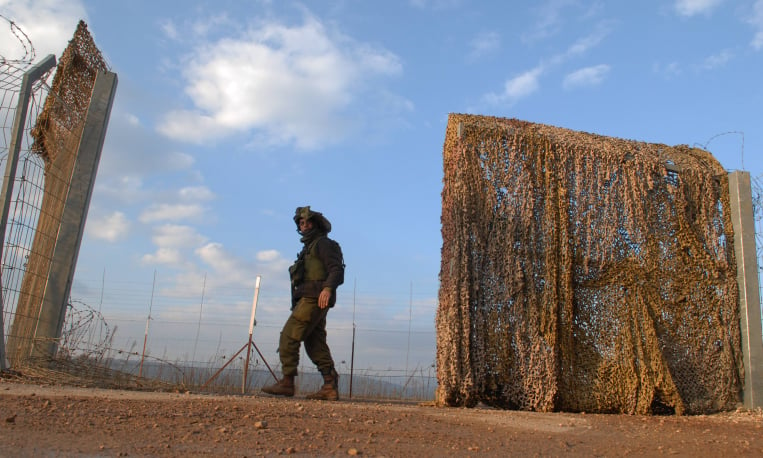
Friday’s Hebrew dailies focus on the troubling developments on Israel’s northern border. They report on the rockets launched Thursday from Lebanon into Israel, and feature the world’s responses to the use of chemical weapons in Syria on Wednesday.
Haaretz leads with the rockets fired Thursday. “For the first time in almost two years, a volley of Katyusha rockets was fired toward the north,” the paper reports. No injuries were reported; however, three people were treated for shock.
A total of four rockets were launched from Lebanon, apparently from the area south of Zur. One of the rockets was successfully intercepted by an Iron Dome battery stationed in the north, while two others hit populated areas. Several houses and cars were damaged.
“Anyone who harms us, who tries to harm us, should know that we will harm them,” Prime Minister Benjamin Netanyahu said in a videotaped statement following the attack.
The daily quotes Israeli security sources, who said the Shiite terror organization Hezbollah was not the group behind the attack. Rather, they say, it appears to be the doings of another Jihadist group, possibly affiliated with the Sunni al-Qaeda.
Still on the topic of Israel’s northern border, Yedioth Ahronoth features a brief interview with President Shimon Peres, who calls upon the world to “act against a leader [who’s] murdering women and children.”
Addressing Wednesday’s gas attack in the suburbs of Damascus, which, according to opposition sources, killed as many as 1,300 people, Peres says that “the world can’t come to terms with genocide and the slaughter of children and women with chemical weapons and gas.”
The paper also reports that Syrian President Bashar Assad’s regime is denying any involvement in the attack. Rather, sources from the presidential palace are quoted as saying that “terrorists who infiltrated Syria are committing horrific crimes” in an attempt to further destabilize the country.
With a headline calling the region a “disturbed Middle East,” Maariv highlights the release of former Egyptian president Hosni Mubarak from jail, alongside the reports from Syria and Lebanon.
“After two and a half years, Mubarak is released from prison,” the daily reports. The former president, who’s reportedly fighting cancer, was transferred by helicopter to a military hospital where he’ll remain until his trial resumes at the start of next week.
Citing reports in the French press, Maariv tells its readers one reason behind Mubarak’s release could be pressure from Saudi Arabia. According to this report, the Saudis closed a deal with the Egyptian army, in which the military would receive aid amounting to some $US 10 billion for the release of the former president.
Israel Hayom is the only Hebrew paper to feature the ongoing polio vaccination drive on its front page. According to a survey conducted by the paper, over 70 percent of the population is concerned about the recent discovery of the virus. At the same time, some 41% aren’t sure they’ll have their children inoculated with the new treatment. At the time of print, some 312,000 children had been given the new vaccination.
The tabloid also highlights new guidelines and regulations issued by the Education Ministry as it prepares to open the new school year. According to the ministry, children with weakened immune systems will not be permitted to return to school until six weeks after the vaccination initiative is over.
Dalit Stauber, the ministry’s director general, says the schools are preparing alternative methods of teaching, including Internet-based classrooms, so that the thousands of kids affected by this decision don’t fall behind.
The weekend papers are filled with columns and opinion pieces regarding the latest developments in the region. In Maariv, Amnon Lord writes that the use of chemical weapons by the Syrian regime poses a challenge for Israel.
Lord quotes Transportation Minister Yisrael Katz as saying the use of gas against civilians is a moral challenge for the state of Israel. The writer then critiques those who claim that the deaths of a few hundred or thousand by gas don’t change the larger picture — in which more than 100,000 people have died by one weapon or another.
“There’s a principal difference” between using gas and other weapons, Lord writes. The gas “is a weapon of mass destruction, and it doesn’t matter when or why it was defined as such.” Whoever uses weapons of mass destruction, he says, does so for various reasons. However, by doing so he “also states his willingness to carry out genocide.”
In Israel Hayom, veteran military commentator Yoav Limor discusses the possible motives and outcome of the rocket attack from Lebanon. He notes there are a few considerations facing Israeli policy makers:
First, the realization that allowing cross-border attacks to be carried out with no response is dire to Israel’s security and sovereignty; second, Israel has no desire to cause the situation to deteriorate into an all-out war with Hezbollah; and, finally, the understanding of the larger picture in which international attention must be focused, for the moment, on Assad.
“As of last night,” Limor concludes, “it seems the incident in the north is behind us, but these dilemmas will return quickly — in the north and the south.”





The Times of Israel Community.