

Two physicists are the brains of an Arab-Jewish startup connecting optics to chips
Jerusalem’s Teramount secures $50 million from investors for device that connects optical fibers to silicon chips, enabling data transfer at the speed of light for AI apps
 Add ToI as a Preferred Source on Google
Sharon Wrobel is a tech reporter for The Times of Israel
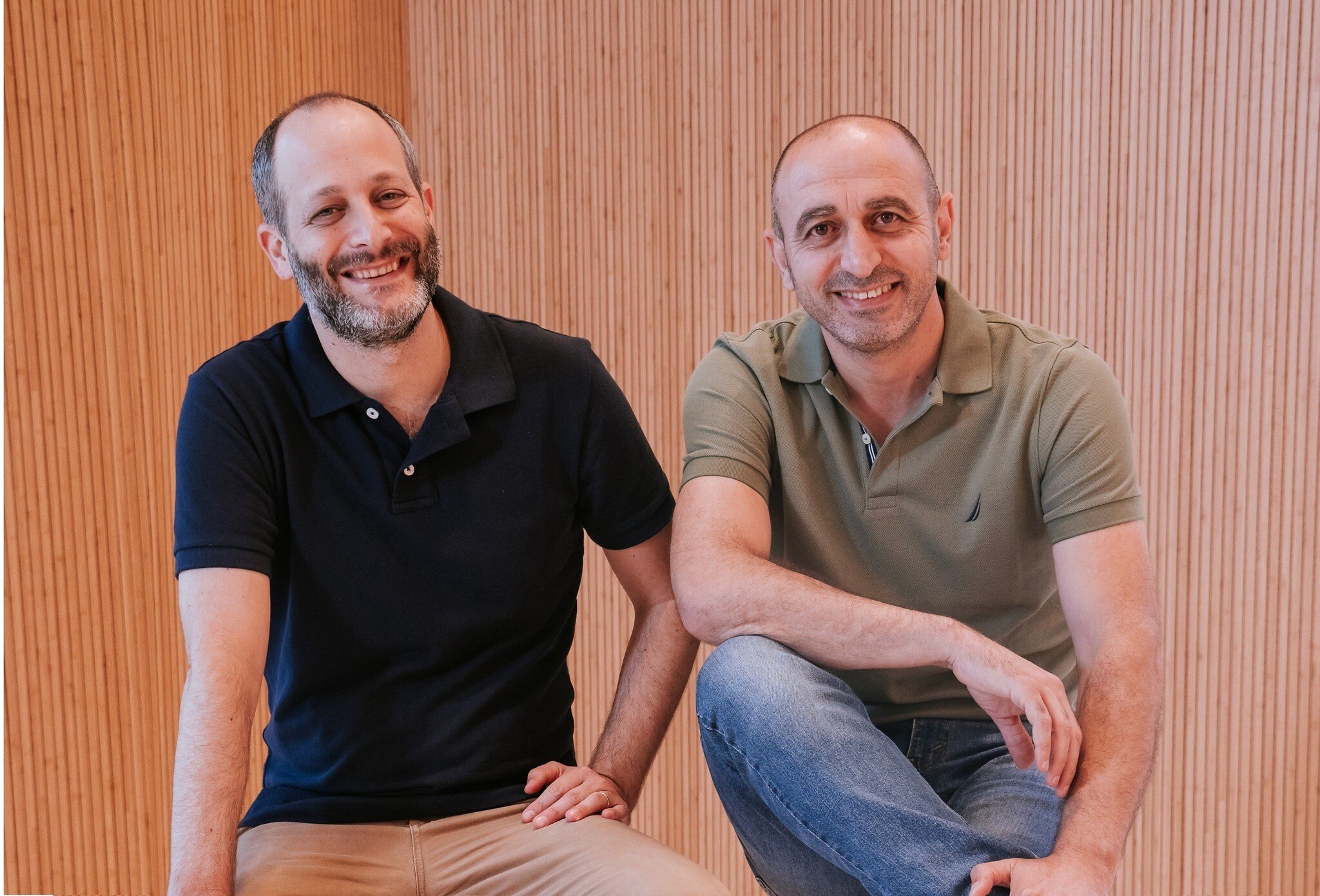
Two Hebrew University PhD graduates — one Muslim, the other Jewish – studied, worked together, and co-founded a nanotechnology startup to connect optical fibers to silicon photonics chips, facilitating next-generation data transfer at the speed of light.
“We will not solve the problems of the Middle East, but with our vision, we will solve the issues of connecting fibers to chips, and power consumption, which are crucial to meet the needs of high-speed, low-latency, and low-power data transfer for fast-evolving artificial intelligence (AI) and machine learning (ML) technologies and applications,” Hesham Taha, CEO and co-founder of Teramount, told The Times of Israel.
Taha said Teramount’s technology solves connectivity and data bottlenecks as the AI revolution gains pace. The startup connects people from different backgrounds — Jews and Arabs — brainstorming to find solutions, in a workplace where they see each other as equals.
The Jerusalem-based startup employs about 40 people, of whom about 30 percent are Arabs, mainly from East Jerusalem, including optical and chip designers and mechanical and software engineers.
“While coexistence was not the intention of Teramount, it comes by nature of bringing people from different backgrounds into the same place to think together and find solutions, and gives opportunity to the other side to see people who are like them but speak a different language,” said Taha.
Taha was born in Bu’eine Nujeidat in the north of Israel, to a father who was a construction worker and a mother who was a housewife — a typical family in the village, Taha said. One of eight siblings, he was a student in the first class to graduate from high school in the village and the first in his family to pursue an academic path, studying physics at the Hebrew University in Jerusalem in 1995, and continuing to a PhD in applied physics.
“I like physics, and at the time I was thinking I could become a teacher,” Taha recounted. “Working in high-tech was far away from my thinking and reach.”
“In the 1990s, most of the physics-related studies were leading more to security-type of companies,” he added.
During his studies, where Taha said he faced cultural and language-related challenges, he met fellow physicist Avi Israel. The two bonded and, after working at Jerusalem-based Nanonics Imaging, they embarked on their journey to found Teramount.
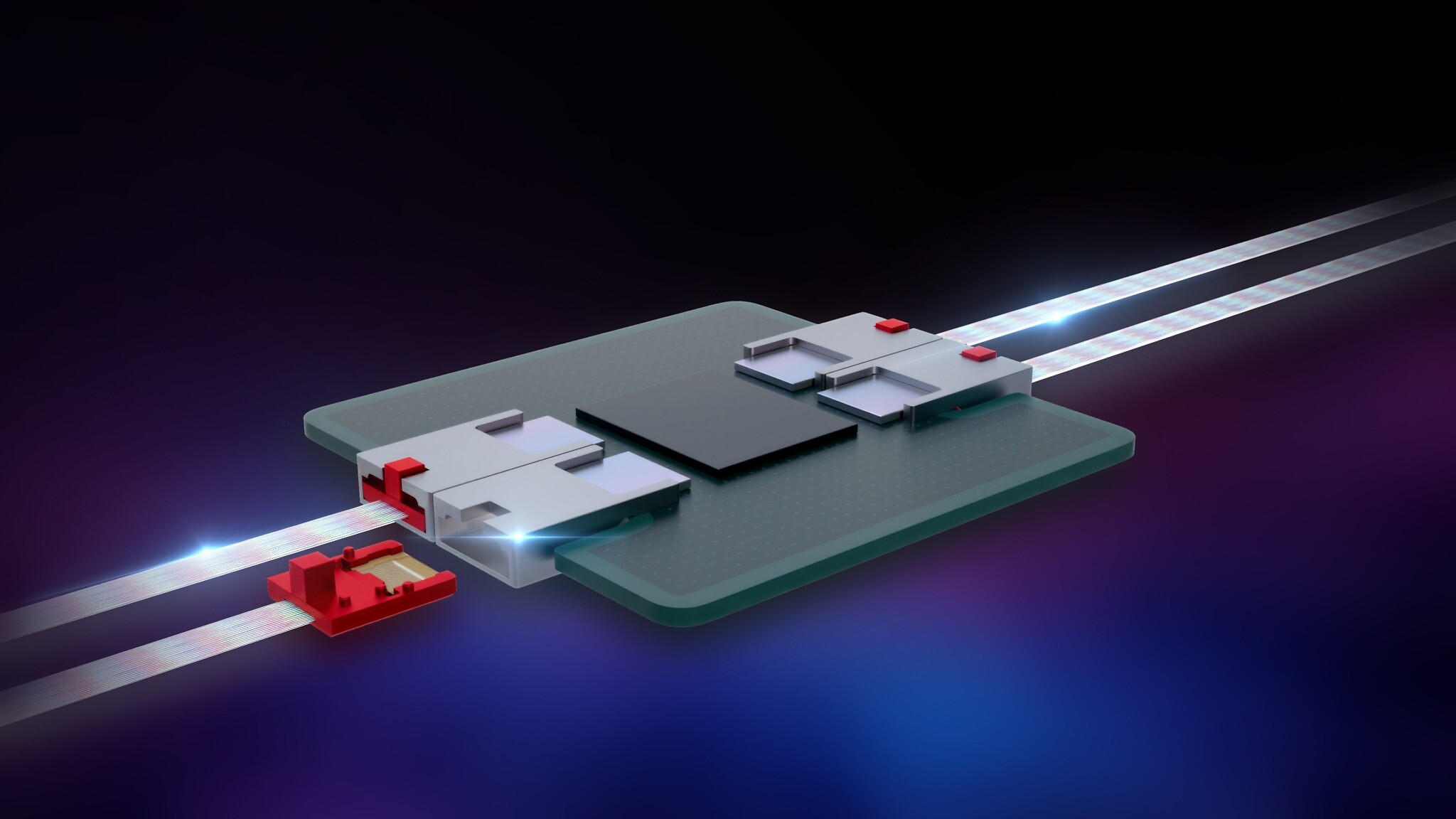
The company was founded in 2013 and came out of stealth in 2015, with funding from angel investors and, at a later stage, the Israel Innovation Authority. The startup has developed a technological device that connects optical fibers to silicon chips to enable the fast transfer of terabytes of data for next-generation AI applications and high-performance computing applications requiring high bandwidth.
Artificial intelligence — the tech that gives computers the ability to learn — has been around since the 1950s. But over the last decade, the field has enjoyed a renaissance made possible by the huge amount of data available online and the higher computational power of chips. At the same time, tech giants, from Nvidia to Intel, have been racing to develop and build infrastructure and data centers to support high-powered computational systems necessary to run AI models.
“Advanced computing and specifically AI requires high compute performance combining tens of thousands of high-performance processors or GPUs,” said Taha. “The main problem comes when you try to connect all of these brains to think together simultaneously and to be synchronized.”
“Traditionally, there has been a reliance on copper wires for transmitting data between processors with electric signals, but it struggles to meet the bandwidth demands of modern AI workloads, consumes lots of power, and is slowing down the data transfer,” he said.
Silicon photonics — a technology that uses light, instead of electricity, to transmit data — has been growing in demand as it promises to significantly speed up network data transfer. The technology can process and transfer data far more briskly than electrical conductor technology, for more energy-efficient computing.
“Teramount solves limitations by replacing copper connections between such processors with optical connectors or optical fibers,” said Taha. “Light as a data transfer through fibers can ramp up speed rates by more than 10 times and save 70 percent of power.”
“Almost all leading semiconductor companies in the world are actively working to promote this type of connectivity, so for Teramount, this is the perfect storm,” he remarked.
The startup announced on Tuesday that it had raised $50 million in financing led by new investor Koch Disruptive Technologies (KDT). Existing investors, including Grove Ventures, and several new strategic investors, including AMD Ventures, Hitachi Ventures, Samsung Catalyst Fund and Wistron, also joined the round.
Among the startup’s private backers is Teramount’s chairman, Dadi Perlmutter, a former senior executive at chip giant Intel and veteran tech investor.
Taha said that the proceeds will be used to ramp up mass production capabilities of millions of its connector unit devices — which link optical fibers coming from outside the rack to the silicon photonics chips — and prepare to meet growing demand in 2027. The startup also plans to bolster its workforce by 30% to 60 employees by the end of this year.
According to data from MarketAndMarket, in 2025, the silicon photonics market has reached $2.65 billion, driven by high demand for such components. The market value of silicon photonics is expected to increase to $9.65 billion by 2030.
“We are working with leading partners, including global foundries, including Tower Semiconductor, as partners in this ecosystem,” said Taha. “We want to be on every chip for advanced computing in the world, as optical interconnects are critical components of the future of AI infrastructure and other high-performance applications.”










The Times of Israel Community.