

Women on the bus, in the picture
Fashion magazine BelleMode takes the issue of segregation into its own realm, causing a bit of a stir
 Add ToI as a Preferred Source on Google
Jessica Steinberg, The Times of Israel's culture and lifestyles editor, covers the Sabra scene from south to north and back to the center


The weeks of debating over separate mens’ and womens’ seating on public buses, as well as the recent riots that took place over segregation in the city of Beit Shemesh, had a lasting effect on Israeli society, and on Hebrew language. A new term, hadarat nashim, the exclusion of women, entered the Israeli lexicon, becoming part of the national debate over the role of the ultra-Orthodox in Israel.

Maya Pollack, editor of BelleMode, Israel’s first fashion magazine, decided to take her own look at the situation, creating a fashion shoot for the magazine’s February issue that puts women in a dominant, sexual and styled position, on the bus.
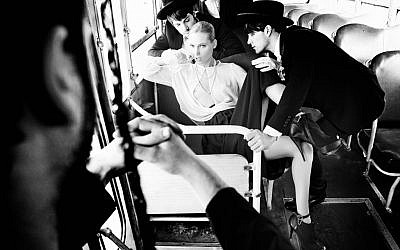
“The exclusion of women…affects one’s personal freedom, and you feel that your decisions aren’t in your hands any longer, but in hands that are stronger than yours,” said Pollack.

Given that fashion puts women at the center, Pollack decided to take the helplessness of the bus situation and “neutralize” it with some female power, putting women back in a position that befits their standing. She called the shoot, “Public Transportation.”

“Everyone who took part in this production felt they were part of something very intense,” said Pollack. “We felt we were saying something very societal. To get on the bus and see everyone standing or sitting really gave a feeling that it was an ultra-Orthodox bus. It felt very real and authentic.”
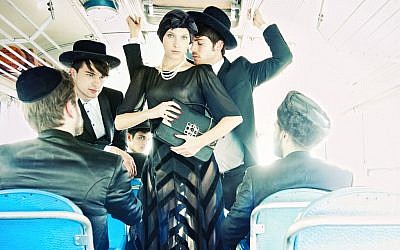
BelleMode, which allowed photographer Lior Nordman’s photos to be put up on Facebook and other media before the issue was on the newsstand, received many reactions to the piece, both positive and negative, added Pollack. “There are those who say it hurts the ultra-Orthodox, and others who felt it objectified women. I’m glad it’s generating that kind of response.”

“If we had been too ‘delicate’ [with the sexual suggestiveness] we would have lost the momentum of the shoot,” said Pollack. “I think there are instances when it pays to be extreme, and to walk a line that combines demure with sexy so that the message gets through.”









The Times of Israel Community.