

Would-be refugees hit the dance floor, so they can later hit the books
A Tel Aviv party for African asylum seekers will, for the price of a cocktail, give someone the ticket to a higher education
 Add ToI as a Preferred Source on Google
Debra writes for the JTA, and is a former features writer for The Times of Israel.
Tel Aviv’s Pasaz Club is the quintessential underground spot – dark, cool, and oozing hipster charm. On an average weekday night the club, tucked in a subterranean passageway of seedy Allenby Boulevard lined with shops long-shuttered by nightfall, is bathed in pink light and bumping with the beats of selected DJs.
Andrea Rosen, a local DJ and marketing executive, hopes that on Wednesday the scene at Pasaz, however, will be just a little bit different. That’s because the nightlife hub will be the scene of a special event called “Get Schooled” to raise funds for the continuing education of Israel’s African migrants.
The event is being run by the Refugee Education Center, or REC, a special project of the African Refugee Development Center in Tel Aviv, which is committed to safeguarding and nurturing the dignity of the African migrants who have streamed into Israel, many in search of safe harbor.
“This isn’t really geared toward the refugees, this is mainly for other people,” says Rosen, who lives in Jaffa and routinely volunteers with the ARDC. “It’s more of a party event. People can come and they’re partying for a good cause, which is very different than their everyday party.”
Rosen, who is donating her time at the turntables for free, will be joined by Omri Smadar of Libra Discotheque, Sabbo of Soulico Crew and French songstress Natacha of OH La La. No one is taking home a shekel for their time. Instead, Rosen, who in addition to her two full-time jobs and volunteer work has also planned and promoted the event, is hoping that eager partygoers will simply opt to donate NIS 30-50 at the door.
A hundred percent of those funds will go toward scholarships for refugees working with the ARDC. Organizers hope that the party will raise close to NIS 8,000.
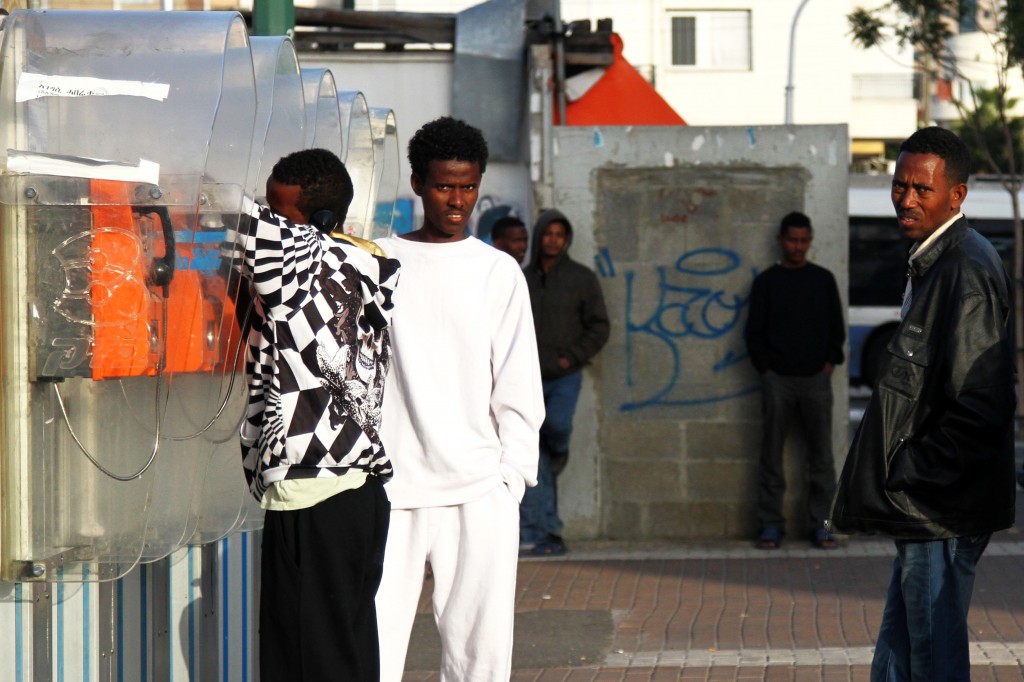
Get Schooled, which is the ARDC’s first big event since its popular African Refugee Seder this past spring (also organized by Rosen), is meant to be more than just a fundraiser. It will also hopefully be a game changer for many of the residents of Tel Aviv, who are used to seeing black faces in their midst but have little to no comprehension of the scope of Africa’s refugee crisis.
“There’s that perception that they’re just here to work and they come as migrant workers,” says Courtney White, a native of New York State who, despite having no Jewish ties and never visiting Israel before, is spending her summer in south Tel Aviv as a volunteer with the ARDC. “And yes, I’m sure there are many people who are here to seek better opportunities. But most of the people that we work with can’t go back. Their lives are literally in danger.”

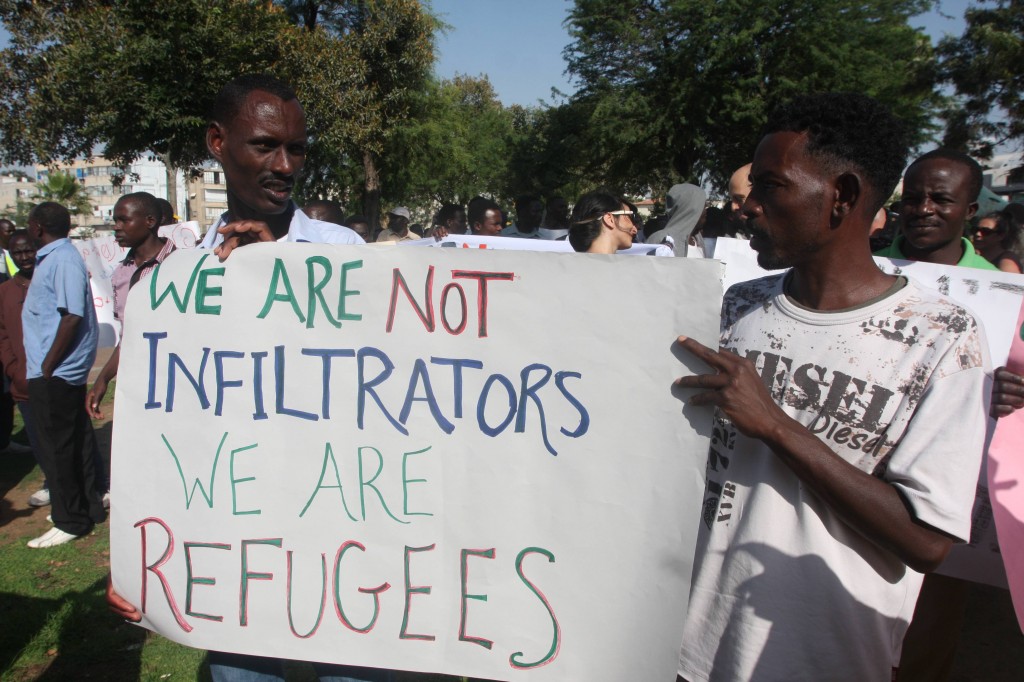
There are more than 60,000 asylum seekers in Israel, most of them from Eritrea and Sudan and some having made it to Israel from the Democratic Republic of Congo, the Ivory Coast, and Egypt. The vast majority walked here via Egypt, and despite many of them having fled documented atrocities including genocide, ethnic cleansing and institutionalized rape, only a handful have been granted official asylum in Israel. Their absorption into the country starts in detention centers and is followed, in most cases, by an inability to legally work coupled by a lack of access to healthcare, social services and education.
According to the ARCD, Israel has one of the lowest rates of refugee recognition in the world, despite being a signatory to the 1951 Convention relating to the status of refugees. Israeli law mandates that migrants who cross in Israel must be held in detention centers for up to three years, and that citizens from certain countries deemed safe enough can be repatriated. A new law passed last month asserts that migrants must consent to repatriation and their consent must be documented on video tape before Israel can send them back.
Following their time in detention centers, authorities allow migrants from nations deemed to dangerous for return, such as Sudan and Eritrea, to leave the centers and enter Israeli cities. But they are not eligible for the range of social services offered to citizens, and applications for asylum are rarely approved.
“The Israeli government has not yet adopted asylum legislation, and the asylum process in Israel is marked by a lack of clarity in policy and procedure,” the ARDC writes on its website.
According to a July 2012 document on migrants in Israel from the New Israel Fund, Sudanese and Eritrean migrants in Israel have so-called “group protection,” meaning they will not be deported, but Israel refuses to review their requests for asylum. Other migrants in Israel, who account for about 10 percent of asylum seekers, can undergo the Refugee Status Determination Process, but have a very low success rate. “Since 2008, just 17 refugees, or less than 0.01 percent of applicants, have received refugee status. Israel does not give any of the asylum seekers work permits or other welfare benefits,” the NIF states.
“Most of the people that we’re doing the event for can’t return [to their home countries],” says White. “They want to return, that’s their goal. They want to go to school so they can go back and contribute to their countries.”
African migrants in Israel also face suspicion and deep-seated racism from Israelis, many of whom say that an unstemmed tide of Africans across our border will eventually imperil Israel’s existence as a Jewish state with a fully Jewish character.
Rosen says such views disgust her.
“I know that everyone says economically we can’t afford to take in everyone,” she says. “And maybe it’s naïve or idealistic but I have to believe that when people are in trouble you find a way to help them. I’m not saying they should come here and live the best lives ever, but we need to not attack them in the street and we can give them something. We don’t have to have them starving or living in Gan Levinsky [a park in south Tel Aviv]. There has to be a better way.”

Anna Rose Siegel, education programming coordinator for the ARDC, says that events like Get Schooled are also crucial tools for changing Israelis’ attitudes.
We believe that these sorts of events personalize the Israeli/refugee dynamic,” Siegel says. “By creating a forum wherein Israelis and refugees can socialize freely and comfortably, we hope that some generalizations will diminish as individuals learn about one another on a personal level.”
Some of Israel’s would-be refugees were in the midst of school when they had to flee their home countries, and more had hoped and planned to attend college but saw their dreams go up in smoke. Several of those who are involved with the REC — where courses in English, Hebrew, psychology and arts are taught and higher-education training is available — have already been accepted to the IDC Herzliya and are in desperate need of tuition assistance. These students will have priority in the allocation of funds, and the remainder of the money will be distributed based on urgency and the likelihood of matriculation into a higher education program.
“I am constantly inspired by the students at ARDC,” says Siegel. “These individuals have experienced so many traumas and challenges in their lives and continue to struggle in Israel. Nevertheless, they are remarkably devoted to their education and demonstrate unrelenting perseverance each day.”
The event, Rosen and White say, will look like any other big party in Tel Aviv and will certainly be as fun. Those wishing to attend need only to show up Pasaz at 94 Allenby Street on Wednesday night with a desire to party and, hopefully, a few extra shekels to spare.
“But it’s not about the money only,” says Rosen. “It’s about making people aware. People know about the outlines of the refugee situation, obviously, but when you go to an event and you see refugees, you realize that for once you’re actually doing something that means something.”









The Times of Israel Community.