

After hard-liners push back, Rouhani rebukes nuke deal critics
‘How can one be an Iranian and not cheer for our negotiating team?’ president asks
 Add ToI as a Preferred Source on Google
Marissa Newman is The Times of Israel political correspondent.
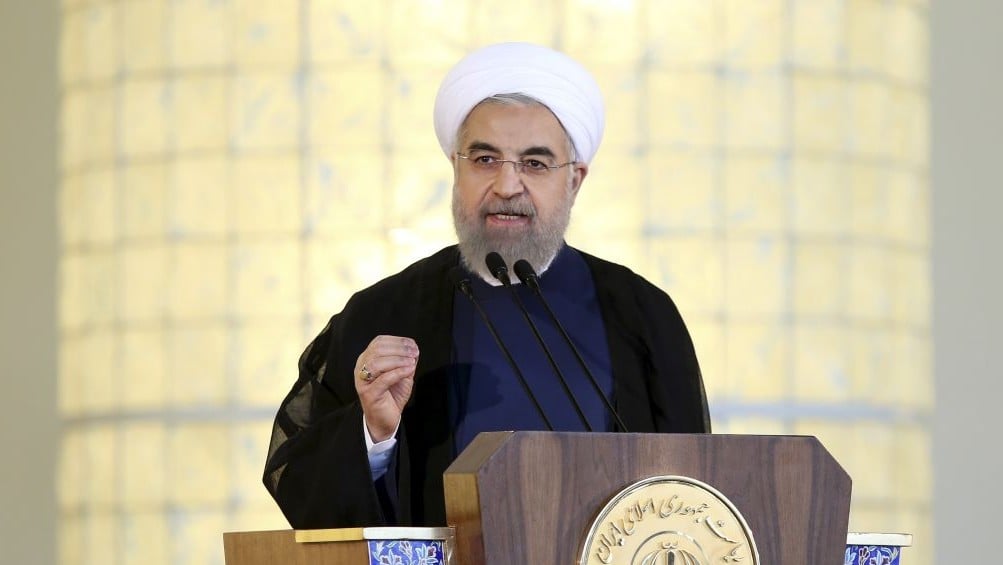
Iranian President Hassan Rouhani on Thursday chided hardliners opposed to the landmark nuclear deal, saying that while domestic critics may nitpick, the agreement itself “is more valuable and more significant” than its specifics.
Iranian parliamentarians are “scrutinizing one by one the terms of the deal,” Rouhani said, according to Reuters. “That’s good but what has happened is more valuable and more significant than that.”
While Iranian lawmakers are reviewing the deal — a process they say could take more than 60 days — several prominent hard-liners have said parts of the deal cross Iranian red lines, especially pertaining to inspections of military sites.
The president lambasted critics for failing to support the Islamic Republic’s negotiators and their gains unconditionally.
“How can one be an Iranian and not cheer for our negotiating team?” Rouhani said. “I chose the best negotiators Iran had. They are knowledgeable and brave.”
The president added that this new “page in history” could be traced back to his election to office.
“This is a new page in history,” he said. “It didn’t happen when we reached the deal in Vienna on July 14, it happened on 4th of August, 2013, when the Iranians elected me as their president.”
Since the deal was clinched between Tehran and world powers last week, some Iranian officials have voiced objections to the agreement.
On Monday, the head of Iran’s Revolutionary Guards rejected the deal, saying the pact was unacceptable and “clearly in contradiction” of the Islamic Republic’s demands. The statement by Major General Mohammad Ali Jafari, head of the powerful Islamic Revolutionary Guards Corps, came hours before the UN unanimously voted to endorse the deal paving the way to lift crippling international sanctions in exchange for curbs on nuclear enrichment.
“Some parts of the draft have clearly crossed the Islamic Republic’s red lines, especially in Iran’s military capabilities. We will never accept it,” Jafari told Iranian news agency Tasnim.
On Tuesday, Gen. Mohammad Reza Naqdi claimed Washington was using the accord as pretext for a future US military strike against Iran.
“Any Iranian who reads the Vienna documents will hate the US 100 times more [than before],” Naqdi said Tuesday according to the semi-official Fars News Agency.
“The US needs the agreement merely to legalize the sanctions and continue pressure against Iran,” he added.
Iran’s parliament will need “at least” 60 days to review a proposed final deal with world powers over its contested nuclear program, a prominent lawmaker said Tuesday, giving legislators in the Islamic Republic about the same time as the US Congress to examine the proposal. But while hard-liners in Iran’s parliament could vote against the deal struck last week in Vienna, their numbers wouldn’t be enough to derail a proposal already backed by the country’s Supreme Leader Ayatollah Ali Khamenei.
Foreign Minister Mohammad Javad Zarif, who headed the Iranian negotiating team, formally submitted the deal Tuesday to parliament. Hours later, the official IRNA news agency reported lawmakers formed a 15-member special committee to review the deal.
Under Iran’s constitution, parliament has the right to reject any deal — even one negotiated by the Foreign Ministry. But committed hard-liners in the Iranian parliament hold only about 60 of the body’s 290 seats, the rest belonging to conservatives and a handful of pro-reform lawmakers.
While hard-liners have drawn other lawmakers over to their side in previous votes, that appears unlikely in this case as the supreme leader has endorsed the work of the nuclear deal negotiators. The lawmakers’ special committee may prove to be an olive branch to hard-liners — allowing them to vent their frustrations against world powers, especially the US, while parliament ultimately approves the deal.
Times of Israel staff and AP contributed to this report.








The Times of Israel Community.