

As Turkey flame rekindles, papers set fire to old positions
Viewing the decidedly undramatic rapprochement deal through a political lens, tabloids pull about-faces on being friends with Ankara
 Add ToI as a Preferred Source on Google
Joshua Davidovich is The Times of Israel's Deputy Editor
If Hollywood were writing the end of the Israel-Turkey spat after six bitter years, it would probably look like Israel sprinting down a runway in the pouring rain in a hopeless act of romanticism to stop Turkey from flying off forever, with Turkey, just tucking into an issue of Sky Mall, seeing its old lover and yelling at the plane to stop and barreling down the aisle, smashing through the door and parachuting into the open arms of Israel, the two then sharing a passionate kiss, soaked through and through, as the music sweeps upward, the sun comes out and everyone lives happily ever after.
Alas, though, the long-sought reconciliation was written by reality, and so instead of a dramatic ending, it features the unsexy stops, starts and overall uncertainty of international diplomacy, with coverage of the somewhat momentous occasion in the Israeli press colored not by unrealistic idealism and romantic gestures, but rather realpolitik, complaints and overwrought analysis.
While many writers contributed to Monday morning’s production in the press, the director was none other than everyone’s favorite “unnamed senior Israeli official,” who announced the sides had reached a deal in Rome Sunday night, though the official announcement won’t come until Monday afternoon, likely after you read these very words, drawing the big news out into two undramatic announcements.
What is dramatic is the sea changes made by the papers in covering the deal. Unofficial government mouthpiece Israel Hayom, which has been unrelenting in its criticism of Turkey since 2010 during the bad old days of soured ties, presents the deal in a totally positive light, seeing as friendship with Turkey is now the preferred position of Prime Minister Benjamin Netanyahu.
Perhaps sheepish about its about-face, the paper, which devoted 25 pages to Brexit coverage a day earlier, devotes only two pages to the historic compromise.
A large chunk of that is taken up by columnist Dan Margalit pumping up the deal by writing that both sides might not have gotten everything they wanted, but that doesn’t matter much.
“At the end of the day, the best deals are those in which both sides are able to get the things that matter most to them, if not the majority of them,” he writes.
The populist Yedioth Ahronoth, meanwhile, which might have been expected to back the deal as a notch for Israel restoring some of its regional relations, isn’t sure the agreement is a good idea at all, with its front page headline reading “Reconciliation or surrender,” and asking if Israel is giving up too much to re-establish ties.
While the front page may be dressed up as a question, the paper gives its unflinching answer inside: Surrender.
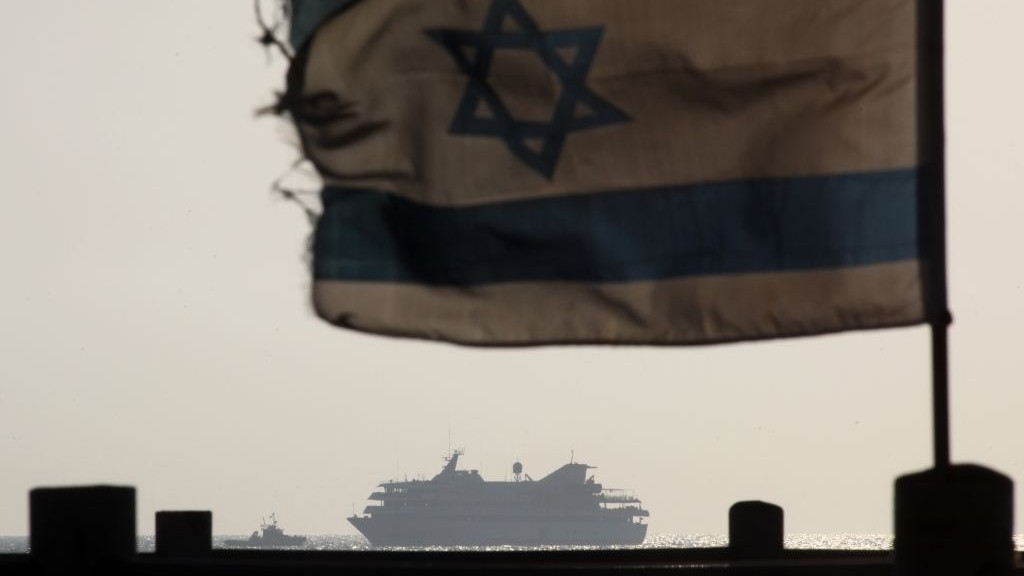
While Yedioth makes sure to devote half a page to a reproduction of a letter written by Oron Shaul’s brother about his fight to have his body freed from Gaza, which it seems will not be part of the deal, most galling to the tabloid is the $21 million payout Israel will give to the families of those killed in the IDF raid on the Mavi Marmara Gaza-blockade busting ship.
The paper does little to hide its disgust, headlining its news story on the deal “Millions to the attackers” and reporting that “what this means is activists with the extremist group IHH, which attacked IDF soldiers with metal rods, will get compensation from Israel.”
An unscientific survey pushed by the paper online shows it’s not alone in being skeptical, with 64% saying they are against the agreement and 36% in favor, out of 355 votes at the time of this writing.
“Ties with Turkey are important to Israel but Netanyahu has gone too far in agreeing to give an all-inclusive package to the families of terrorists who harmed IDF soldiers,” the paper quotes Zionist Union MK Itzik Shmuli saying, with a reference to the all-inclusive vacation packages so popular with Israelis in Turkey (and which the paper reports will return to popularity with the deal.)
Terming the payout a “surrender tax,” but nonetheless providing some much-needed context, columnist Yoaz Hendel writes that it’s wise to view opinions on the deal through a political lens, taking into account the speaker’s feelings for the prime minister and place on the political spectrum.
“It’s worthwhile here to put a mirror to Israeli politics. Leftists who cried over the loss of ties with Turkey are coming out harshly against the deal because it’s Netanyahu who is signing it, and Likud people are supporting the loss of national pride for the same reason,” he writes. “The wonders of diplomatic politics.”
Yet the leftiest of all the papers, Haaretz, leaves the Netanyahu-bashing behind and instead views the deal through a geopolitical lens of Israel and Turkey both seeing a way to boost their regional and world standing.
“It would be a mistake to weigh the agreement’s costs and benefits through the prism of Hamas, or in terms of its financial price – $20 million, which Israel will pay into a fund to compensate the dead Turks. A close Israeli-Turkish relationship is of supreme strategic importance. … Turkey, like Israel, is seeking new friends in the region following the collapse of President Recep Tayyip Erdogan’s ‘zero problems with neighbors’ policy,” analyst Zvi Bar’el writes, referring to soured Turkish ties with Syria, Egypt and Russia. “Israel can’t effect a Turkish reconciliation with Egypt or Russia, just as Turkey can’t effect a Saudi-Israeli rapprochement. But both have common interests beyond Israel’s desire to sell natural gas to Turkey and Turkey’s desire to diversify its natural gas sources so as to reduce its dependence on Russian gas. Both are threatened by Syria’s civil war and have a major interest in influencing its outcome; both are dangerously close to the Islamic State group’s base of operations, and both are longtime stakeholders in US and European policy in the Middle East. It’s too soon to talk about bilateral military cooperation, but diplomatic and strategic coordination – both bilateral and multilateral, in conjunction with the United States and Europe – is certainly possible in the fairly near future.”
The sky is brexiting! The sky is brexiting!
Bar’el also notes that the reconciliation will probably do little to help Turkey make its way into the European Union, given the bloc’s cold shoulder toward Israel, but Israel is clearly still interested in the EU, given the paper’s continued coverage of the UK’s Brexit and the fallout from the move.
In Yedioth, Nahum Barnea laments the victory of the Leave camp along with a north London Jewish couple, quipping that in Israel liars win at the polls every few years, but noting that his subjects don’t find any comfort in it.
“What bothers me the most is that the Jews voted en masse for the Brexit,” Barnea quotes the husband, who gives his name only as P, saying, in a free translation of the paper’s Hebrew back into English. “These are Jews who migrated to England or whose parents migrated to England. You can still hear an accent among some of them. I can understand Jews moving from Labour to Conservatives, from left to right. That’s natural, a result of their growing economic standing. But the xenophobia, the hatred of migrants, I find unacceptable.”
Laying it on even thicker, French intellectual Bernard Henri-Levy waxes apocalyptic over the Brexit and its “idiotic” supporters, bemoaning the impending death of Europe in the most alarmist way possible.
“This Brexit does not signal the victory of ‘another Europe,’ but rather of ‘no Europe at all.’ It is not the dawn of a reconstruction, but the possible twilight of an ambitious project of civilization. Unless we pull ourselves together, last Thursday will mark the consecration of the grisly ‘International’ of the sworn enemies of enlightenment and the eternal adversaries of democracy and human rights,” he writes, making an over-the-top call for the process to be reversed somehow and making a cryptic prediction of a return to the Holocaust if it is not. “Between those resigned to let this world rot in the Trumpian dumpsters of gun-toting, cowboy-booted ‘greater America,’ or under the spell of a Putinism that is reinventing the language of dictatorship or, since Friday morning, in the desolation of a Great Britain turning its back on its own greatness – between those current realities and the heat of an oven from which the most frightening demons of Europe emerged lies but a single human lifetime. So the choice is clear. If Europeans do not seize the moment, Thursday’s referendum will be remembered as the baptism of a Holy Alliance of the dark horsemen of the new reaction – baptized not in the waters of the Jordan, but on the banks of the Thames.”




The Times of Israel Community.