

Israeli jets bomb terrorists, airlift babies
The Hebrew papers wonder if Hezbollah is behind a foiled attack on Israel’s northern border; Nepal relief efforts take off
 Add ToI as a Preferred Source on Google
Marissa Newman is The Times of Israel political correspondent.
With the death toll rising steadily and international aid pouring in, the devastation in Kathmandu and surrounding areas — and the thousands of Israelis trapped there — grabs the headlines in Yedioth Ahronoth on Monday. But for the other Hebrew papers, an Israeli airstrike along the northern border and the strikes attributed to Israel in Syria in past days dominate Monday’s coverage.
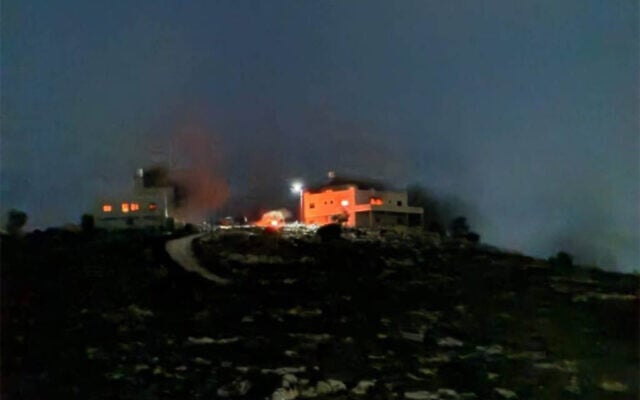
Haaretz and Israel Hayom lead with a foiled border attack against the IDF on Sunday night, in which three — possibly four — militants were killed by an Israeli airstrike while planting explosives. Haaretz notes that the terrorists crossed the border but not a secondary fence built by the IDF several months ago “for tactical reasons.”
“The IDF refrained last night from addressing whether the foiled attack is a direct response to the airstrike attributed to Israel on Friday night, and who stands behind the incident. However, the connection between the two incidents is being investigated. In the past, a few days would pass before Hezbollah would organize a retaliation. The operational level of the cell last night also didn’t seem so high — a fact that raises doubts whether these were Hezbollah men.”
The IDF will remain on high alert in the coming days along the northern border, it reports.
Writing in Israel Hayom, Yoav Limor maintains, by contrast, that the planned bombing was most likely carried out by Hezbollah operatives.
“The IDF was careful not to officially claim Hezbollah was responsible for the foiled attack, but common sense dictates that this was the case,” he writes. “It’s likely this is an attempt at a low-risk, swift retaliation in order to avenge the latest airstrike on Syria which is attributed to Israel.”
Meanwhile, in Yedioth, personal accounts from Nepal are prominently featured.
The daily leads with the SOS call from Tomer Grossman, 22, who is trapped in a devastated village outside Kathmandu with his mother, Oranit, 50.
Grossman sent several messages urging the rescue teams to come retrieve them. He wrote that “at least three dead bodies in this village,” that everyone had fled leaving only five people there, and that they had no food or water. “If no rescue soon I think 1 or 2 more dead people,” he wrote.
“The relatives [of Grossman] sent the message to the Foreign Ministry’s command center, but there they said it was not possible to send a helicopter to that area because all the choppers are being used by the Nepalese army, and they say there are more important rescue missions in the Everest and Frozen Lakes areas,” the report says.
Yedioth reports that the family of Nadav Shoham, an Israeli trekker who was killed in a Nepal storm last October, had donated 15 satellite phones to hikers in the area in his memory. “To my delight, these satellite phones are in the hands of some of the hikers right now, and some of them were used to make contact and send emergency signals to the Chabad house so that it was possible to locate them,” Tova Shoham, Nadav’s mother, says. “I’m sure this would have made Nadav happy,” she says, adding that she will send additional equipment.
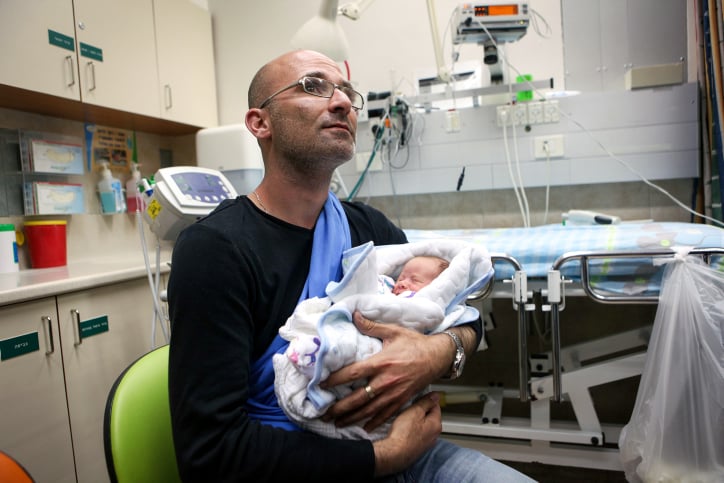
The paper also reports on the Israeli relief efforts to rescue newborn babies born to Israeli couples from surrogates in Nepal. It notes that two planes landing late Sunday and Monday afternoon were expected to carry several of the babies and their parents. “But on the two planes heading to Israel there were only a few babies, and the parents of those remaining were furious to discover they would need to pass another cold night in tents, outdoors, with their newborns,” it writes. Some 16 of the estimated 25 babies born in Nepal to Israeli parents were left behind as of Sunday night.
Haaretz praises Israel’s efforts to bring back the babies in its editorial, while urging the government to revise the legislation barring homosexual couples from contracting surrogates in Israel.
“The interior minister was right to announce that he will try to fly the parents and children to Israel promptly, while deferring the legal formalities. Israel, along with the parties directly concerned, also has a responsibility to ensure the welfare of the women who contracted surrogacy agreements with Israelis – both the women who have already given birth and those who are still pregnant.
“Nevertheless, these steps offer only an immediate solution to the critical problem that has arisen right now. The underlying cause of this problem is the discriminatory legislation that governs surrogacy procedures in Israel. Under Israeli law, only a married heterosexual couple can contract an Israeli woman to serve as a surrogate mother. The law thereby discriminates against both single people and same-sex couples… The Knesset ought to enact the portion of the surrogacy bill that ends this discrimination without further delay. The incident in Nepal underscores the need for it.”
According to Haaretz, some of the 3,400 Nepal citizens working in Israel have not yet successfully contacted their relatives.






The Times of Israel Community.