

Top Likud minister threatens to form unity government
Party officials warn that if nationalist parties don’t show more flexibility, Netanyahu will turn to the Zionist Union
 Add ToI as a Preferred Source on Google
Stuart Winer is a breaking news editor at The Times of Israel.
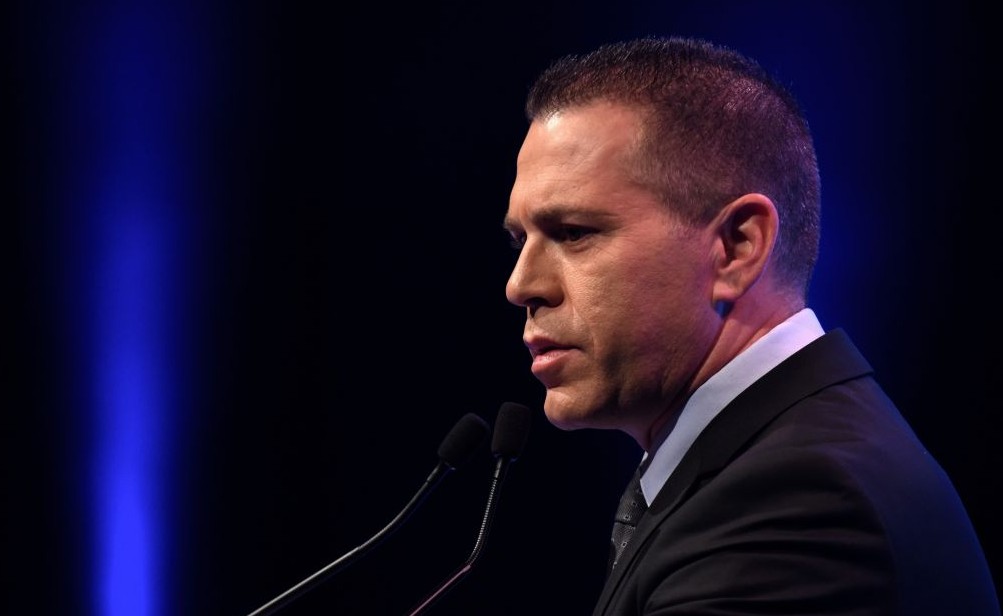
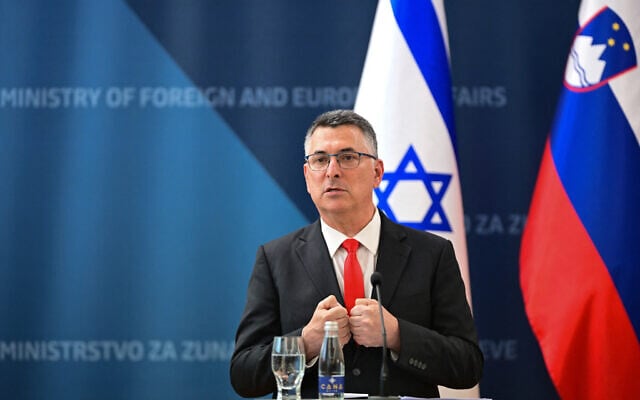
Interior Minister Gilad Erdan said Tuesday that his Likud party won’t hesitate to bring the left-wing Zionist Union faction into a unity government should the right-wing parties, with whom it is currently negotiating, stick to their maximalist demands.
Erdan seemed to add substance to reports, denied by both the Likud and the Zionist Union, that Prime Minister Benjamin Netanyahu has sounded out the party’s leader, Isaac Herzog, about a unity government — a scenario that has alarmed Likud’s natural coalition partners, Yisrael Beytenu and Jewish Home.
The Likud has reportedly been resisting the demands of those parties for certain senior ministerships, and its threatening to reach across the aisle has been interpreted by pundits as a negotiating tactic.
“We’ve been saying all along that if the days go by and the parties of the nationalist camp fail to compromise, the prime minister will have no choice but to make a generous offer to the Zionist Union, even though that is not our preferred option,” Erdan said in an interview with Army Radio.
Erdan denied any knowledge of a reported personal meeting between Netanyahu and Herzog. “To the best of my knowledge, such a meeting has not been held,” he claimed.
Erdan’s threat to ditch the right-wing parties was echoed by fellow Likud member Miri Regev, who declared Tuesday that the entire electoral system should be changed to prevent smaller parties from “extorting” larger parties during coalition-making.
“It is untenable for the small- and medium-sized parties to extort the larger parties and distort the will of the voter,” she said in a statement.
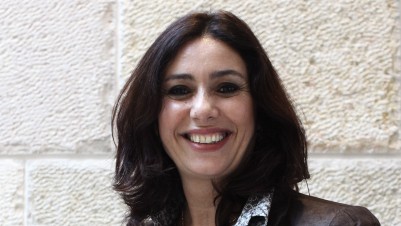
“If the stubbornness and unfairness on the part of the natural partners continues, and they force the Likud up against the wall, the Likud will not hesitate to approach Herzog and offer a unity government or even declare new elections.
Herzog on Monday emphatically denied a Channel 1 report that he had secretly met with Netanyahu. “It never happened,” he said, while his party termed the report “ludicrous.”
The report said the meeting was held in secret and that close aides on both sides were kept out of the loop.
Netanyahu’s camp has remained silent on the report, which came as coalition talks were in full swing nearly a month after national elections saw the Likud party gain 30 seats.
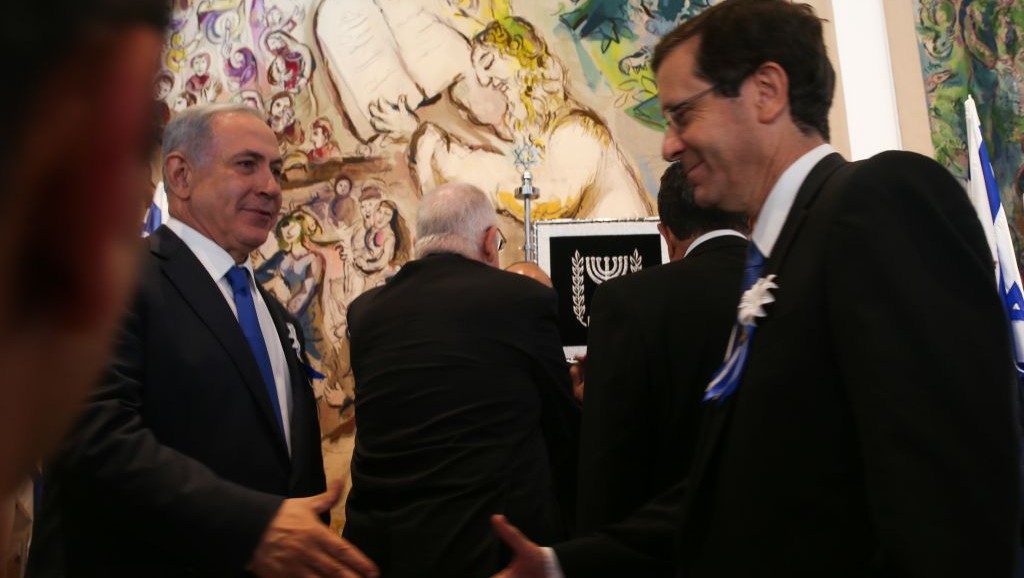
Persistent rumors of a possible unity government — founded on the Likud’s 30 seats and the Zionist Union’s 24 — have been repeatedly dismissed by both sides.
Likud sources estimated that the ultra-Orthodox parties, namely Shas and United Torah Judaism, could sign on to join the coalition as early as this week. Meanwhile, negotiations have significantly narrowed the gaps between the Likud and the Kulanu party.
A four-hour meeting Sunday night between Netanyahu and Kulanu’s leader, Moshe Kahlon, reportedly culminated in a decision that Kulanu, which won 10 seats in the election, will receive the finance, housing and environmental protection ministries in the next coalition.
Under Israel’s electoral system, Netanyahu must cobble together a coalition comprising smaller parties by offering cabinet positions — including, possibly, some of the most senior posts in government — to factions whose support he requires if he is to cement a Knesset majority of at least 61 seats.
Meanwhile, lawmakers within his own Likud party have also demanded top jobs, citing the party’s strong 30-seat showing, which makes the party the largest by far in the 20th Knesset.
Netanyahu has until May 7 to present his coalition to President Reuven Rivlin.






The Times of Israel Community.